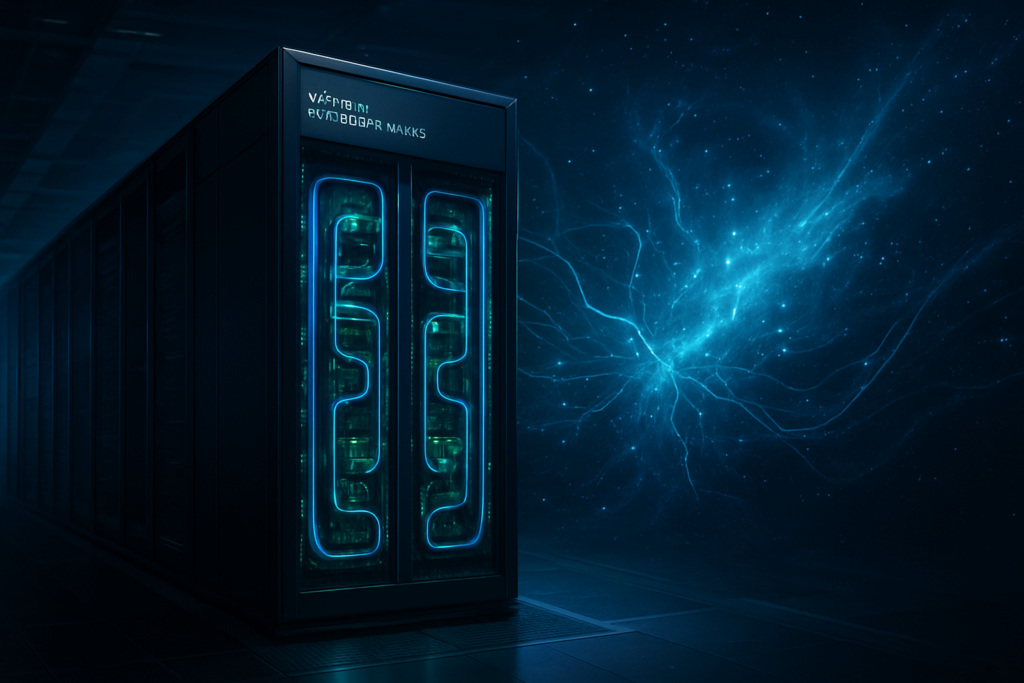
In a landmark keynote at the 2026 Consumer Electronics Show (CES) in Las Vegas, NVIDIA (NASDAQ: NVDA) CEO Jensen Huang officially introduced the Vera Rubin AI platform, the successor to the company’s highly successful Blackwell architecture. Named after the pioneering astronomer who provided the first evidence for dark matter, the Rubin platform is designed to power the next generation of "agentic AI"—autonomous systems capable of complex reasoning and long-term planning. The announcement marks a pivotal shift in the AI infrastructure landscape, promising a staggering 5x performance increase over Blackwell and a radical departure from traditional data center cooling methods.
The immediate significance of the Vera Rubin platform lies in its ability to dramatically lower the cost of intelligence. With a 10x reduction in the cost of generating inference tokens, NVIDIA is positioning itself to make massive-scale AI models not only more capable but also commercially viable for a wider range of industries. As the industry moves toward "AI Superfactories," the Rubin platform serves as the foundational blueprint for the next decade of accelerated computing, integrating compute, networking, and cooling into a single, cohesive ecosystem.
Engineering the Future: The 6-Chip Architecture and Liquid-Cooled Dominance
The technical heart of the Vera Rubin platform is an "extreme co-design" philosophy that integrates six distinct, high-performance chips. At the center is the NVIDIA Rubin GPU, a dual-die powerhouse fabricated on TSMC’s (NYSE: TSM) 3nm process, boasting 336 billion transistors. It is the first GPU to utilize HBM4 memory, delivering up to 22 TB/s of bandwidth—a 2.8x improvement over Blackwell. Complementing the GPU is the NVIDIA Vera CPU, built with 88 custom "Olympus" ARM (NASDAQ: ARM) cores. This CPU offers 2x the performance and bandwidth of the previous Grace CPU, featuring 1.8 TB/s NVLink-C2C connectivity to ensure seamless data movement between the processor and the accelerator.
Rounding out the 6-chip architecture are the BlueField-4 DPU, the NVLink 6 Switch, the ConnectX-9 SuperNIC, and the Spectrum-6 Ethernet Switch. The BlueField-4 DPU is a massive upgrade, featuring a 64-core CPU and an integrated 800 Gbps SuperNIC designed to accelerate agentic reasoning. Perhaps most impressive is the NVLink 6 Switch, which provides 3.6 TB/s of bidirectional bandwidth per GPU, enabling a rack-scale bandwidth of 260 TB/s—exceeding the total bandwidth of the global internet. This level of integration allows the Rubin platform to deliver 50 PFLOPS of NVFP4 compute for AI inference, a 5-fold leap over the Blackwell B200.
Beyond raw compute, NVIDIA has reinvented the physical form factor of the data center. The flagship Vera Rubin NVL72 system is 100% liquid-cooled and features a "fanless" compute tray design. By removing mechanical fans and moving to warm-water Direct Liquid Cooling (DLC), NVIDIA has eliminated one of the primary points of failure in high-density environments. This transition allows for rack power densities exceeding 130 kW, nearly double that of previous generations. Industry experts have noted that this "silent" architecture is not just an engineering feat but a necessity, as the power requirements for next-gen AI training have finally outpaced the capabilities of traditional air cooling.
Market Dominance and the Cloud Titan Alliance
The launch of Vera Rubin has immediate and profound implications for the world’s largest technology companies. NVIDIA announced that the platform is already in full production, with major cloud service providers set to begin deployments in the second half of 2026. Microsoft (NASDAQ: MSFT) has committed to deploying Rubin in its upcoming "Fairwater AI Superfactories," which are expected to power the next generation of models from OpenAI. Similarly, Amazon (NASDAQ: AMZN) Web Services (AWS) and Alphabet (NASDAQ: GOOGL) through Google Cloud have signed on as early adopters, ensuring that the Rubin architecture will be the backbone of the global AI cloud by the end of the year.
For competitors like AMD (NASDAQ: AMD) and Intel (NASDAQ: INTC), the Rubin announcement sets an incredibly high bar. The 5x performance leap and the integration of HBM4 memory put NVIDIA several steps ahead in the "arms race" for AI hardware. Furthermore, by providing a full-stack solution—from the CPU and GPU to the networking switches and liquid-cooling manifolds—NVIDIA is making it increasingly difficult for customers to mix and match components from other vendors. This "lock-in" is bolstered by the Rubin MGX architecture, which hardware partners like Super Micro Computer (NASDAQ: SMCI), Dell Technologies (NYSE: DELL), Hewlett Packard Enterprise (NYSE: HPE), and Lenovo (HKEX: 0992) are already using to build standardized rack-scale solutions.
Strategic advantages also extend to specialized AI labs and startups. The 10x reduction in token costs means that startups can now run sophisticated agentic workflows that were previously cost-prohibitive. This could lead to a surge in "AI-native" applications that require constant, high-speed reasoning. Meanwhile, established giants like Oracle (NYSE: ORCL) are leveraging Rubin to offer sovereign AI clouds, allowing nations to build their own domestic AI capabilities using NVIDIA's high-efficiency, liquid-cooled infrastructure.
The Broader AI Landscape: Sustainability and the Pursuit of AGI
The Vera Rubin platform arrives at a time when the environmental impact of AI is under intense scrutiny. The shift to a 100% liquid-cooled, fanless design is a direct response to concerns regarding the massive energy consumption of data centers. By delivering 8x better performance-per-watt for inference tasks compared to Blackwell, NVIDIA is attempting to decouple AI progress from exponential increases in power demand. This focus on sustainability is likely to become a key differentiator as global regulations on data center efficiency tighten throughout 2026.
In the broader context of AI history, the Rubin platform represents the transition from "Generative AI" to "Agentic AI." While Blackwell was optimized for large language models that generate text and images, Rubin is designed for models that can interact with the world, use tools, and perform multi-step reasoning. This architectural shift mirrors the industry's pursuit of Artificial General Intelligence (AGI). The inclusion of "Inference Context Memory Storage" in the BlueField-4 DPU specifically targets the long-context requirements of these autonomous agents, allowing them to maintain "memory" over much longer interactions than was previously possible.
However, the rapid pace of development also raises concerns. The sheer scale of the Rubin NVL72 racks—and the infrastructure required to support 130 kW densities—means that only the most well-capitalized organizations can afford to play at the cutting edge. This could further centralize AI power among a few "hyper-scalers" and well-funded nations. Comparisons are already being made to the early days of the space race, where the massive capital requirements for infrastructure created a high barrier to entry that only a few could overcome.
Looking Ahead: The H2 2026 Rollout and Beyond
As we look toward the second half of 2026, the focus will shift from announcement to implementation. The rollout of Vera Rubin will be the ultimate test of the global supply chain's ability to handle high-precision liquid-cooling components and 3nm chip production at scale. Experts predict that the first Rubin-powered models will likely emerge in late 2026, potentially featuring trillion-parameter architectures that can process multi-modal data in real-time with near-zero latency.
One of the most anticipated applications for the Rubin platform is in the field of "Physical AI"—the integration of AI agents into robotics and autonomous manufacturing. The high-bandwidth, low-latency interconnects of the Rubin architecture are ideally suited for the massive sensor-fusion tasks required for humanoid robots to navigate complex environments. Additionally, the move toward "Sovereign AI" is expected to accelerate, with more countries investing in Rubin-based clusters to ensure their economic and national security in an increasingly AI-driven world.
Challenges remain, particularly in the realm of software. While the hardware offers a 5x performance leap, the software ecosystem (CUDA and beyond) must evolve to fully utilize the asynchronous processing capabilities of the 6-chip architecture. Developers will need to rethink how they distribute workloads across the Vera CPU and Rubin GPU to avoid bottlenecks. What happens next will depend on how quickly the research community can adapt their models to this new "extreme co-design" paradigm.
Conclusion: A New Era of Accelerated Computing
The launch of the Vera Rubin platform at CES 2026 is more than just a hardware refresh; it is a fundamental reimagining of what a computer is. By integrating compute, networking, and thermal management into a single, fanless, liquid-cooled system, NVIDIA has set a new standard for the industry. The 5x performance increase and 10x reduction in token costs provide the economic fuel necessary for the next wave of AI innovation, moving us closer to a world where autonomous agents are an integral part of daily life.
As we move through 2026, the industry will be watching the H2 deployment closely. The success of the Rubin platform will be measured not just by its benchmarks, but by its ability to enable breakthroughs in science, healthcare, and sustainability. For now, NVIDIA has once again proven its ability to stay ahead of the curve, delivering a platform that is as much a work of art as it is a feat of engineering. The "Rubin Revolution" has officially begun, and the AI landscape will never be the same.
This content is intended for informational purposes only and represents analysis of current AI developments.
TokenRing AI delivers enterprise-grade solutions for multi-agent AI workflow orchestration, AI-powered development tools, and seamless remote collaboration platforms.
For more information, visit https://www.tokenring.ai/.