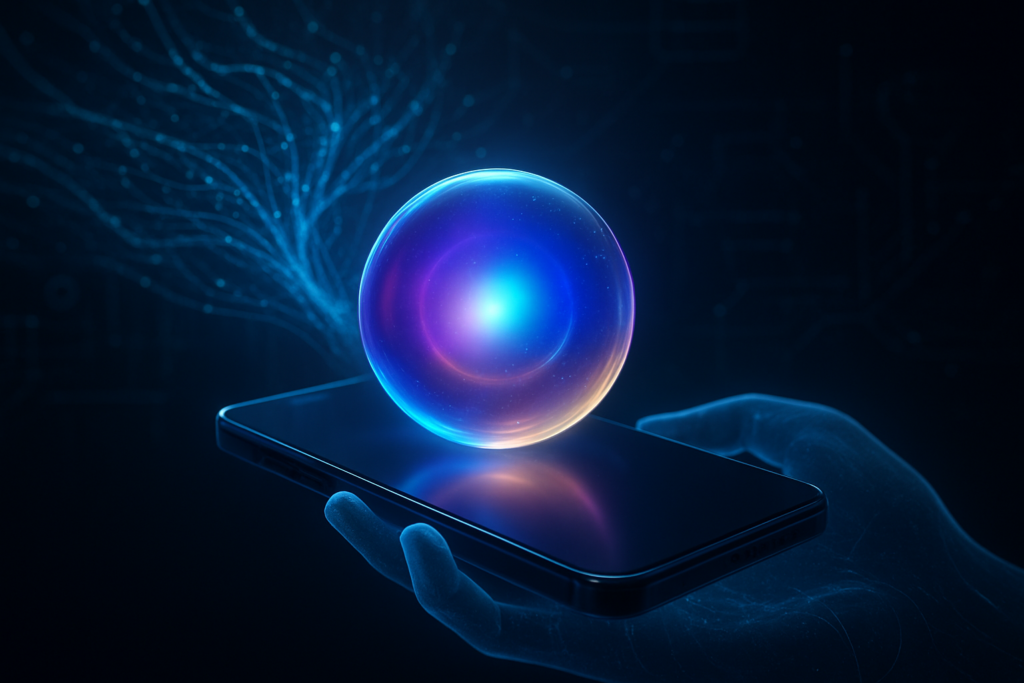
In a move that underscores the immense technical challenges of the generative AI era, Apple Inc. (NASDAQ: AAPL) has officially recalibrated its roadmap for the long-awaited overhaul of its virtual assistant. Originally slated for a 2025 debut, the "Reimagined Siri"—the cornerstone of the Apple Intelligence initiative—is now scheduled for a full release in Fall 2026. This delay comes alongside the confirmation of a massive strategic partnership with Alphabet Inc. (NASDAQ: GOOGL), which will see Google’s Gemini models serve as the high-reasoning engine for Siri’s most complex tasks, marking a historic shift in Apple’s approach to ecosystem independence.
The announcement, which trickled out through internal memos and strategic briefings in early January 2026, signals a "quality-first" pivot by CEO Tim Cook. By integrating Google’s advanced Large Language Models (LLMs) into the core of iOS, Apple aims to bridge the widening gap between its current assistant and the proactive AI agents developed by competitors. For consumers, this means the dream of a Siri that can truly understand personal context and execute multi-step actions across apps is still months away, but the technical foundation being laid suggests a leap far beyond the incremental updates of the past decade.
A Trillion-Parameter Core: The Technical Shift to Gemini
The technical backbone of the 2026 Siri represents a total departure from Apple’s previous "on-device only" philosophy. According to industry insiders, Apple is leveraging a custom version of Gemini 3 Pro, a model boasting approximately 1.2 trillion parameters. This partnership, reportedly costing Apple $1 billion annually, allows Siri to tap into "world knowledge" and reasoning capabilities that far exceed Apple’s internal 150-billion-parameter models. While Apple’s own silicon will still handle lightweight, privacy-sensitive tasks on-device, the heavy lifting of intent recognition and complex planning will be offloaded to this custom Gemini core.
To maintain its strict privacy standards, Apple is utilizing its proprietary Private Cloud Compute (PCC) architecture. In this setup, the Gemini models run on Apple’s own specialized servers, ensuring that user data is never accessible to Google for training or persistent storage. This "V2" architecture replaces an earlier, more limited framework that struggled with unacceptable error rates during beta testing in late 2025. The new system is designed for "on-screen awareness," allowing Siri to see what a user is doing in real-time and offer contextual assistance—a feat that required a complete rewrite of the iOS interaction layer.
Initial reactions from the AI research community have been cautiously optimistic. Experts note that by admitting the need for an external reasoning engine, Apple is prioritizing utility over pride. "The jump to a trillion-parameter model via Gemini is the only way Apple could realistically catch up to the agentic capabilities we see in the latest versions of ChatGPT and Google Assistant Pro," noted one senior researcher. However, the complexity of managing a hybrid model—balancing on-device speed with cloud-based intelligence—remains the primary technical hurdle cited for the Fall 2026 delay.
The AI Power Balance: Google’s Gain and OpenAI’s Pivot
The partnership represents a seismic shift in the competitive landscape of Silicon Valley. While Microsoft (NASDAQ: MSFT) and OpenAI initially appeared to have the inside track with early ChatGPT integrations in iOS 18, Google has emerged as the primary "reasoning partner" for the 2026 overhaul. This positioning gives Alphabet a significant strategic advantage, placing Gemini at the heart of over a billion active iPhones. It also creates a "pluralistic" AI ecosystem within Apple’s hardware, where users may eventually toggle between different specialized models depending on their needs.
For Apple, the delay to Fall 2026 is a calculated risk. By aligning the launch of the Reimagined Siri with the debut of the iPhone 18 and the rumored "iPhone Fold," Apple is positioning AI as the primary driver for its next major hardware supercycle. This strategy directly challenges Samsung (KRX: 005930), which has already integrated advanced Google AI features into its Galaxy line. Furthermore, Apple’s global strategy has necessitated a separate partnership with Alibaba (NYSE: BABA) to provide similar LLM capabilities in the Chinese market, where Google services remain restricted.
The market implications are profound. Alphabet’s stock saw a modest uptick following reports of the $1 billion annual deal, while analysts have begun to question the long-term exclusivity of OpenAI’s relationship with Apple. Startups specializing in "AI agents" may also find themselves in a precarious position; if Apple successfully integrates deep cross-app automation into Siri by 2026, many third-party productivity tools could find their core value proposition subsumed by the operating system itself.
Privacy vs. Performance: Navigating the New AI Landscape
The delay of the Reimagined Siri highlights a broader trend in the AI industry: the difficult trade-off between privacy and performance. Apple’s insistence on using its Private Cloud Compute to "sandbox" Google’s models is a direct response to growing consumer concerns over data harvesting. By delaying the release, Apple is signaling that it will not sacrifice its brand identity for the sake of speed. This move sets a high bar for the industry, potentially forcing other tech giants to adopt more transparent and secure cloud processing methods.
However, the "year of public disappointment" in 2025—a term used by some critics to describe Apple’s slow rollout of AI features—has left a mark. As AI becomes more personalized, the definition of a "breakthrough" has shifted from simple text generation to proactive assistance. The Reimagined Siri aims to be a "Personalized AI Assistant" that knows your schedule, your relationships, and your habits. This level of intimacy requires a level of trust that Apple is betting its entire future on, contrasting with the more data-aggressive approaches seen elsewhere in the industry.
Comparisons are already being drawn to the original launch of the iPhone or the transition to Apple Silicon. If successful, the 2026 Siri could redefine the smartphone from a tool we use into a partner that acts on our behalf. Yet, the potential concerns are non-trivial. The reliance on a competitor like Google for the "brains" of the device raises questions about long-term platform stability and the potential for "AI lock-in," where switching devices becomes impossible due to the deep personal context stored within a specific ecosystem.
The Road to Fall 2026: Agents and Foldables
Looking ahead, the roadmap for Apple Intelligence is divided into two distinct phases. In Spring 2026, users are expected to receive "Siri 2.0" via iOS 26.4, which will introduce the initial Gemini-powered conversational improvements. This will serve as a bridge to the "Full Reimagined Siri" (Siri 3.0) in the fall. This final version is expected to feature "Actionable Intelligence," where Siri can execute complex workflows—such as "Find the photos from last night’s dinner, edit them to look warmer, and email them to the group chat"—without the user ever opening an app.
The Fall 2026 launch is also expected to be the debut of Apple’s first foldable device. Experts predict that the "Reimagined Siri" will be the primary interface for this new form factor, using its on-screen awareness to manage multi-window multitasking that has traditionally been cumbersome on mobile devices. The challenge for Apple’s new AI leadership, now headed by Mike Rockwell and Amar Subramanya following the departure of John Giannandrea, will be ensuring that these features are not just functional, but indispensable.
As we move through 2026, the industry will be watching for the first public betas of the Gemini integration. The success of this partnership will likely determine whether Apple can maintain its premium status in an era where hardware specs are increasingly overshadowed by software intelligence. Predictions suggest that if Apple hits its Fall 2026 targets, it will set a new standard for "Agentic AI"—assistants that don't just talk, but do.
A Defining Moment for the Post-App Era
The shift of the Reimagined Siri to Fall 2026 and the partnership with Google mark a defining moment in Apple’s history. It is an admission that the frontier of AI is too vast for even the world’s most valuable company to conquer alone. By combining its hardware prowess and privacy focus with Google’s massive scale in LLM research, Apple is attempting to create a hybrid model of innovation that could dominate the next decade of personal computing.
The significance of this development cannot be overstated; it represents the transition from the "App Era" to the "Agent Era." In this new landscape, the operating system becomes a proactive entity, and Siri—once a punchline for its limitations—is being rebuilt to be the primary way we interact with technology. While the delay is a short-term setback for investors and enthusiasts, the technical and strategic depth of the "Fall 2026" vision suggests a product that is worth the wait.
In the coming months, the tech world will be hyper-focused on WWDC 2026, where Apple is expected to provide the first live demonstrations of the Gemini-powered Siri. Until then, the industry remains in a state of high anticipation, watching to see if Apple’s "pluralistic" vision for AI can truly deliver the personalized, secure assistant that Tim Cook has promised.
This content is intended for informational purposes only and represents analysis of current AI developments.
TokenRing AI delivers enterprise-grade solutions for multi-agent AI workflow orchestration, AI-powered development tools, and seamless remote collaboration platforms.
For more information, visit https://www.tokenring.ai/.