As of early 2026, the artificial intelligence landscape has undergone a seismic shift from centralized data centers to the palm of the hand. At the heart of this transition is Meta Platforms, Inc. (NASDAQ: META) and its Llama 3.2 model series. While the industry has since moved toward the massive-scale Llama 4 family and "Project Avocado" architectures, Llama 3.2 remains the definitive milestone that proved sophisticated visual reasoning and agentic workflows could thrive entirely offline. By combining high-performance vision-capable models with ultra-lightweight text variants, Meta has effectively democratized "on-device" intelligence, fundamentally altering how consumers interact with their hardware.
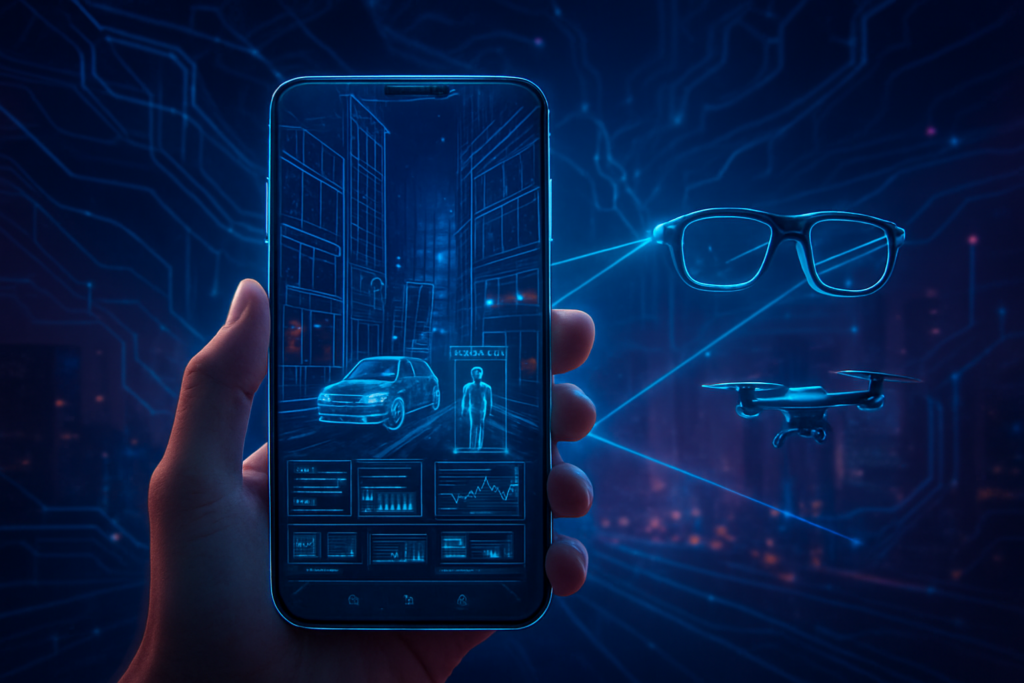
The immediate significance of Llama 3.2 lies in its "small-but-mighty" philosophy. Unlike its predecessors, which required massive server clusters to handle even basic multimodal tasks, Llama 3.2 was engineered specifically for mobile deployment. This development has catalyzed a new era of "Hyper-Edge" computing, where 55% of all AI inference now occurs locally on smartphones, wearables, and IoT devices. For the first time, users can process sensitive visual data—from private medical documents to real-time home security feeds—without a single packet of data leaving the device, marking a victory for both privacy and latency.
Technical Architecture: Vision Adapters and Knowledge Distillation
Technically, Llama 3.2 represents a masterclass in efficiency, divided into two distinct categories: the vision-enabled models (11B and 90B) and the lightweight edge models (1B and 3B). To achieve vision capabilities in the 11B and 90B variants, Meta researchers utilized a "compositional" adapter-based architecture. Rather than retraining a multimodal model from scratch, they integrated a Vision Transformer (ViT-H/14) encoder with the pre-trained Llama 3.1 text backbone. This was accomplished through a series of cross-attention layers that allow the language model to "attend" to visual tokens. As a result, these models can analyze complex charts, provide image captioning, and perform visual grounding with a massive 128K token context window.
The 1B and 3B models, however, are perhaps the most influential for the 2026 mobile ecosystem. These models were not trained in a vacuum; they were "pruned" and "distilled" from the much larger Llama 3.1 8B and 70B models. Through a process of structured width pruning, Meta systematically removed less critical neurons while retaining the core knowledge base. This was followed by knowledge distillation, where the larger "teacher" models guided the "student" models to mimic their reasoning patterns. Initial reactions from the research community lauded this approach, noting that the 3B model often outperformed larger 7B models from 2024, providing a "distilled essence" of intelligence optimized for the Neural Processing Units (NPUs) found in modern silicon.
The Strategic Power Shift: Hardware Giants and the Open Source Moat
The market impact of Llama 3.2 has been transformative for the entire hardware industry. Strategic partnerships with Qualcomm (NASDAQ: QCOM), MediaTek (TWSE: 2454), and Arm (NASDAQ: ARM) have led to the creation of dedicated "Llama-optimized" hardware blocks. By January 2026, flagship chips like the Snapdragon 8 Gen 4 are capable of running Llama 3.2 3B at speeds exceeding 200 tokens per second using 4-bit quantization. This has allowed Meta to use open-source as a "Trojan Horse," commoditizing the intelligence layer and forcing competitors like Alphabet Inc. (NASDAQ: GOOGL) and Apple Inc. (NASDAQ: AAPL) to defend their closed-source ecosystems against a wave of high-performance, free-to-use alternatives.
For startups, the availability of Llama 3.2 has ended the era of "API arbitrage." In 2026, success no longer comes from simply wrapping a GPT-4o-mini API; it comes from building "edge-native" applications. Companies specializing in robotics and wearables, such as those developing the next generation of smart glasses, are leveraging Llama 3.2 to provide real-time AR overlays that are entirely private and lag-free. By making these models open-source, Meta has effectively empowered a global "AI Factory" movement where enterprises can maintain total data sovereignty, bypassing the subscription costs and privacy risks associated with cloud-only providers like OpenAI or Microsoft (NASDAQ: MSFT).
Privacy, Energy, and the Global Regulatory Landscape
Beyond the balance sheets, Llama 3.2 has significant societal implications, particularly concerning data privacy and energy sustainability. In the context of the EU AI Act, which becomes fully applicable in mid-2026, local models have become the "safe harbor" for developers. Because Llama 3.2 operates on-device, it often avoids the heavy compliance burdens placed on high-risk cloud models. This shift has also addressed the growing environmental backlash against AI; recent data suggests that on-device inference consumes up to 95% less energy than sending a request to a remote data center, largely due to the elimination of data transmission and the efficiency of modern NPUs from Intel (NASDAQ: INTC) and AMD (NASDAQ: AMD).
However, the transition to on-device AI has not been without concerns. The ability to run powerful vision models locally has raised questions about "dark AI"—untraceable models used for generating deepfakes or bypassing content filters in an "air-gapped" environment. To mitigate this, the 2026 tech stack has integrated hardware-level digital watermarking into NPUs. Comparing this to the 2022 release of ChatGPT, the industry has moved from a "wow" phase to a "how" phase, where the primary challenge is no longer making AI smart, but making it responsible and efficient enough to live within the constraints of a battery-powered device.
The Horizon: From Llama 3.2 to Agentic "Post-Transformer" AI
Looking toward the future, the legacy of Llama 3.2 is paving the way for the "Post-Transformer" era. While Llama 3.2 set the standard for 2024 and 2025, early 2026 is seeing the rise of even more efficient architectures. Technologies like BitNet (1-bit LLMs) and Liquid Neural Networks are beginning to succeed the standard Llama architecture by offering 10x the energy efficiency for robotics and long-context processing. Meta's own upcoming "Project Mango" is rumored to integrate native video generation and processing into an ultra-slim footprint, moving beyond the adapter-based vision approach of Llama 3.2.
The next major frontier is "Agentic AI," where models do not just respond to text but autonomously orchestrate tasks. In this new paradigm, Llama 3.2 3B often serves as the "local orchestrator," a trusted agent that manages a user's calendar, summarizes emails, and calls upon more powerful models like NVIDIA (NASDAQ: NVDA) H200-powered cloud clusters only when necessary. Experts predict that within the next 24 months, the concept of a "standalone app" will vanish, replaced by a seamless fabric of interoperable local agents built on the foundations laid by the Llama series.
A Lasting Legacy for the Open-Source Movement
In summary, Meta’s Llama 3.2 has secured its place in AI history as the model that "liberated" intelligence from the server room. Its technical innovations in pruning, distillation, and vision adapters proved that the trade-off between model size and performance could be overcome, making AI a ubiquitous part of the physical world rather than a digital curiosity. By prioritizing edge-computing and mobile applications, Meta has not only challenged the dominance of cloud-first giants but has also established a standardized "Llama Stack" that developers now use as the default blueprint for on-device AI.
As we move deeper into 2026, the industry's focus will likely shift toward "Sovereign AI" and the continued refinement of agentic workflows. Watch for upcoming announcements regarding the integration of Llama-derived models into automotive systems and medical wearables, where the low latency and high privacy of Llama 3.2 are most critical. The "Hyper-Edge" is no longer a futuristic concept—it is the current reality, and it began with the strategic release of a model small enough to fit in a pocket, but powerful enough to see the world.
This content is intended for informational purposes only and represents analysis of current AI developments.
TokenRing AI delivers enterprise-grade solutions for multi-agent AI workflow orchestration, AI-powered development tools, and seamless remote collaboration platforms.
For more information, visit https://www.tokenring.ai/.