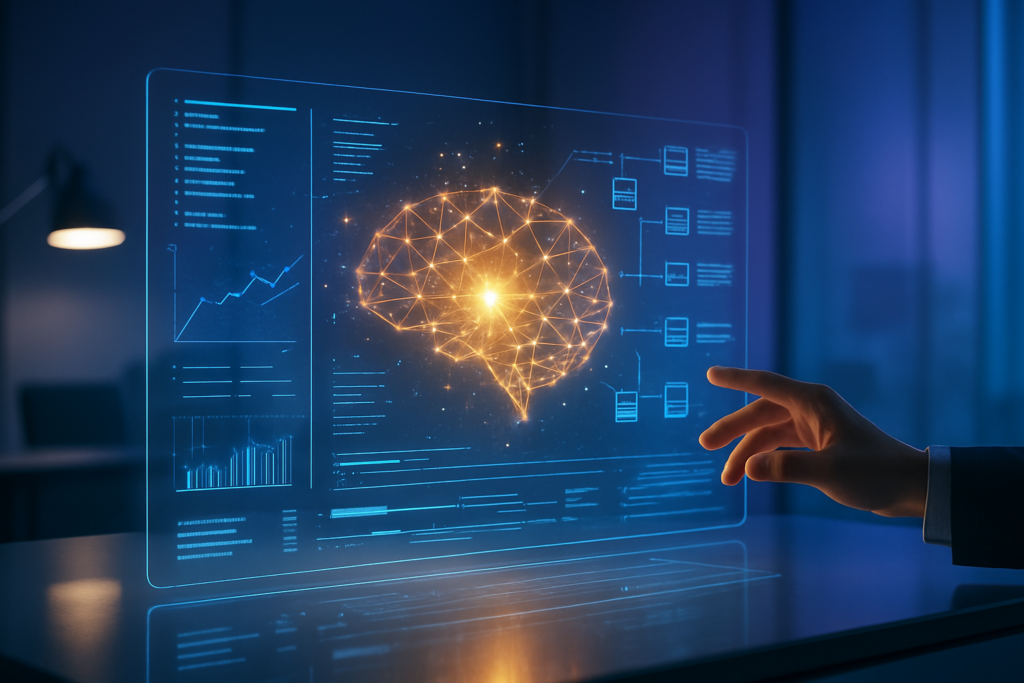
On January 12, 2026, Anthropic fundamentally redefined the relationship between humans and artificial intelligence with the unveiling of Claude Cowork. Moving beyond the conversational paradigm of traditional chatbots, Claude Cowork is a first-of-its-kind autonomous agent designed to operate as a "digital colleague." By granting the AI the ability to independently manage local file systems, orchestrate complex project workflows, and execute multi-step tasks without constant human prompting, Anthropic has signaled a decisive shift from passive AI assistants to active, agentic coworkers.
The immediate significance of this launch lies in its "local-first" philosophy. Unlike previous iterations of Claude that lived solely in the browser, Claude Cowork arrives as a dedicated desktop application (initially exclusive to macOS) with the explicit capability to read, edit, and organize files directly on a user’s machine. This development represents the commercial culmination of Anthropic’s "Computer Use" research, transforming a raw API capability into a polished, high-agency tool for knowledge workers.
The Technical Leap: Skills, MCP, and Local Agency
At the heart of Claude Cowork is a sophisticated evolution of Anthropic’s reasoning models, specifically optimized for long-horizon tasks. While standard AI models often struggle with "context drift" during long projects, Claude Cowork utilizes a new "Skills" framework introduced in late 2025. This framework allows the model to dynamically load task-specific instruction sets—such as "Financial Modeling" or "Slide Deck Synthesis"—only when required. This technical innovation preserves the context window for the actual data being processed, allowing the agent to maintain focus over hours of autonomous work.
The product integrates deeply with the Model Context Protocol (MCP), an open standard that enables Claude to seamlessly pull data from local directories, cloud storage like Google Drive (NASDAQ: GOOGL), and productivity hubs like Notion or Slack. During a live demonstration, Anthropic showed Claude Cowork scanning a cluttered "Downloads" folder, identifying disparate receipts and project notes, and then automatically generating a structured expense report and a project timeline in a local spreadsheet—all while the user was away from their desk.
Unlike previous automation tools that relied on brittle "if-then" logic, Claude Cowork uses visual and semantic reasoning to navigate interfaces. It can "see" the screen, understand the layout of non-standard software, and move a cursor or type text much like a human would. To mitigate risks, Anthropic has implemented a "Scoped Access" security model, ensuring the AI can only interact with folders explicitly shared by the user. Furthermore, the system is designed with a "Human-in-the-Loop" requirement for high-stakes actions, such as mass file deletions or external communications.
Initial reactions from the AI research community have been largely positive, though some experts have noted the significant compute requirements. The service is currently restricted to a new "Claude Max" subscription tier, priced between $100 and $200 per month. Industry analysts suggest this high price point reflects the massive backend processing needed to sustain an AI agent that remains "active" and thinking even when the user is not actively typing.
A Tremble in the SaaS Ecosystem: Competitive Implications
The launch of Claude Cowork has sent ripples through the stock market, particularly affecting established software incumbents. On the day of the announcement, shares of Salesforce (NYSE: CRM) and Adobe (NASDAQ: ADBE) saw modest declines as investors began to weigh the implications of an AI that can perform cross-application workflows. If a single AI agent can navigate between a CRM, a design tool, and a spreadsheet to complete a project, the need for specialized "all-in-one" enterprise platforms may diminish.
Anthropic is positioning Claude Cowork as a direct alternative to the more ecosystem-locked offerings from Microsoft (NASDAQ: MSFT). While Microsoft Copilot is deeply integrated into the Office 365 suite, Claude Cowork’s strength lies in its ability to work across any application on a user's desktop, regardless of the developer. This "agnostic agent" strategy gives Anthropic a strategic advantage among power users and creative professionals who utilize a fragmented stack of specialized tools rather than a single corporate ecosystem.
However, the competition is fierce. Microsoft recently responded by moving its "Agent Mode in Excel" to general availability and introducing "Work IQ," a persistent memory layer powered by GPT-5.2. Similarly, Alphabet (NASDAQ: GOOGL) has moved forward with "Project Mariner," a browser-based agent that focuses on high-speed web automation. The battle for the "AI Desktop" has officially moved from who has the best chatbot to who has the most reliable agent.
For startups, Claude Cowork provides a "force multiplier" effect. Small teams can now leverage an autonomous digital worker to handle the "drudge work" of file organization, data entry, and basic document drafting, allowing them to compete with much larger organizations. This could lead to a new wave of "lean" companies where the human-to-output ratio is vastly higher than current industry standards.
Beyond the Chatbot: The Societal and Economic Shift
The introduction of Claude Cowork marks a pivotal moment in the broader AI landscape, signaling the end of the "Chatbot Era" and the beginning of the "Agentic Era." For the past three years, AI has been a tool that users talk to; now, it is a tool that users work with. This transition fits into a larger 2026 trend where AI models are being judged not just on their verbal fluency, but on their "Agency Quotient"—their ability to execute complex plans with minimal supervision.
The implications for white-collar productivity are profound. Economists are already drawing comparisons to the introduction of the spreadsheet in the 1980s or the browser in the 1990s. By automating the "glue work" that connects different software programs—the copy-pasting, the file renaming, the data reformatting—Claude Cowork could potentially unlock a 100x increase in individual productivity for specific administrative and analytical roles.
However, this shift brings significant concerns regarding data privacy and job displacement. As AI agents require deeper access to personal and corporate file systems, the "attack surface" for potential data breaches grows. Furthermore, while Anthropic emphasizes that Claude is a "coworker," the reality is that an agent capable of doing the work of an entry-level analyst or administrative assistant will inevitably lead to a re-evaluation of those roles. The debate over "AI safety" has expanded from preventing existential risks to ensuring the day-to-day security and economic stability of a world where AI has its "hands" on the keyboard.
The Road Ahead: Windows Support and "Permanent Memory"
In the near term, Anthropic has confirmed that a Windows version of Claude Cowork is in active development, with a targeted release for mid-2026. This will be a critical step for enterprise adoption, as the majority of corporate environments still rely on the Windows OS. Additionally, researchers are closely watching for the full rollout of "Permanent Memory," a feature that would allow Claude to remember a user’s unique stylistic preferences and project history across months of collaboration, rather than treating every session as a fresh start.
Experts predict that the "high-cost" barrier of the Claude Max tier will eventually fall as "small language models" (SLMs) become more capable of handling agentic tasks locally. Within the next 18 months, we may see "hybrid agents" that perform simple file management locally on a device’s NPU (Neural Processing Unit) and only call out to the cloud for complex reasoning tasks. This would lower latency and costs while improving privacy.
The next major milestone to watch for is "multi-agent orchestration," where a user can deploy a fleet of Claude Coworkers to handle different parts of a massive project simultaneously. Imagine an agent for research, an agent for drafting, and an agent for formatting—all communicating with each other via the Model Context Protocol to deliver a finished product.
Conclusion: A Milestone in the History of Work
The launch of Claude Cowork on January 12, 2026, will likely be remembered as the moment AI transitioned from a curiosity to a utility. By giving Claude a "body" in the form of computer access and a "brain" capable of long-term planning, Anthropic has moved us closer to the vision of a truly autonomous digital workforce. The key takeaway is clear: the most valuable AI is no longer the one that gives the best answer, but the one that gets the most work done.
As we move further into 2026, the tech industry will be watching the adoption rates of the Claude Max tier and the response from Apple (NASDAQ: AAPL), which remains the last major giant to fully reveal its "AI Agent" OS integration. For now, Anthropic has set a high bar, challenging the rest of the industry to prove that they can do more than just talk. The era of the digital coworker has arrived, and the way we work will never be the same.
This content is intended for informational purposes only and represents analysis of current AI developments.
TokenRing AI delivers enterprise-grade solutions for multi-agent AI workflow orchestration, AI-powered development tools, and seamless remote collaboration platforms.
For more information, visit https://www.tokenring.ai/.