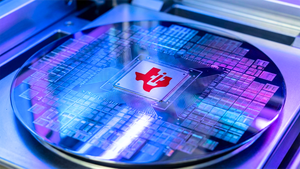
As of January 12, 2026, the global semiconductor landscape stands at a historic crossroads. Intel Corporation (NASDAQ: INTC) has officially confirmed the successful "powering on" and initial mass production of its 18A (1.8nm) process node, a milestone that many analysts are calling the most significant event in the company’s 58-year history. This achievement marks the first time in nearly a decade that Intel has a credible claim to the "leadership" title in transistor performance, arriving just as the company fights to recover from a bruising 2025 where its global semiconductor market share plummeted to a record low of 6%.
The 18A node is not merely a technical update; it is the linchpin of CEO Pat Gelsinger’s "IDM 2.0" strategy. With the first Panther Lake consumer chips now reaching broad availability and the Clearwater Forest server processors booting in data centers across the globe, Intel is attempting to prove it can out-innovate its rivals. The significance of this moment cannot be overstated: after falling to the number four spot in global semiconductor revenue behind NVIDIA (NASDAQ: NVDA), Samsung Electronics (KRX: 005930), and SK Hynix, Intel’s survival as a leading-edge manufacturer depends entirely on the yield and performance of this 1.8nm architecture.
The Architecture of a Comeback: RibbonFET and PowerVia
The technical backbone of the 18A node rests on two revolutionary pillars: RibbonFET and PowerVia. While competitors like Taiwan Semiconductor Manufacturing Company (NYSE: TSM) have dominated the industry using FinFET transistors, Intel has leapfrogged to a second-generation Gate-All-Around (GAA) architecture known as RibbonFET. This design wraps the transistor gate entirely around the channel, allowing for four nanoribbons to stack vertically. This provides unprecedented control over the electrical current, drastically reducing power leakage and enabling the 18A node to support eight distinct logic threshold voltages. This level of granularity allows chip designers to fine-tune performance for specific AI workloads, a feat that was physically impossible with older transistor designs.
Perhaps more impressive is the implementation of PowerVia, Intel’s proprietary backside power delivery system. Traditionally, power and signal lines are bundled together on the front of a silicon wafer, leading to "routing congestion" and voltage drops. By moving the power delivery to the back of the wafer, Intel has effectively separated the "plumbing" from the "wiring." Initial data from the 18A production lines indicates an 8% to 10% improvement in performance-per-watt and a staggering 30% gain in transistor density compared to the previous Intel 3 node. While TSMC’s N2 (2nm) node remains the industry leader in absolute transistor density, analysts at TechInsights suggest that Intel’s PowerVia gives the 18A node a distinct advantage in thermal management and energy efficiency—critical metrics for the power-hungry AI data centers of 2026.
A Battle for Foundry Dominance and Market Share
The commercial implications of the 18A milestone are profound. Having watched its market share erode to just 6% in 2025—down from over 12% only four years prior—Intel is using 18A to lure back high-profile customers. The "power-on" success has already solidified multi-billion dollar commitments from Microsoft (NASDAQ: MSFT) and Amazon (NASDAQ: AMZN), both of which are utilizing Intel’s 18A for their custom-designed AI accelerators and server CPUs. This shift is a direct challenge to TSMC’s long-standing monopoly on leading-edge foundry services, offering a "Sovereign Silicon" alternative for Western tech giants wary of geopolitical instability in the Taiwan Strait.
The competitive landscape has shifted into a three-way race between Intel, TSMC, and Samsung. While TSMC is currently ramping its own N2 node, it has delayed the full integration of backside power delivery until its N2P variant, expected later this year. This has given Intel a narrow window of "feature leadership" that it hasn't enjoyed since the 14nm era. If Intel can maintain production yields above the critical 65% threshold throughout 2026, it stands to reclaim a significant portion of the high-margin data center market, potentially pushing its market share back toward double digits by 2027.
Geopolitics and the AI Infrastructure Super-Cycle
Beyond the balance sheets, the 18A node represents a pivotal moment for the broader AI landscape. As the world moves toward "Agentic AI" and trillion-parameter models, the demand for specialized silicon has outpaced the industry's ability to supply it. Intel’s success with 18A is a major win for the U.S. CHIPS Act, as it validates the billions of dollars in federal subsidies aimed at reshoring advanced semiconductor manufacturing. The 18A node is the first "AI-first" process, designed specifically to handle the massive data throughput required by modern neural networks.
However, the milestone is not without its concerns. The complexity of 18A manufacturing is immense, and any slip in yield could be catastrophic for Intel’s credibility. Industry experts have noted that while the "power-on" phase is a success, the true test will be the "high-volume manufacturing" (HVM) ramp-up scheduled for the second half of 2026. Comparisons are already being drawn to the 10nm delays of the past decade; if Intel stumbles now, the 6% market share floor of 2025 may not be the bottom, but rather a sign of a permanent decline into a secondary player.
The Road to 14A and High-NA EUV
Looking ahead, the 18A node is just the beginning of a rapid-fire roadmap. Intel is already preparing its next major leap: the 14A (1.4nm) node. Scheduled for initial risk production in late 2026, 14A will be the first process in the world to fully utilize High-NA (Numerical Aperture) Extreme Ultraviolet (EUV) lithography machines. These massive, $400 million systems from ASML will allow Intel to print features even smaller than those on 18A, potentially extending its lead in performance-per-watt through the end of the decade.
The immediate focus for 2026, however, remains the successful rollout of Clearwater Forest for the enterprise market. If these chips deliver the promised 40% improvement in AI inferencing speeds, Intel could effectively halt the exodus of data center customers to ARM-based alternatives. Challenges remain, particularly in the packaging space, where Intel’s Foveros Direct 3D technology must compete with TSMC’s established CoWoS (Chip-on-Wafer-on-Substrate) ecosystem.
A Decisive Chapter in Semiconductor History
In summary, the "powering on" of the 18A node is a definitive signal that Intel is no longer just a "legacy" giant in retreat. By successfully integrating RibbonFET and PowerVia ahead of its peers, the company has positioned itself as a primary architect of the AI era. The jump from a 6% market share in 2025 to a potential leadership position in 2026 is one of the most ambitious turnarounds attempted in the history of the tech industry.
The coming months will be critical. Investors and industry watchers should keep a close eye on the Q3 2026 yield reports and the first independent benchmarks of the Clearwater Forest Xeon processors. If Intel can prove that 18A is as reliable as it is fast, the "silicon throne" may once again reside in Santa Clara. For now, the successful "power-on" of 18A has given the industry something it hasn't had in years: a genuine, high-stakes competition at the very edge of physics.
This content is intended for informational purposes only and represents analysis of current AI developments.
TokenRing AI delivers enterprise-grade solutions for multi-agent AI workflow orchestration, AI-powered development tools, and seamless remote collaboration platforms.
For more information, visit https://www.tokenring.ai/.