
The end of an earnings season can be a great time to discover new stocks and assess how companies are handling the current business environment. Let’s take a look at how Abbott Laboratories (NYSE: ABT) and the rest of the medical devices & supplies - diversified stocks fared in Q4.
The medical devices industry operates a business model that balances steady demand with significant investments in innovation and regulatory compliance. The industry benefits from recurring revenue streams tied to consumables, maintenance services, and incremental upgrades to the latest technologies. However, the capital-intensive nature of product development, coupled with lengthy regulatory pathways and the need for clinical validation, can weigh on profitability and timelines. In addition, there are constant pricing pressures from healthcare systems and insurers maximizing cost efficiency. Over the next several years, one tailwind is demographic–aging populations means rising chronic disease rates that drive greater demand for medical interventions and monitoring solutions. Advances in digital health, such as remote patient monitoring and smart devices, are also expected to unlock new demand by shortening upgrade cycles. On the other hand, the industry faces headwinds from pricing and reimbursement pressures as healthcare providers increasingly adopt value-based care models. Additionally, the integration of cybersecurity for connected devices adds further risk and complexity for device manufacturers.
The 6 medical devices & supplies - diversified stocks we track reported a mixed Q4. As a group, revenues beat analysts’ consensus estimates by 1.9% while next quarter’s revenue guidance was in line.
Amidst this news, share prices of the companies have had a rough stretch. On average, they are down 5.1% since the latest earnings results.
Weakest Q4: Abbott Laboratories (NYSE: ABT)
With roots dating back to 1888 when founder Dr. Wallace Abbott began producing precise, dosage-form medications, Abbott Laboratories (NYSE: ABT) develops and sells a diverse range of healthcare products including medical devices, diagnostics, nutrition products, and branded generic pharmaceuticals.
Abbott Laboratories reported revenues of $11.46 billion, up 4.4% year on year. This print fell short of analysts’ expectations by 2.9%. Overall, it was a softer quarter for the company with a significant miss of analysts’ revenue estimates and a significant miss of analysts’ organic revenue estimates.
"In 2025, we expanded margins and achieved double-digit earnings per share growth, our new product pipeline was highly productive, and we took important strategic steps to shape the company for the future," said Robert B. Ford, chairman and chief executive officer, Abbott.
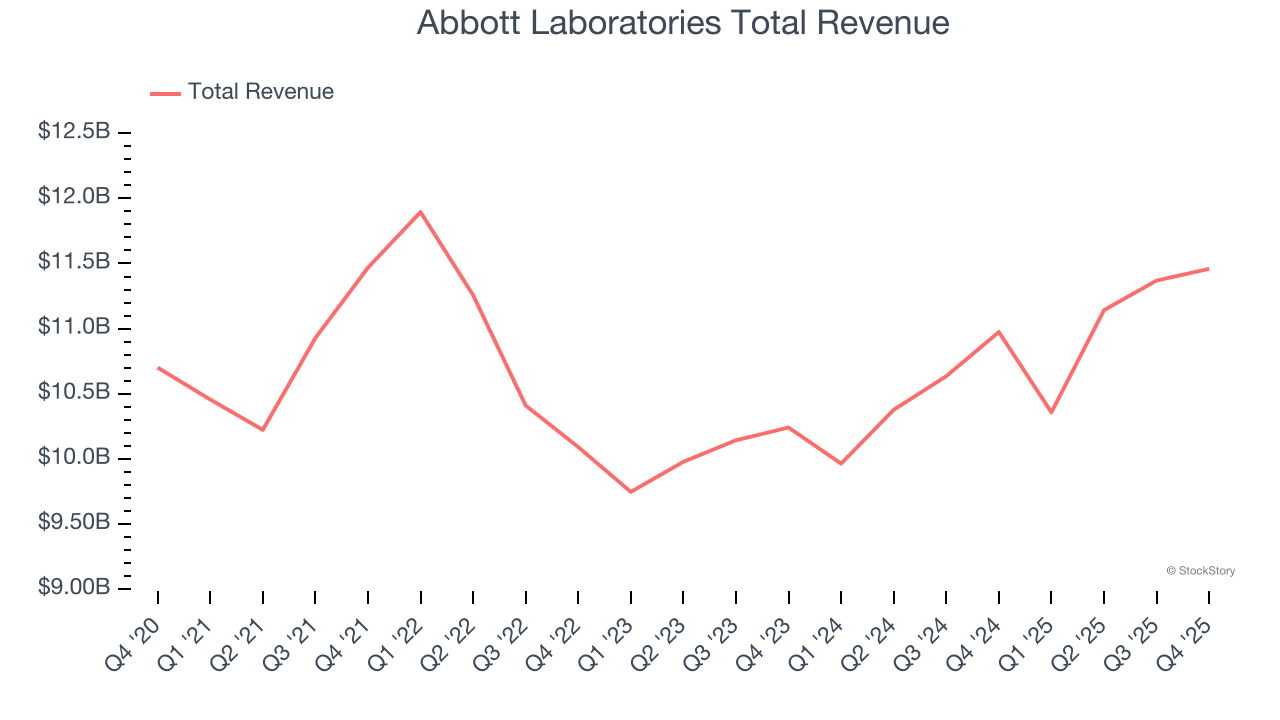
Abbott Laboratories delivered the weakest performance against analyst estimates of the whole group. Unsurprisingly, the stock is down 9.6% since reporting and currently trades at $109.17.
Is now the time to buy Abbott Laboratories? Access our full analysis of the earnings results here, it’s free.
Best Q4: Neogen (NASDAQ: NEOG)
Founded in 1981 and operating at the intersection of food safety and animal health, Neogen (NASDAQ: NEOG) develops and manufactures diagnostic tests and related products to detect dangerous substances in food and pharmaceuticals for animal health.
Neogen reported revenues of $224.7 million, down 2.8% year on year, outperforming analysts’ expectations by 7.2%. The business had a stunning quarter with a beat of analysts’ EPS estimates and a solid beat of analysts’ revenue estimates.
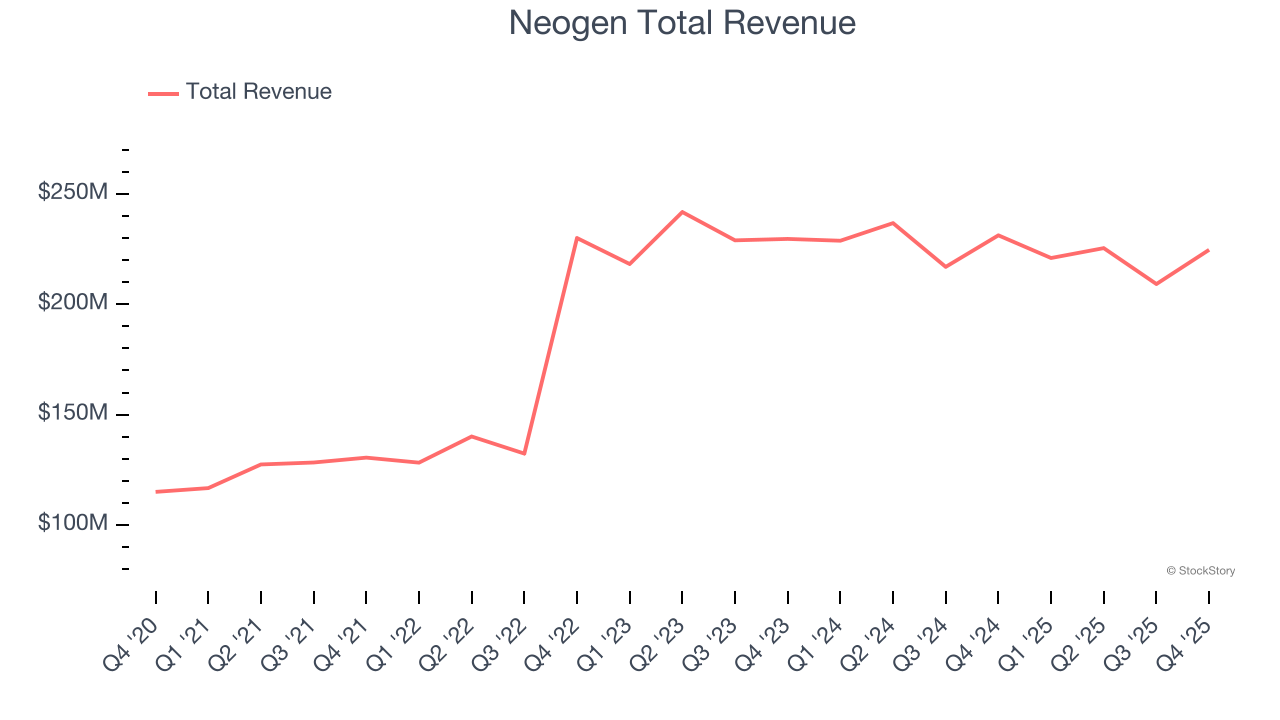
Neogen achieved the biggest analyst estimates beat among its peers. The market seems happy with the results as the stock is up 33.8% since reporting. It currently trades at $9.87.
Is now the time to buy Neogen? Access our full analysis of the earnings results here, it’s free.
Baxter (NYSE: BAX)
With a history dating back to 1931 and products used in over 100 countries, Baxter International (NYSE: BAX) provides essential healthcare products including dialysis therapies, IV solutions, infusion systems, surgical products, and patient monitoring technologies to hospitals and clinics worldwide.
Baxter reported revenues of $2.97 billion, up 8% year on year, exceeding analysts’ expectations by 5.7%. Still, it was a slower quarter as it posted a significant miss of analysts’ full-year EPS guidance estimates and a significant miss of analysts’ EPS estimates.
As expected, the stock is down 19.4% since the results and currently trades at $17.95.
Read our full analysis of Baxter’s results here.
CooperCompanies (NASDAQ: COO)
With a history dating back to 1958 and a portfolio spanning two distinct healthcare segments, Cooper Companies (NASDAQ: COO) develops and manufactures medical devices focused on vision care through contact lenses and women's health including fertility products and services.
CooperCompanies reported revenues of $1.02 billion, up 6.2% year on year. This number was in line with analysts’ expectations. More broadly, it was a satisfactory quarter as it also produced an impressive beat of analysts’ full-year EPS guidance estimates but organic revenue in line with analysts’ estimates.
CooperCompanies scored the highest full-year guidance raise among its peers. The stock is down 8.3% since reporting and currently trades at $73.51.
Read our full, actionable report on CooperCompanies here, it’s free.
Stryker (NYSE: SYK)
With over 150 million patients impacted annually through its innovative healthcare technologies, Stryker (NYSE: SYK) develops and manufactures advanced medical devices and equipment across orthopedics, surgical tools, neurotechnology, and patient care solutions.
Stryker reported revenues of $7.17 billion, up 11.4% year on year. This result topped analysts’ expectations by 0.8%. It was a satisfactory quarter as it also logged a narrow beat of analysts’ organic revenue estimates.
The stock is down 2.4% since reporting and currently trades at $345.68.
Read our full, actionable report on Stryker here, it’s free.
Want to invest in winners with rock-solid fundamentals? Check out our Top 5 Growth Stocks and add them to your watchlist. These companies are poised for growth regardless of the political or macroeconomic climate.
StockStory’s analyst team — all seasoned professional investors — uses quantitative analysis and automation to deliver market-beating insights faster and with higher quality.