Over the past six months, Best Buy’s shares (currently trading at $62.90) have posted a disappointing 15.4% loss, well below the S&P 500’s 7.3% gain. This may have investors wondering how to approach the situation.
Is now the time to buy Best Buy, or should you be careful about including it in your portfolio? See what our analysts have to say in our full research report, it’s free.
Why Do We Think Best Buy Will Underperform?
Even with the cheaper entry price, we're sitting this one out for now. Here are three reasons we avoid BBY and a stock we'd rather own.
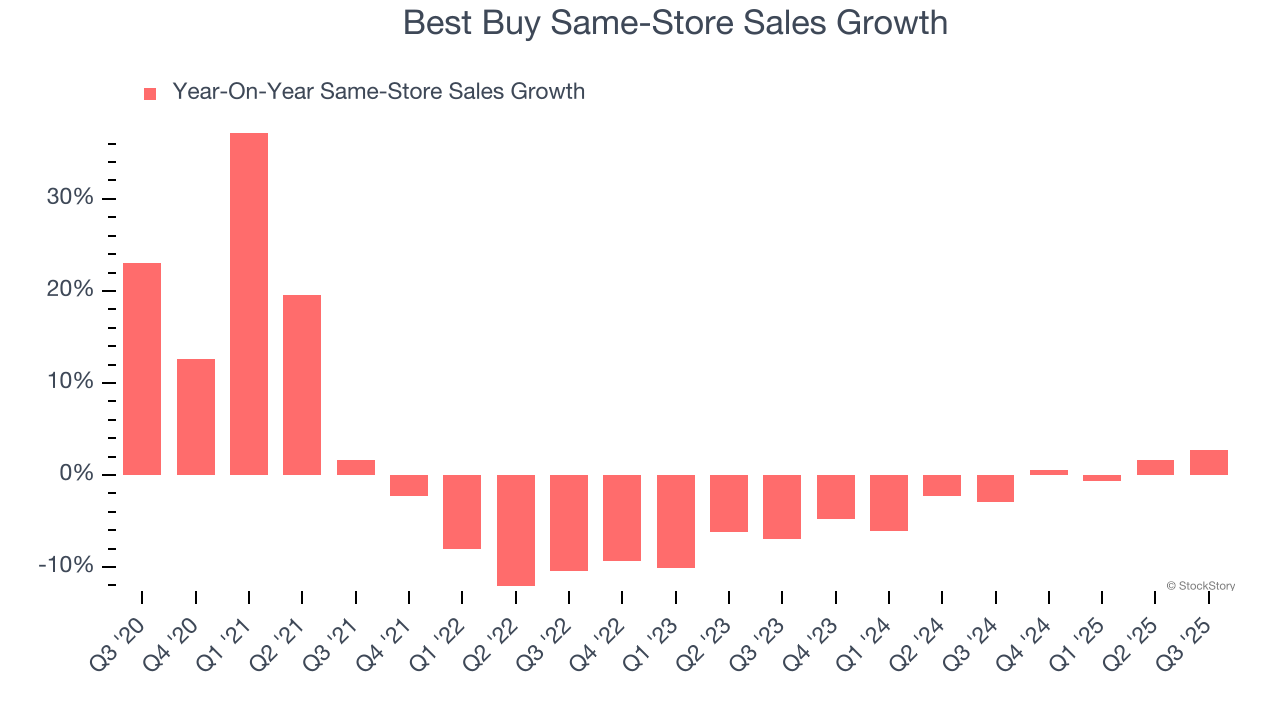
1. Shrinking Same-Store Sales Indicate Waning Demand
Same-store sales is an industry measure of whether revenue is growing at existing stores, and it is driven by customer visits (often called traffic) and the average spending per customer (ticket).
Best Buy’s demand has been shrinking over the last two years as its same-store sales have averaged 1.5% annual declines.
2. Low Gross Margin Reveals Weak Structural Profitability
We prefer higher gross margins because they not only make it easier to generate more operating profits but also indicate product differentiation, negotiating leverage, and pricing power.
Best Buy has bad unit economics for a retailer, signaling it operates in a competitive market and lacks pricing power because its inventory is sold in many places. As you can see below, it averaged a 22.5% gross margin over the last two years. Said differently, Best Buy had to pay a chunky $77.54 to its suppliers for every $100 in revenue. 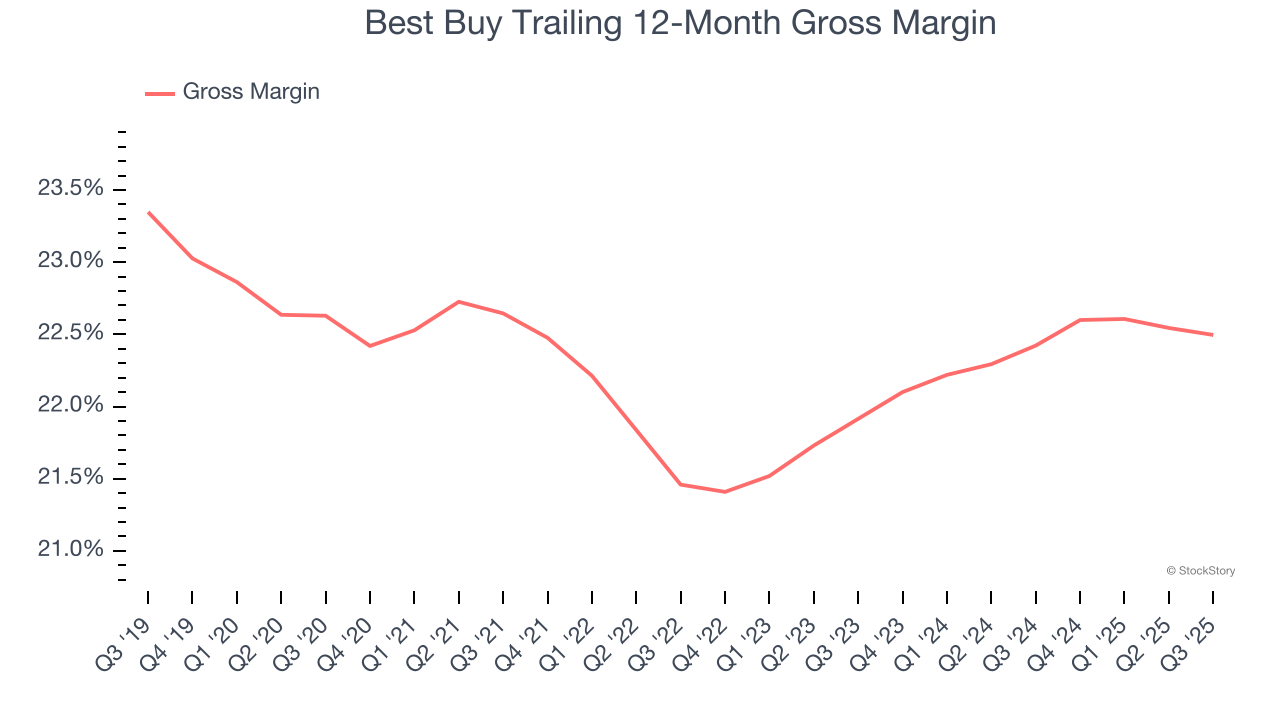
3. Weak Operating Margin Could Cause Trouble
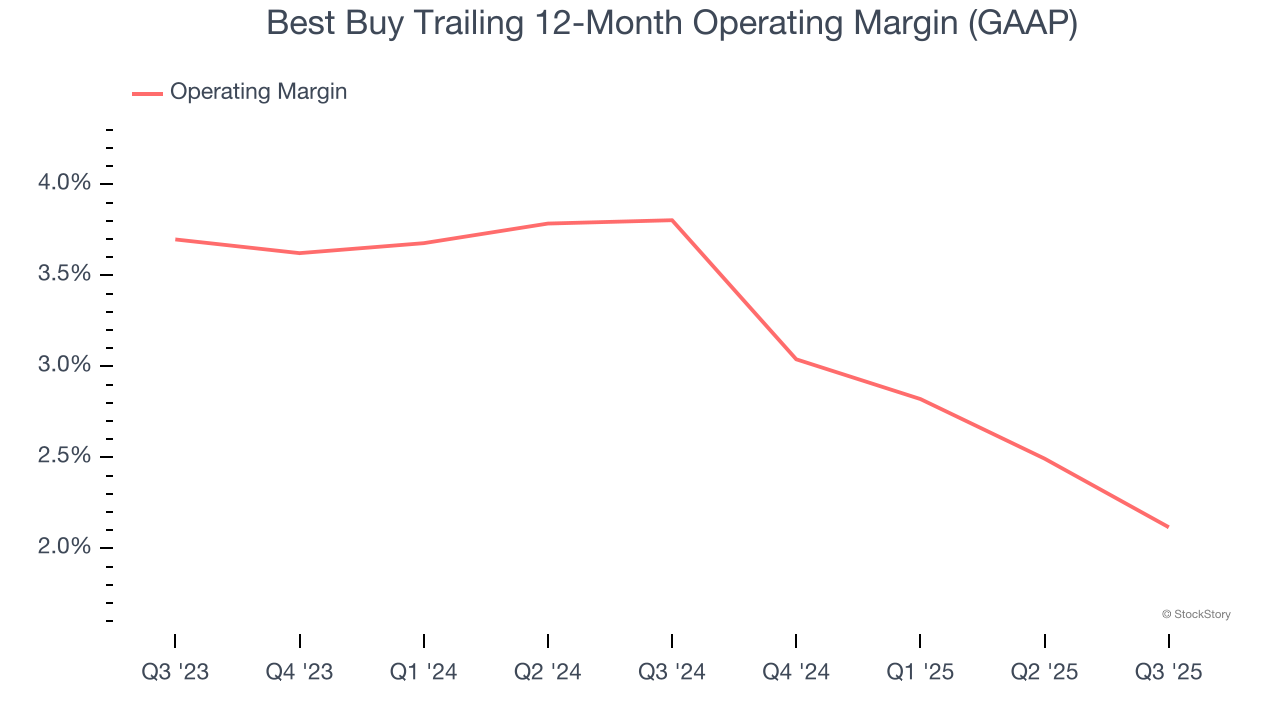
Operating margin is a key profitability metric because it accounts for all expenses necessary to run a store, including wages, inventory, rent, advertising, and other administrative costs.
Best Buy was profitable over the last two years but held back by its large cost base. Its average operating margin of 3% was weak for a consumer retail business. This result isn’t too surprising given its low gross margin as a starting point.
Final Judgment
We see the value of companies helping consumers, but in the case of Best Buy, we’re out. After the recent drawdown, the stock trades at 9.8× forward P/E (or $62.90 per share). While this valuation is optically cheap, the potential downside is huge given its shaky fundamentals. There are superior stocks to buy right now. We’d recommend looking at a top digital advertising platform riding the creator economy.
High-Quality Stocks for All Market Conditions
Your portfolio can’t afford to be based on yesterday’s story. The risk in a handful of heavily crowded stocks is rising daily.
The names generating the next wave of massive growth are right here in our Top 9 Market-Beating Stocks. This is a curated list of our High Quality stocks that have generated a market-beating return of 244% over the last five years (as of June 30, 2025).
Stocks that have made our list include now familiar names such as Nvidia (+1,326% between June 2020 and June 2025) as well as under-the-radar businesses like the once-small-cap company Exlservice (+354% five-year return). Find your next big winner with StockStory today.