E-commerce platform Shopify (NYSE: SHOP) reported Q4 CY2025 results topping the market’s revenue expectations, with sales up 30.6% year on year to $3.67 billion. Its GAAP profit of $0.57 per share was 33.9% above analysts’ consensus estimates.
Is now the time to buy Shopify? Find out by accessing our full research report, it’s free.
Shopify (SHOP) Q4 CY2025 Highlights:
- Revenue: $3.67 billion vs analyst estimates of $3.60 billion (30.6% year-on-year growth, 2% beat)
- GMV: $123.8 billion vs analyst estimates of $121.4 billion (31.0% year-on-year growth, 2% beat)
- EPS (GAAP): $0.57 vs analyst estimates of $0.43 (33.9% beat)
- Adjusted EBITDA: $753 million vs analyst estimates of $709.3 million (20.5% margin, 6.2% beat)
- Operating Margin: 17.2%, in line with the same quarter last year
- Free Cash Flow Margin: 19.5%, up from 17.8% in the previous quarter
- Market Capitalization: $165.6 billion
Company Overview
Starting with just three people selling snowboards online in 2004, Shopify (NYSE: SHOP) provides a comprehensive platform that enables merchants of all sizes to create, manage and grow their businesses across multiple sales channels.
Revenue Growth
Reviewing a company’s long-term sales performance reveals insights into its quality. Any business can experience short-term success, but top-performing ones enjoy sustained growth for years. Luckily, Shopify’s sales grew at an excellent 31.6% compounded annual growth rate over the last five years. Its growth surpassed the average software company and shows its offerings resonate with customers, a great starting point for our analysis.
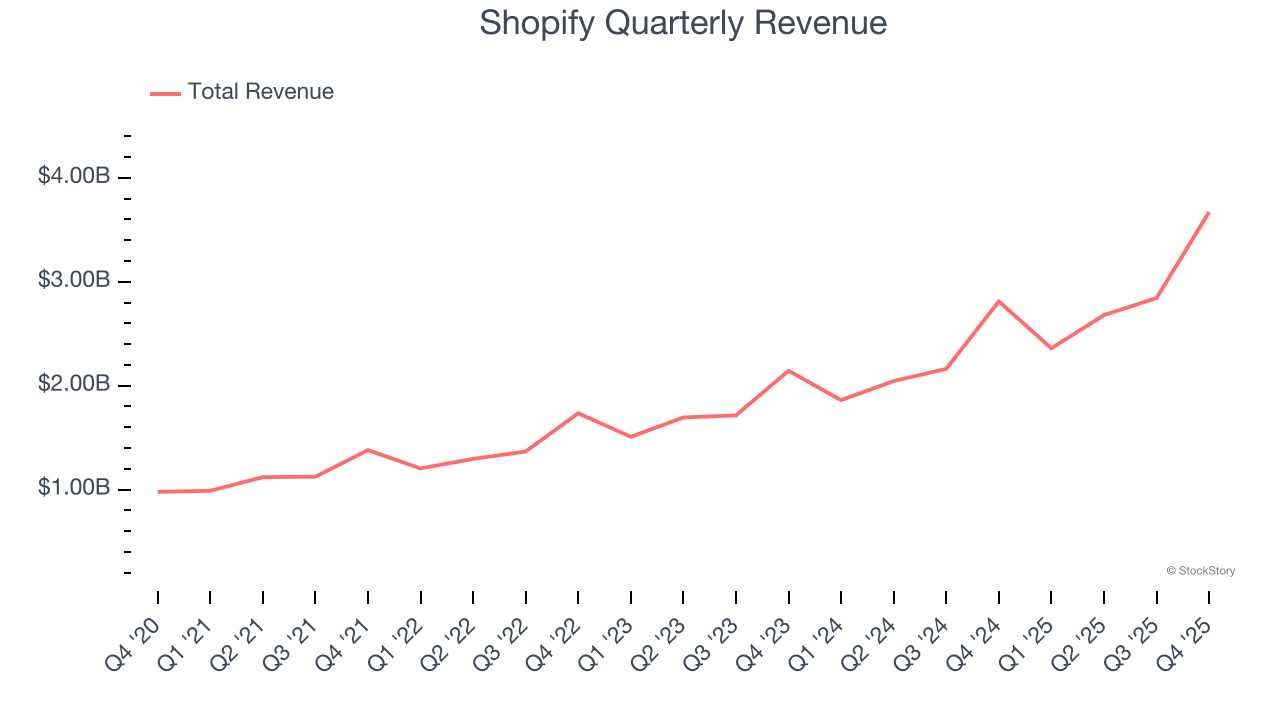
We at StockStory place the most emphasis on long-term growth, but within software, a half-decade historical view may miss recent innovations or disruptive industry trends. Shopify’s annualized revenue growth of 27.9% over the last two years is below its five-year trend, but we still think the results suggest healthy demand. 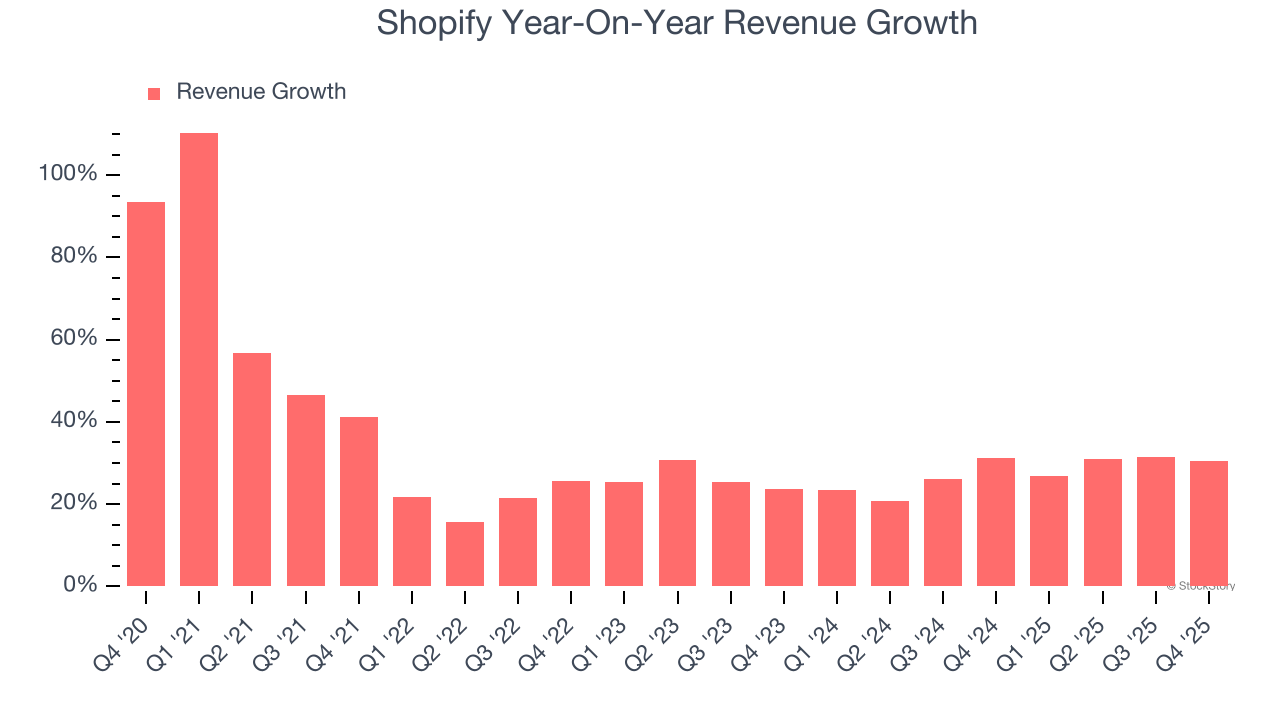
This quarter, Shopify reported wonderful year-on-year revenue growth of 30.6%, and its $3.67 billion of revenue exceeded Wall Street’s estimates by 2%.
Looking ahead, sell-side analysts expect revenue to grow 23.5% over the next 12 months, a deceleration versus the last two years. Still, this projection is eye-popping given its scale and indicates the market is forecasting success for its products and services.
Microsoft, Alphabet, Coca-Cola, Monster Beverage—all began as under-the-radar growth stories riding a massive trend. We’ve identified the next one: a profitable AI semiconductor play Wall Street is still overlooking. Go here for access to our full report.
Customer Acquisition Efficiency
The customer acquisition cost (CAC) payback period represents the months required to recover the cost of acquiring a new customer. Essentially, it’s the break-even point for sales and marketing investments. A shorter CAC payback period is ideal, as it implies better returns on investment and business scalability.
Shopify is extremely efficient at acquiring new customers, and its CAC payback period checked in at 5.5 months this quarter. The company’s rapid recovery of its customer acquisition costs indicates it has a highly differentiated product offering and a strong brand reputation due to its scale. These dynamics give Shopify more resources to pursue new product initiatives while maintaining the flexibility to increase its sales and marketing investments. 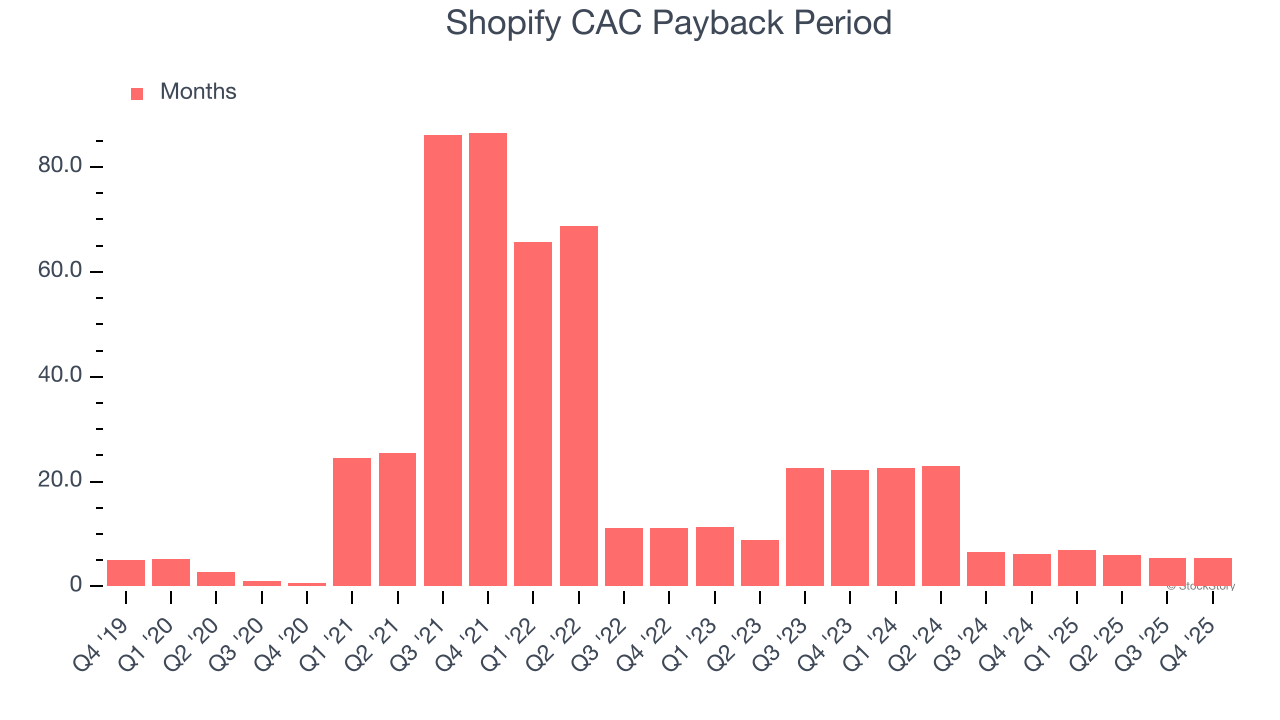
Key Takeaways from Shopify’s Q4 Results
We enjoyed seeing Shopify beat analysts’ GMV and revenue expectations this quarter, putting up impressive 30+% year-on-year growth for both metrics. Profit also came in better than expected, making for a very solid print. The stock traded up 10.6% to $141.03 immediately after reporting.
Shopify may have had a good quarter, but does that mean you should invest right now? The latest quarter does matter, but not nearly as much as longer-term fundamentals and valuation, when deciding if the stock is a buy. We cover that in our actionable full research report which you can read here (it’s free).