What a fantastic six months it’s been for Compass. Shares of the company have skyrocketed 84.5%, hitting $13.56. This was partly due to its solid quarterly results, and the performance may have investors wondering how to approach the situation.
Is now the time to buy Compass, or should you be careful about including it in your portfolio? Check out our in-depth research report to see what our analysts have to say, it’s free.
Why Do We Think Compass Will Underperform?
We’re happy investors have made money, but we're sitting this one out for now. Here are three reasons there are better opportunities than COMP and a stock we'd rather own.
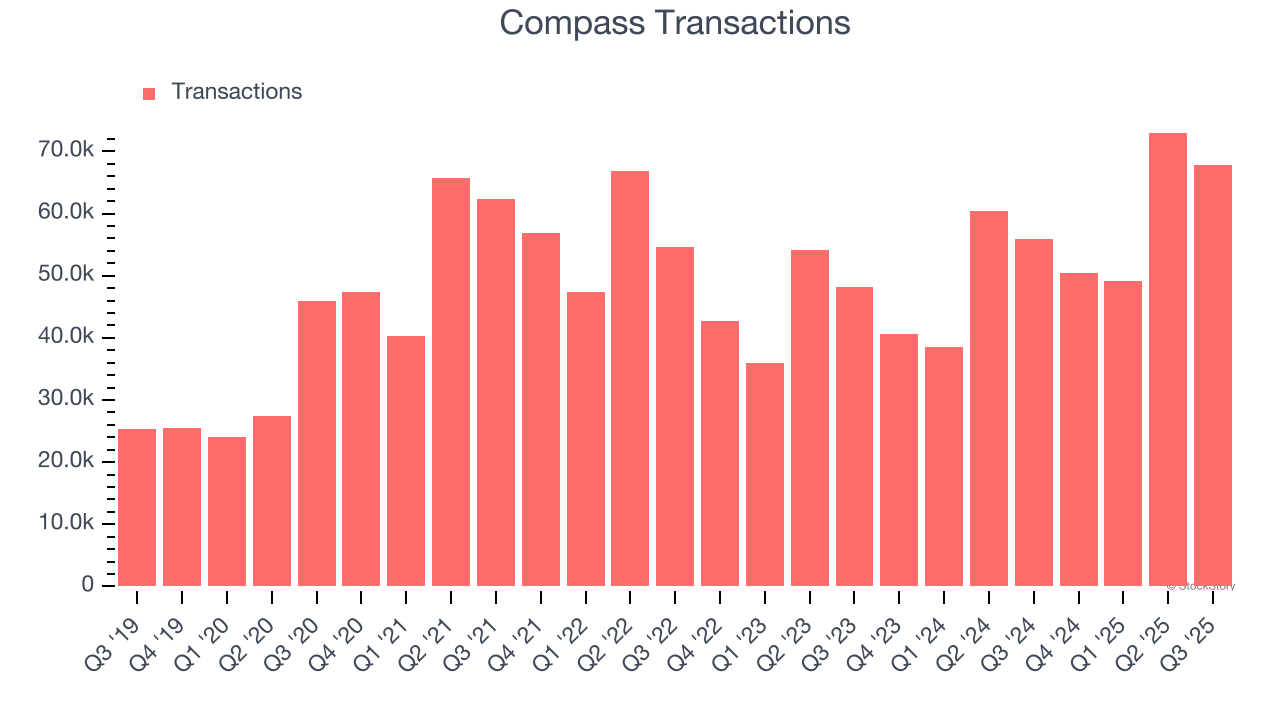
1. Weak Growth in Transactions Points to Soft Demand
Revenue growth can be broken down into changes in price and volume (for companies like Compass, our preferred volume metric is transactions). While both are important, the latter is the most critical to analyze because prices have a ceiling.
Compass’s transactions came in at 67,886 in the latest quarter, and over the last two years, averaged 15.5% year-on-year growth. This performance was underwhelming and suggests it might have to lower prices or invest in product improvements to accelerate growth, factors that can hinder near-term profitability.
2. Operating Losses Sound the Alarms
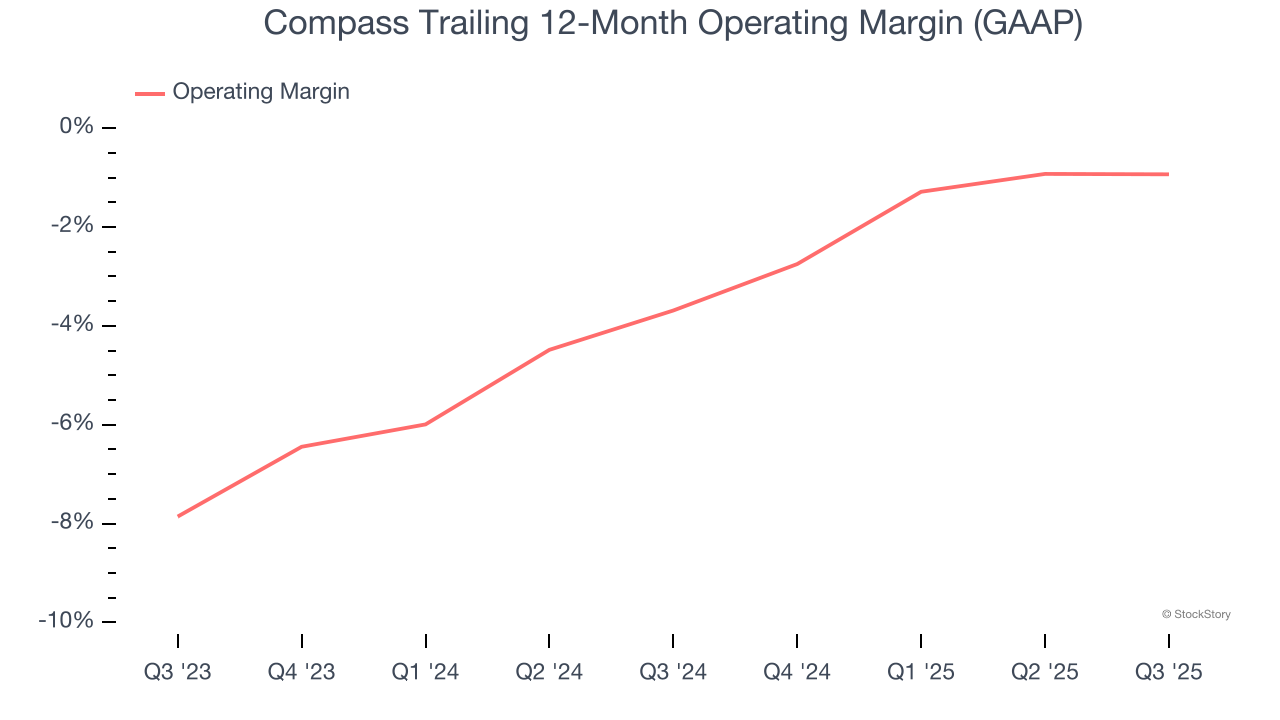
Operating margin is an important measure of profitability as it shows the portion of revenue left after accounting for all core expenses – everything from the cost of goods sold to advertising and wages. It’s also useful for comparing profitability across companies with different levels of debt and tax rates because it excludes interest and taxes.
Compass’s operating margin has risen over the last 12 months, but it still averaged negative 2.2% over the last two years. This is due to its large expense base and inefficient cost structure.
3. Mediocre Free Cash Flow Margin Limits Reinvestment Potential
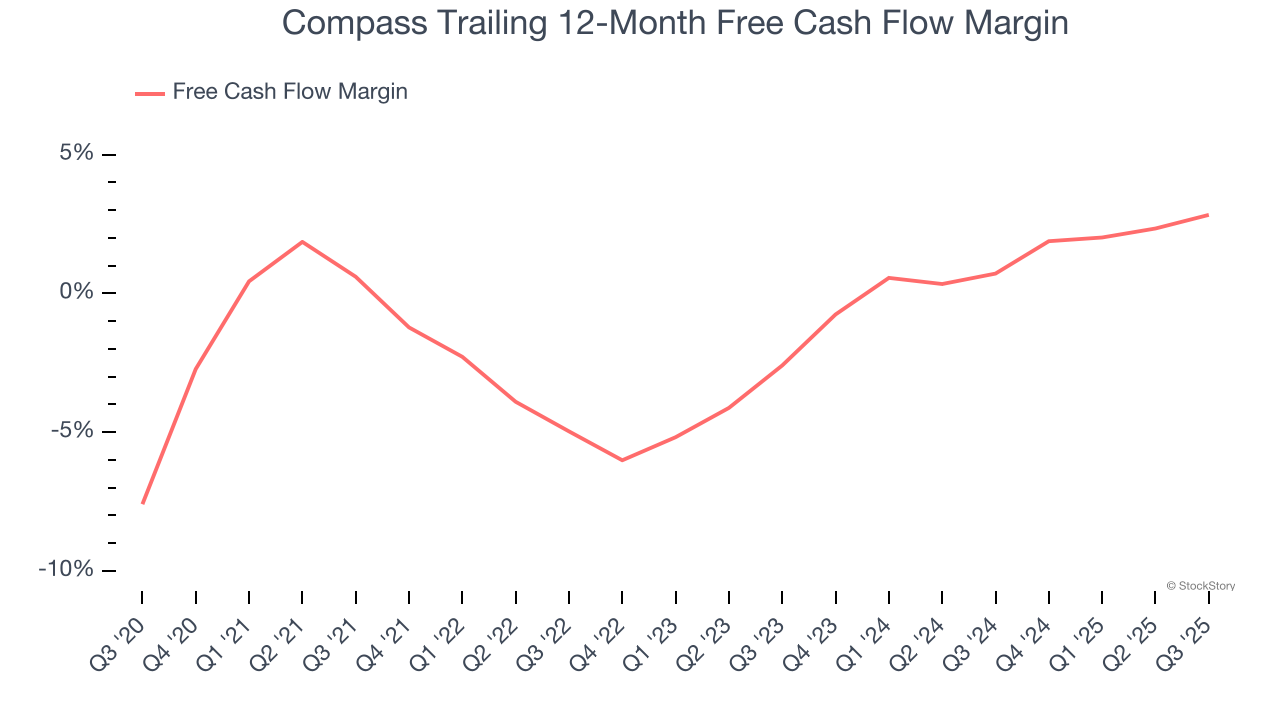
Free cash flow isn't a prominently featured metric in company financials and earnings releases, but we think it's telling because it accounts for all operating and capital expenses, making it tough to manipulate. Cash is king.
Compass has shown poor cash profitability over the last two years, giving the company limited opportunities to return capital to shareholders. Its free cash flow margin averaged 1.9%, lousy for a consumer discretionary business.
Final Judgment
Compass doesn’t pass our quality test. Following the recent rally, the stock trades at 22.4× forward P/E (or $13.56 per share). This valuation is reasonable, but the company’s shaky fundamentals present too much downside risk. There are better stocks to buy right now. Let us point you toward the Amazon and PayPal of Latin America.
Stocks We Like More Than Compass
Your portfolio can’t afford to be based on yesterday’s story. The risk in a handful of heavily crowded stocks is rising daily.
The names generating the next wave of massive grsowth are right here in our Top 5 Growth Stocks for this month. This is a curated list of our High Quality stocks that have generated a market-beating return of 244% over the last five years (as of June 30, 2025).
Stocks that have made our list include now familiar names such as Nvidia (+1,326% between June 2020 and June 2025) as well as under-the-radar businesses like the once-micro-cap company Kadant (+351% five-year return). Find your next big winner with StockStory today.