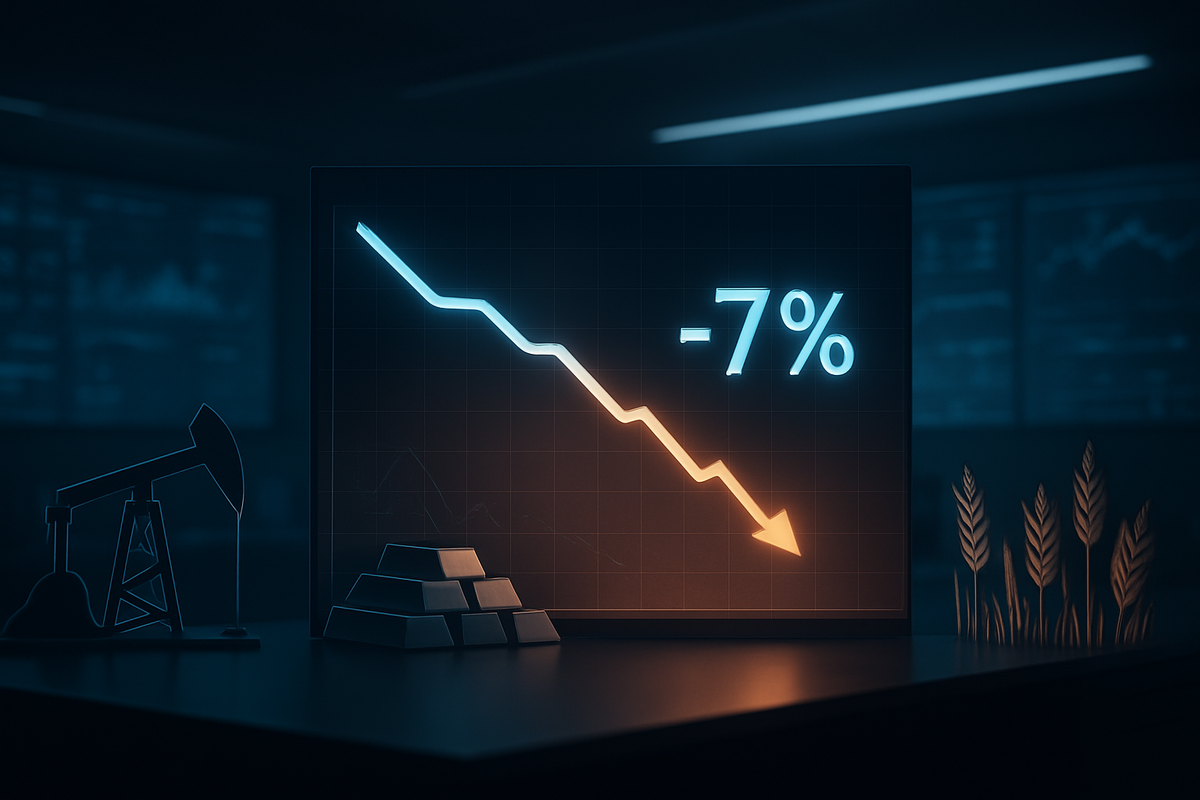
The global economy is entering a period of significant price cooling as the World Bank’s latest Commodity Markets Outlook for 2026 projects a dramatic shift in market dynamics. According to the report released this week, global commodity prices are expected to plummet to their lowest levels in six years, driven by a combination of sluggish international growth and a historic surplus in crude oil production. Analysts at the World Bank forecast a 7% decline in overall commodity prices for both 2025 and 2026, marking a definitive end to the price volatility that characterized the post-pandemic recovery and the early stages of the Russia-Ukraine conflict.
The immediate implications of this forecast suggest a long-awaited "disinflationary tailwind" for central banks struggling to anchor price stability. However, the report also warns that this downturn is not merely a cyclical correction but a reflection of structural shifts in global demand—particularly in China—and a rapidly accelerating transition toward renewable energy. As the non-energy price index fell by a notable 1.2% in February 2026, the data reinforces a broader trend of easing pressure on raw materials, though certain sectors like precious metals continue to defy the gravity of the broader market.
The Perfect Storm: Surplus, Sluggishness, and Uncertainty
The World Bank’s report highlights a "perfect storm" of factors contributing to the projected 14% cumulative price drop over the next two years. At the heart of the decline is a massive projected oil surplus; by late 2026, the global supply of crude is expected to exceed demand by a margin 65% higher than the previous peak seen during the 2020 pandemic lockdowns. This glut is fueled by record-high production from non-OPEC+ nations and a structural decline in fuel consumption as electric vehicle (EV) adoption reaches a critical mass in major markets. The report suggests that Brent crude could average as low as $60 per barrel by the end of 2026, a five-year low that would significantly undercut the fiscal budgets of oil-exporting nations.
Beyond energy, the broader industrial landscape is grappling with "persistent policy uncertainty." Trade tensions and the threat of new tariffs have dampened manufacturing investment, while the continued stagnation of the Chinese property sector has gutted demand for construction staples like iron ore and timber. The non-energy index's 1.2% dip in February 2026 was largely driven by a massive 15.6% correction in beverage prices—such as coffee and cocoa—as supply chains finally normalized after years of weather-related disruptions. While food prices saw a marginal 2.1% uptick in February due to grain volatility, the overall trajectory for the sector remains downward, offering a glimmer of hope for global food security.
Corporate Winners and Losers in a Deflationary World
The projected commodity slump creates a stark divide between industries that rely on raw material inputs and those that extract them. For energy giants like Exxon Mobil (NYSE: XOM) and Chevron (NYSE: CVX), the forecast of $60 oil represents a significant challenge to dividend growth and capital expenditure plans. Similarly, diversified miners such as BHP Group (NYSE: BHP) and Rio Tinto (NYSE: RIO) are facing headwinds as the "China-led" demand for iron ore continues to soften. These companies may need to pivot more aggressively toward "green metals" like copper and lithium to offset the decline in traditional industrial commodities.
Conversely, the drop in energy and raw material costs is a boon for consumer-facing and logistics-heavy firms. Delta Air Lines (NYSE: DAL) and other major carriers are poised to see a significant expansion in profit margins as jet fuel costs—often their largest variable expense—decline in tandem with crude prices. Retail behemoths like Walmart (NYSE: WMT) and Amazon (NASDAQ: AMZN) are also expected to benefit from lower shipping and packaging costs, potentially allowing them to maintain competitive pricing while protecting their bottom lines. However, the agricultural sector presents a mixed bag; while lower crop prices hurt the revenue of firms like Archer-Daniels-Midland (NYSE: ADM), high fertilizer costs (which rose 6.5% in February) continue to squeeze the margins of farmers and input providers like Nutrien (NYSE: NTR).
Structural Shifts and the End of the "Scarcity Narrative"
The World Bank’s 2026 outlook signals a broader shift in the global economic narrative, moving away from the "scarcity mindset" that dominated the early 2020s. This event fits into a larger trend where technological advancements in energy efficiency and the diversification of supply chains are beginning to outpace demand growth. The 2026 forecast echoes historical precedents such as the commodity collapse of 2014-2016, which was also driven by an oil supply shock and a slowdown in emerging markets. However, the current shift is unique because it is occurring alongside a global push for decarbonization, which is permanently altering the demand curve for fossil fuels.
Regulatory and policy implications are also coming into focus. With commodity-driven inflation receding, the Federal Reserve and other central banks may find more room to lower interest rates, which could stimulate investment in technology and infrastructure. Yet, the World Bank cautions that this period of lower prices should not lead to complacency. Governments in commodity-dependent economies are being urged to use this "breathing room" to diversify their revenue streams and invest in human capital, rather than relying on the volatile cycles of the past.
Navigating the Road to 2027
In the short term, markets should prepare for continued volatility as they digest the implications of a $60 oil environment. Energy companies are likely to engage in strategic pivots, increasing their focus on carbon capture and renewable energy storage to hedge against the long-term decline of crude demand. For investors, the "commodity super-cycle" thesis—which argued for a decade of rising prices—appears to be under serious threat, requiring a re-evaluation of portfolio allocations toward growth sectors that benefit from lower input costs.
As we move toward the latter half of 2026, the primary market opportunity may lie in the "green transition" metals that are currently being dragged down by the broader index. While iron ore and oil are slumping, the long-term demand for copper and nickel remains robust due to the global electrification trend. A potential scenario could emerge where we see a "bifurcation" of the commodity market: traditional energy and industrial staples hitting multi-year lows, while strategic metals required for AI data centers and renewable grids begin to decouple and trade at a premium.
Conclusion: A Market in Transition
The World Bank’s 2026 Commodity Markets Outlook provides a sobering but necessary reality check for the global economy. The projected 7% annual price drops through 2026 represent a return to a more stable, albeit slower-growing, economic environment. The key takeaways for stakeholders are clear: the era of high energy-driven inflation is pausing, but it is being replaced by a period of profound structural change. The global oil glut and the cooling of the Chinese economy are no longer temporary "shocks" but permanent fixtures of the mid-2020s landscape.
Moving forward, the market will be defined by how well companies and nations adapt to this low-price environment. For investors, the months ahead will require a watchful eye on Chinese industrial data and OPEC+ production decisions, which remain the primary wildcards in an otherwise bearish outlook. Ultimately, while the "six-year low" in prices offers a respite for consumers and central bankers, it also serves as a final warning for the traditional energy sector to accelerate its evolution before the surplus becomes a permanent state of affairs.
This content is intended for informational purposes only and is not financial advice.