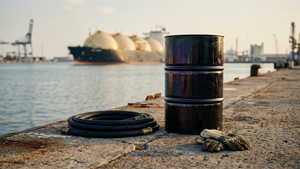
The global energy market is reeling today, March 4, 2026, as the Strait of Hormuz remains effectively closed to commercial traffic following a dramatic escalation in the Middle East conflict. The Islamic Revolutionary Guard Corps (IRGC) of Iran initiated a total blockade of the 21-mile-wide waterway earlier this week, halting the flow of approximately 20 million barrels of oil per day and one-fifth of the world’s liquefied natural gas (LNG). For Asia’s powerhouse economies—China, Japan, South Korea, and India—the shutdown of this "existential energy artery" has triggered immediate emergency measures and sent shockwaves through regional stock exchanges.
As crude prices flirt with the $130-per-barrel mark, economists are raising the alarm over "energy security concerns" that threaten to derail the post-2025 global recovery. The blockade has paralyzed the primary transit route for 84% of Asia’s crude imports, leaving major industrial hubs and refining complexes at the mercy of rapidly depleting strategic reserves. With maritime insurance premiums for the Persian Gulf surging by 50% in the last 72 hours, the immediate implications for global inflation and supply chain stability are becoming increasingly dire.
The Trigger: Operation Epic Fury and the Descent into Conflict
The current crisis traces its immediate origins to February 28, 2026, when a series of coordinated military strikes—dubbed "Operation Epic Fury"—targeted Iranian nuclear facilities and IRGC command centers. In the wake of these strikes, Iran moved swiftly to weaponize its control over the Strait of Hormuz, deploying advanced naval mines and shore-based anti-ship missiles to deter tanker traffic. By March 2, major shipping conglomerates had suspended all transit through the region, effectively cutting off the Gulf’s oil and gas exports to the world.
The timeline of escalation began in late 2025 when the "snapback" of UN sanctions was triggered by European powers following a collapse in nuclear negotiations. This diplomatic failure, combined with the erosion of Iranian proxy influence in the Levant, left the IRGC with few options for regional deterrence other than a direct challenge to global energy flows. The blockade is not merely a military maneuver; it is a calculated economic strike against the Indo-Pacific nations that serve as the primary customers for Middle Eastern energy.
Stakeholders across the globe are now scrambling to respond. The United States and its allies have dispatched additional carrier strike groups to the Arabian Sea, while Asian governments, led by Tokyo and Seoul, have initiated high-level diplomatic outreach to Tehran and Washington. However, the IRGC has maintained its stance that the Strait will remain closed until sanctions are lifted and military operations against Iranian soil cease. The initial market reaction has been one of pure volatility, with energy-heavy indices in Tokyo and Mumbai seeing their steepest one-day drops since the 2020 pandemic.
Corporate Fallout: Winners and Losers in a High-Stakes Crisis
The blockade has created a stark divide in the global energy sector, with Asian refiners facing an existential crisis while non-Middle Eastern producers see their valuations soar. Major Asian industrial giants like Reliance Industries (NSE: RELIANCE) and Sinopec (HKG: 0386) are particularly vulnerable; both rely heavily on crude flows from Saudi Arabia, Iraq, and Kuwait to feed their massive refining complexes. Without immediate alternatives, these companies face the prospect of reduced throughput and skyrocketing input costs, which will inevitably be passed on to consumers.
Similarly, South Korea’s SK Innovation (KRX: 096770) and Japan’s ENEOS Holdings (TYO: 5020) have seen their stock prices battered as investors price in the risk of sustained energy shortages. These firms are the backbone of their respective national economies, and their struggle to secure feedstock is already impacting the manufacturing and transportation sectors. On the natural gas side, Korea Gas Corp (KRX: 036460) is facing a supply-side nightmare as Qatari LNG tankers remain trapped behind the blockade, threatening the stability of the peninsula’s power grid.
Conversely, energy producers with assets outside the Persian Gulf are emerging as the primary beneficiaries of the supply crunch. U.S.-based Cheniere Energy (NYSE: LNG) and Australia’s Woodside Energy (ASX: WDS) have seen a surge in demand as Asian buyers scramble for non-Middle Eastern gas. These "safe-haven" energy stocks are trading at record highs as they represent the only viable alternative for energy-hungry economies in the short term. Global majors with diversified geographic footprints, such as ExxonMobil (NYSE: XOM) and Chevron (NYSE: CVX), are also positioned to weather the storm, benefiting from the global price spike while utilizing production from the Permian Basin and West Africa.
A Systemic Threat: Inflation and the Fragility of Asian Security
The blockade of the Strait of Hormuz is more than a regional skirmish; it is a systemic threat that highlights the profound fragility of the current energy order. For decades, Asia’s economic miracle has been fueled by cheap, reliable energy flowing through this narrow chokepoint. The current disruption fits into a broader historical pattern of "energy as a weapon," echoing the 1973 and 1979 oil shocks that reshaped the global economy. Economists warn that a sustained $10-per-barrel increase in oil prices typically shaves nearly 1% off China’s GDP, and the current spike is far more severe.
The ripple effects are already being felt in the agricultural and manufacturing sectors, where energy costs are a primary driver of production. Rising fuel prices are translating into higher food prices in India and Southeast Asia, raising the specter of "cost-push" inflation that could lead to social unrest. Furthermore, this event is likely to accelerate the decoupling of major Asian powers from Middle Eastern dependence. The shift toward a "China-Russia-Iran" axis versus a "US-India-Japan" alignment is being tested as each nation seeks to secure its own energy future through bilateral deals and alternative transit routes.
Regulatory and policy implications are also mounting. We are likely to see an immediate push for expanded Strategic Petroleum Reserves (SPR) and a massive acceleration in the transition to nuclear and renewable energy. However, these are long-term solutions for a short-term emergency. The historical precedent suggests that once a chokepoint as critical as Hormuz is weaponized, the risk premium on global energy never truly returns to its pre-crisis levels, fundamentally altering the cost of doing business in the Indo-Pacific.
The Road Ahead: De-escalation or Decoupling?
In the short term, the market will remain fixated on the military and diplomatic efforts to reopen the Strait. A "tanker war" scenario, where the IRGC targets shipping even after a partial reopening, could keep insurance rates prohibitively high for months. Investors should expect continued volatility in energy-linked equities and a potential move toward safe-haven assets like gold and the US dollar. The United States and its partners may be forced to provide naval escorts for commercial vessels, a move that would significantly increase the risk of a direct kinetic exchange between major powers.
Long-term, this crisis will necessitate a strategic pivot for Asian energy importers. We may see the acceleration of land-based pipelines, such as the China-Pakistan Economic Corridor (CPEC), to bypass maritime chokepoints. Additionally, the crisis provides a powerful incentive for Japan and South Korea to bring their mothballed nuclear reactors back online at an even faster pace. The challenge for these nations will be surviving the immediate inflationary shock while managing a structural shift in their energy procurement strategies that could take a decade to complete.
Market Outlook: What to Watch in the Coming Months
As we move deeper into March 2026, the key takeaway is that the "Hormuz Risk" is no longer a theoretical exercise but a lived reality. The global economy is at a crossroads, and the stability of the Asian market hinges on a swift resolution to the blockade. Investors should closely monitor the replenishment rates of national SPRs and the movements of major tanker fleets. Any signs of de-escalation in Tehran will likely cause a sharp, though perhaps temporary, correction in crude prices.
Moving forward, the market will favor companies that demonstrate energy resilience. Watch for the performance of domestic energy producers and infrastructure firms involved in the expansion of alternative energy sources. The lasting impact of this March 2026 conflict will be a permanent re-evaluation of energy security in Asia, where the cost of being "connected" to the Middle East has suddenly become too high to ignore. For the public companies involved, the coming months will be a test of operational agility and financial fortitude in the face of a historic geopolitical storm.
This content is intended for informational purposes only and is not financial advice.