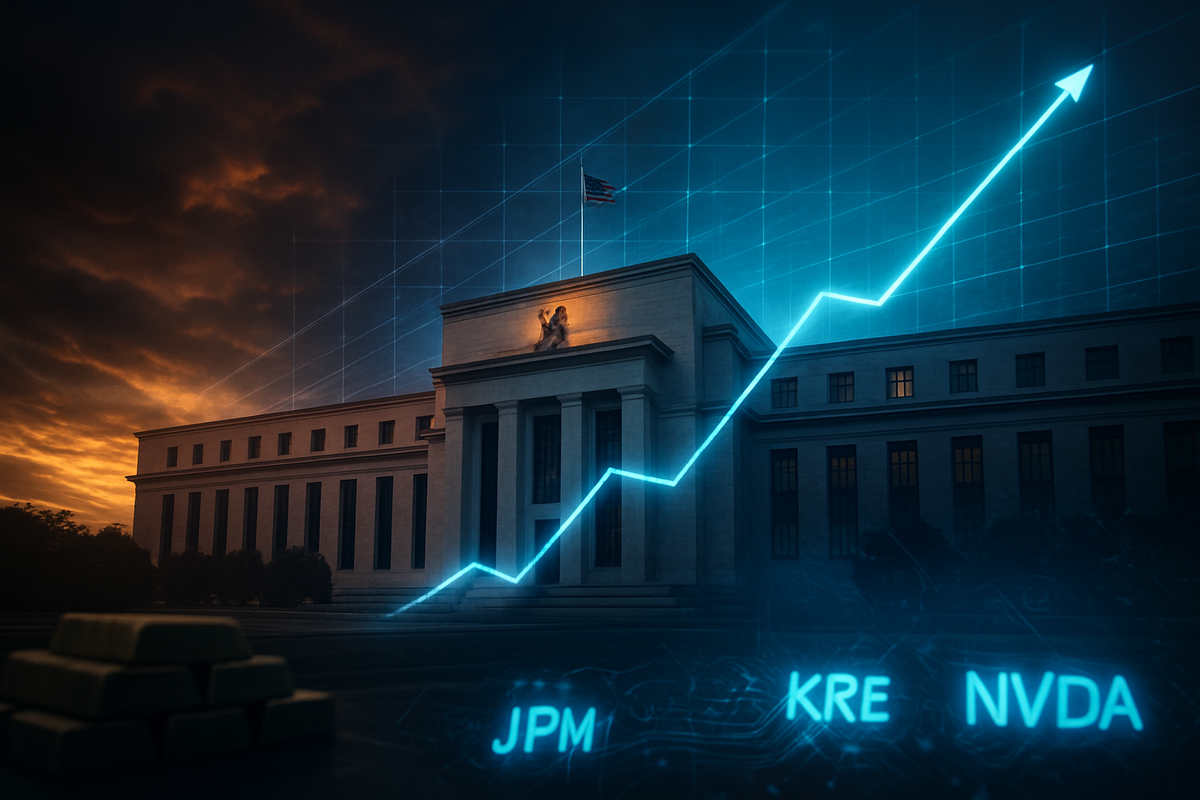
With the era of Jerome Powell rapidly approaching its sunset, the financial world is grappling with a potential "regime change" that could fundamentally alter the relationship between the Federal Reserve, the economy, and the stock market. The recent nomination of Kevin Warsh to succeed Powell as Chair of the Board of Governors of the Federal Reserve has ignited a wave of speculation and volatility across global asset classes. As of February 9, 2026, investors are no longer asking if the Fed will change its approach, but how deep the "Warsh Shock" will cut into the existing market order.
The immediate implications of a Warsh-led Fed have already sent ripples through the fixed-income and commodities markets. Warsh, a former Fed Governor known for his critical views on the expansion of the central bank's balance sheet, represents a departure from the consensus-driven, data-dependent style that defined the Powell years. His nomination signals a pivot toward "monetary dominance"—a philosophy that prioritizes institutional restraint and a leaner central bank footprint—while simultaneously embracing an "AI-productivity" thesis that could justify keeping short-term rates lower than his "hawk" label might suggest.
The Path to Nomination: Institutional Friction and the January Surprise
The road to this transition has been marked by significant institutional tension. President Donald Trump officially announced his intention to nominate Kevin Warsh on January 30, 2026, just months before Jerome Powell’s term as Chair is set to expire on May 15, 2026. The announcement came amid a period of public friction between the White House and the current Fed leadership, highlighted by a Department of Justice investigation into the Fed's internal operations—a move Powell has publicly characterized as an assault on central bank independence.
Kevin Warsh, who served on the Fed Board during the 2008 financial crisis, has spent the last decade as a vocal critic of the central bank’s "mission creep." His timeline of return to the Fed is framed as a rescue mission for the dollar's credibility. Market reactions to his nomination were swift: the yield curve "steepened" dramatically as investors began to price in his plan to aggressively shrink the Fed’s $6.5 trillion balance sheet. While Powell focused on managing the "consensus" of the Federal Open Market Committee (FOMC), Warsh is expected to lead with "conviction-heavy" authority, potentially making the Fed less predictable but more decisive.
Initial industry reactions have been polarized. While some institutional economists worry that a rapid reduction in the Fed's bond holdings could destabilize the Treasury market, many fiscal conservatives and banking executives have lauded the move as a necessary step toward restoring "sound money" principles. The "regime change" narrative isn't just about interest rates; it’s about a wholesale re-evaluation of the Fed's role as a liquidity provider of last resort.
Sector Divergence: Winners of Productivity and Losers of the 'Debasement Trade'
The prospect of a Warsh-led Fed has created a clear divide between "winners" and "losers" in the equity markets. The most significant beneficiaries appear to be in the financial sector. Large-cap leaders like JPMorgan Chase (NYSE: JPM) and Wells Fargo (NYSE: WFC) are poised to benefit from a "steepening" yield curve, which allows them to borrow at lower short-term rates while lending at higher long-term yields. Regional banks, represented by the SPDR S&P Regional Banking ETF (NYSE Arca: KRE), have also surged on expectations that a Warsh Fed will champion deregulation, potentially easing the path for institutions like Huntington Bancshares (NASDAQ: HBAN) and Zions Bancorp (NASDAQ: ZION).
In the technology sector, the narrative is more nuanced. Warsh has argued that the Artificial Intelligence revolution—led by giants like NVIDIA (NASDAQ: NVDA) and Microsoft (NASDAQ: MSFT)—is driving a productivity boom similar to the 1990s. This belief, often called "Productive Dovishness," suggests he may be willing to cut short-term rates to support capital-intensive growth without fearing inflation. Consequently, hyperscalers like Alphabet (NASDAQ: GOOGL), Meta Platforms (NASDAQ: META), and Amazon (NASDAQ: AMZN) have seen resilient support, even as the broader market (NYSE Arca: SPY) remains volatile.
Conversely, the "losers" have been found in the precious metals and bond-sensitive sectors. The "debasement trade"—the bet that the Fed would allow inflation to run hot to inflate away national debt—hit a wall with the Warsh nomination. Gold mining giants such as Newmont Corporation (NYSE: NEM) and Barrick Gold (NYSE: GOLD) saw double-digit declines as the market priced in a more disciplined US Dollar. Additionally, homebuilders like Lennar (NYSE: LEN) and D.R. Horton (NYSE: DHI) are facing headwinds; Warsh’s plan to sell the Fed’s $2 trillion in Mortgage-Backed Securities (MBS) could keep mortgage rates elevated, even if the Fed funds rate drops.
A Wider Significance: Ending the Era of 'Data Dependency'
The nomination of Kevin Warsh fits into a broader global trend of reassessing the limits of central bank power. For nearly two decades, the Fed has operated under a regime of "forward guidance" and Quantitative Easing (QE). Warsh’s arrival could signal the end of this era. By advocating for "monetary dominance," he is essentially telling the fiscal authorities that the Fed will no longer serve as a backstop for government spending. This is a historic pivot that echoes the policy shifts of Paul Volcker in the early 1980s, though with a modern twist tailored to the digital age.
The ripple effects of this change will be felt by international partners and competitors alike. A stronger, more disciplined US Dollar could pressure emerging markets that have borrowed heavily in greenbacks. Furthermore, the focus on AI as a productivity driver marks a departure from traditional Phillips Curve economics, which typically posits a trade-off between unemployment and inflation. Warsh is betting that technology can break this cycle, a high-stakes experiment that could redefine central banking for the next quarter-century.
Regulatory implications are also front and center. Warsh has been an outspoken opponent of the "Basel III Endgame" capital requirements, suggesting that his tenure will be marked by a significant rollback of the post-2008 regulatory framework. This has the potential to unlock trillions in bank capital, providing a massive—though potentially risky—liquidity injection into the private sector at a time when the Fed is withdrawing its own liquidity via balance sheet reduction.
What Comes Next: The March Hearings and the May Transition
The immediate focus for the markets is the Senate Banking Committee confirmation hearings scheduled to begin in March 2026. These hearings are expected to be contentious, as lawmakers from both parties grill Warsh on his plans for the balance sheet and his commitment to the Fed's dual mandate of maximum employment and price stability. A key short-term challenge for Warsh will be navigating the "Warsh Shock" without causing a liquidity crisis in the Treasury market, where the Fed’s absence as a primary buyer is already being felt.
Long-term, the market will need to adapt to a Fed that is less concerned with "smoothing over" every market hiccup. If Warsh follows through on his intent to reduce the Fed’s footprint, the era of the "Fed Put"—the idea that the central bank will always step in to save the market—may finally be over. Investors will have to recalibrate their risk models to account for higher long-term yields and a more volatile bond market. Strategic pivots toward productivity-enhancing companies and away from inflation hedges will likely become the dominant investment theme of 2026.
Potential scenarios range from a "Goldilocks" outcome—where AI-driven productivity allows for growth and low short-term rates—to a more disruptive "Reflation" scenario if the aggressive sale of MBS and Treasuries causes a spike in borrowing costs that the private sector cannot absorb.
Conclusion: A Turning Point for the Global Economy
The nomination of Kevin Warsh represents more than just a change in personnel; it is a fundamental challenge to the status quo of modern central banking. By prioritizing institutional reform and the productivity-enhancing potential of new technologies, Warsh is attempting to steer the Fed toward a more sustainable and less intrusive future. For investors, the takeaway is clear: the era of easy money and predictable forward guidance is fading, replaced by a "regime change" that favors banking strength and technological innovation while punishing inflation-hedged assets.
As we look toward the May 15 transition, the market is likely to remain in a state of flux. The transition from Powell’s consensus to Warsh’s conviction will be a testing period for both the Fed and the global financial system. Investors should keep a close eye on the 10-year Treasury yield and the performance of regional banking stocks as early indicators of how the market is digesting this new reality. The "Warsh Shock" may be jarring, but it also opens the door to a new market cycle where productivity, not just liquidity, becomes the primary driver of value.
This content is intended for informational purposes only and is not financial advice.