NEW YORK — As the calendar turns to late February 2026, the American consumer is proving to be more resilient than many economists predicted just six months ago. The catalyst for this unexpected strength is the "One Big Beautiful Bill" Act (OBBBA), a landmark piece of fiscal legislation that has effectively turned the current tax filing season into a massive, decentralized economic stimulus event. With billions of dollars in retroactive tax refunds hitting bank accounts this week, the U.S. economy is experiencing a liquidity injection that is reshaping the retail landscape and providing a crucial buffer against the lingering effects of high interest rates.
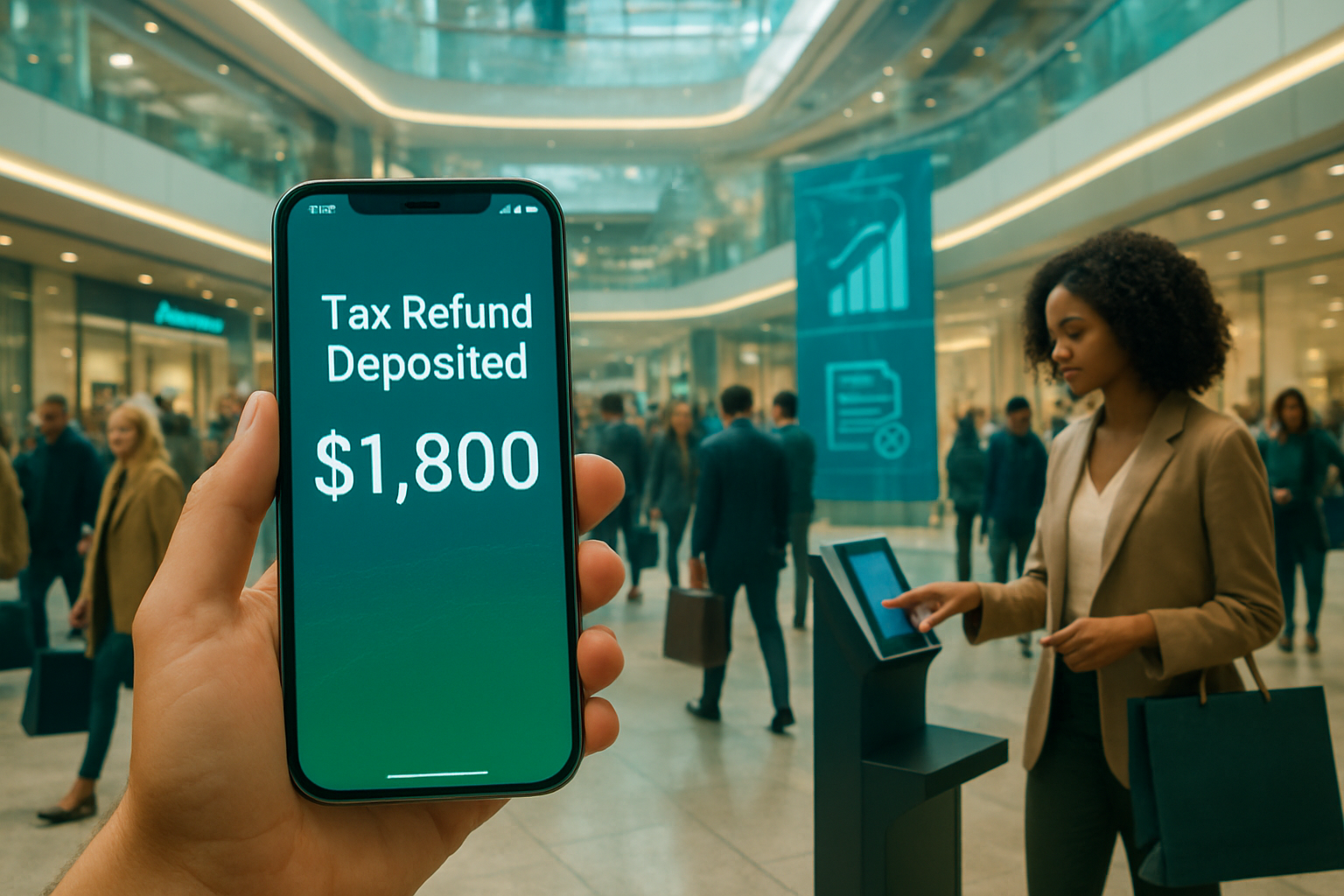
The immediate implications of the OBBBA are visible in real-time high-frequency data. Foot traffic at major retail hubs is up 8% year-over-year, and digital payment processors are reporting a significant spike in "lump-sum" discretionary purchases. While the Federal Reserve continues its cautious path of interest rate normalization, the "OBBBA effect" has introduced a wave of household capital that is currently offsetting the cooling effects of tightened monetary policy. For many American families, the 2026 tax refund isn't just a return of overpaid taxes—it is the largest single-day increase in net worth they have seen in years.
The Road to the 'Beautiful Bill': A Retroactive Revolution
The One Big Beautiful Bill Act (Public Law 119-21) was signed into law on July 4, 2025, following a razor-thin 51-50 vote in the Senate. While the bill was celebrated as a victory for supply-side incentives during its summer signing, its true economic weight is only being felt now, in February 2026. The primary engine of this momentum is the bill’s retroactive nature; several of its cornerstone provisions—including the "No Tax on Tips" and "No Tax on Overtime" exemptions—were applied back to January 1, 2025. Because the IRS did not adjust withholding tables mid-year in 2025, millions of service and manufacturing workers overpaid their federal taxes for nearly twelve months.
The 2026 filing season, which officially opened on January 26, 2026, serves as the "payday" for these accumulated overpayments. Early data from the Treasury Department suggests that the average refund is approximately $1,000 higher than last year, representing a projected $150 billion in total additional liquidity entering the market through April. This surge comes after a chaotic late-2025 period marked by a 43-day federal government shutdown, which created a "data fog" that left many analysts blind to the true strength of the consumer until the January retail numbers began to trickle in.
Key stakeholders, including the U.S. Treasury and various industry heads, have noted that the OBBBA also significantly altered the State and Local Tax (SALT) landscape. By raising the SALT deduction cap from $10,000 to $40,000, the bill has unlocked billions in disposable income for middle- and upper-income households in high-tax states like New York, California, and Illinois. This specific provision is driving a "luxury lift" in the market, even as lower-income brackets grapple with the bill's controversial cuts to the social safety net, including a $187 billion reduction in SNAP benefits.
Retail Winners and Losers in the OBBBA Era
The sudden influx of cash has created a bifurcated "K-shaped" reaction across the public markets. Major big-box retailers are the immediate beneficiaries of the refund surge. Target Corp. (NYSE: TGT) and Costco Wholesale Corp. (NASDAQ: COST) have both reported better-than-expected preliminary February sales, as families use their outsized refunds to stock up on household essentials and upgrade home electronics. Amazon.com, Inc. (NASDAQ: AMZN) has also seen a spike in high-ticket "wish list" items being cleared as refund deposits land in consumer accounts.
On the other end of the spectrum, the "off-price" and "value" apparel sectors are seeing a surprising renaissance. The TJX Companies, Inc. (NYSE: TJX) and The Gap, Inc. (NYSE: GPS)—specifically through its Old Navy brand—are capturing the "No Tax on Overtime" demographic. These are workers who are now flush with retroactive savings and are choosing to refresh wardrobes that had been neglected during the high-inflation environment of 2024. Conversely, companies heavily reliant on the SNAP-funded economy, such as Dollar General Corp. (NYSE: DG), are facing headwinds. The OBBBA’s significant cuts to food assistance are creating a drag on low-income grocery spending that the tax refunds may only temporarily mask.
Financial service providers are also in the spotlight. Intuit Inc. (NASDAQ: INTU), the maker of TurboTax, has seen record engagement as taxpayers rush to file early to unlock their OBBBA windfalls. Meanwhile, traditional consumer lenders like Capital One Financial Corp. (NYSE: COF) are watching closely to see if consumers use these refunds to pay down credit card debt—which hit record highs in late 2025—or if they opt for new discretionary spending, which would signal a shift in consumer confidence.
Policy Shifts and the 'Stimulus' Comparison
The OBBBA represents a fundamental shift in how the U.S. government approaches economic intervention. Unlike the direct stimulus checks of the 2020-2021 era, which were distributed regardless of tax liability, the OBBBA uses the tax code to reward labor participation. By exempting overtime and tips, the policy is designed to incentivize work, though critics argue it disproportionately ignores the unemployed and the elderly who do not benefit from these specific exemptions.
Historically, this event draws comparisons to the 2008 Bush tax rebates, but with a significant twist: the scale of the retroactive SALT and overtime changes is unprecedented. Economists are debating whether this "Refund Stimulus" will reignite inflation, which had finally cooled to 2.4% in early 2026. If the spending surge is too aggressive, the Federal Reserve may be forced to pause its current cycle of rate cuts, potentially leading to a "higher for longer" environment that could dampen the housing market by late 2026.
Furthermore, the OBBBA’s ripple effects are being felt by international competitors. As the U.S. consumer outspends their European and Chinese counterparts this quarter, the U.S. dollar has remained remarkably strong. This has made imports cheaper for American consumers—further benefiting companies like Walmart Inc. (NYSE: WMT)—but it has also placed immense pressure on American exporters who find their goods more expensive on the global stage.
The Road Ahead: Fiscal Cliffs and Strategic Pivots
As we look toward the remainder of 2026, the primary question is whether this spending surge is a "one-and-done" event or a sustainable shift. The retroactive nature of the 2025 tax cuts means that the 2027 filing season will not feature the same "double-payment" of refunds. Companies must now decide whether to ramp up inventory for a continued boom or prepare for a "fiscal cliff" in early 2027 when the retroactive payouts vanish.
For retailers, the strategic pivot involves moving away from the heavy discounting of 2024 and toward a "premium-value" proposition. With more cash in their pockets, consumers are showing a willingness to trade up to brand-name goods, provided they perceive a quality increase. Investors should also keep a close eye on the labor market; if the "No Tax on Overtime" provision successfully keeps workers on the job longer, it could help ease the labor shortages that have plagued the service industry for years, potentially boosting the margins of hospitality giants and restaurant groups.
There is also the looming possibility of regulatory adjustments. If the OBBBA-fueled spending spree leads to a significant widening of the deficit—which some non-partisan groups estimate will hit $2 trillion by year-end—talk of a "correction bill" in late 2026 could create market volatility. Strategic adaptations by financial institutions will be required as they navigate a landscape where consumer liquidity is high, but federal debt levels are reaching critical thresholds.
Wrap-Up: Navigating the OBBBA Economy
The One Big Beautiful Bill Act has fundamentally altered the economic rhythm of 2026. By turning the IRS into a temporary engine of stimulus, the act has provided a lifeline to the retail sector and a boost to the broader GDP. However, the "K-shaped" nature of the recovery—where tax-paying workers benefit at the expense of those reliant on a shrinking social safety net—suggests that the market's gains may be unevenly distributed.
Moving forward, the market's health will depend on how effectively the Federal Reserve manages the liquidity surge. For investors, the coming months will require a discerning eye toward sectors that can sustain growth once the initial refund wave recedes. The OBBBA has successfully "primed the pump," but the sustainability of this growth will depend on whether the incentive-based tax cuts lead to genuine, long-term productivity gains.
In the short term, the "February Surprise" of 2026 has confirmed one thing: never bet against the American consumer when they have a fresh tax refund in hand. Watch for Q1 earnings reports from major retailers in May for the first concrete evidence of how much of this "Beautiful Bill" made its way onto corporate balance sheets.
This content is intended for informational purposes only and is not financial advice.