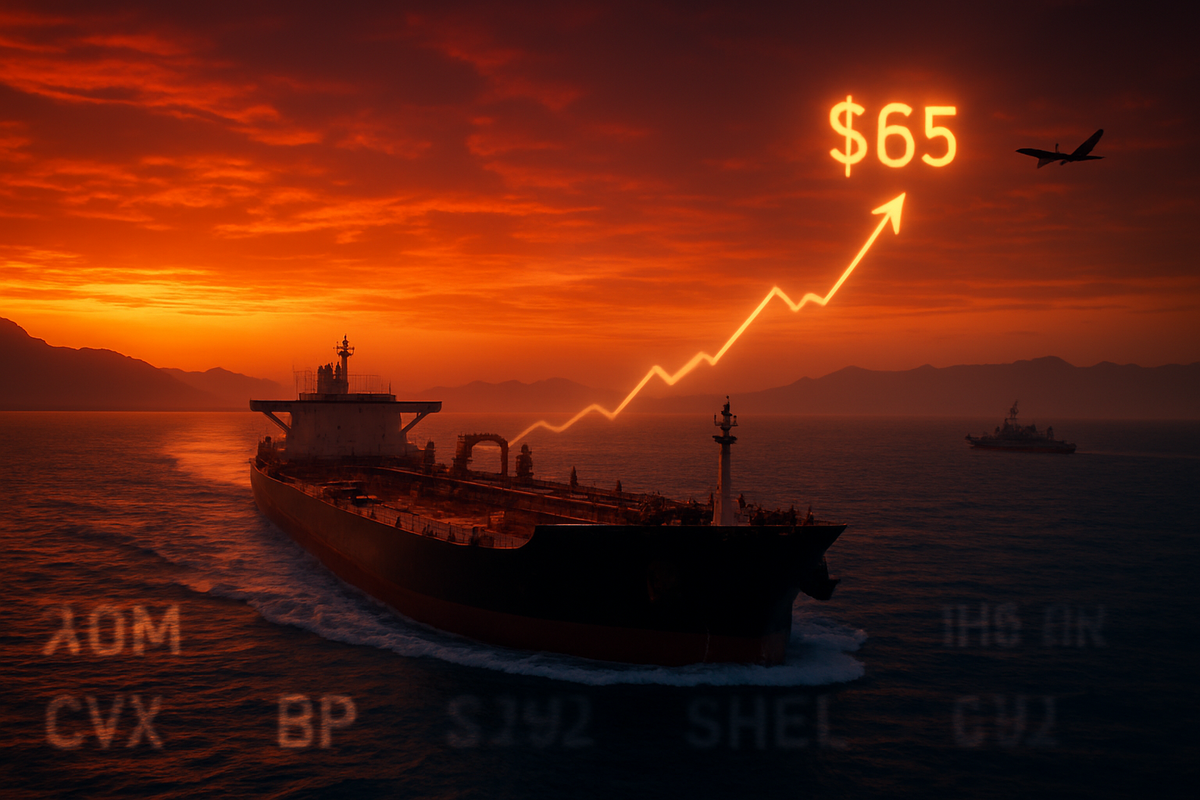
Energy markets were jolted into a high-volatility state this month as West Texas Intermediate (WTI) crude surged to the $65.00 mark, driven by the abrupt cancellation of high-stakes nuclear negotiations between Washington and Tehran. The talks, which were scheduled to take place in Istanbul, Turkey, fell apart after a fundamental disagreement over the inclusion of regional observers and the scope of the agenda, effectively re-injecting a massive geopolitical risk premium into global oil prices.
The immediate market reaction underscores the fragile state of global energy security as of February 16, 2026. While underlying fundamentals suggest a looming supply surplus, the threat of a military escalation in the Persian Gulf has forced traders to pivot from demand-side concerns to the very real possibility of a physical supply disruption. WTI, which had been languishing near $61.50 on hopes of a diplomatic breakthrough, spiked to $65.00 within hours of the cancellation news, reflecting a market that is once again pricing in the "war premium."
The Istanbul Impasse: A Timeline of Diplomatic Friction
The scheduled negotiations in Istanbul, slated for early February, were intended to be the most significant diplomatic engagement between the U.S. and Iran in years. However, the talks collapsed before they could begin. The U.S. administration maintained a "this or nothing" posture, insisting that regional stakeholders—including Saudi Arabia, the UAE, and Qatar—be present as observers and that the agenda expand to include ballistic missile programs and regional proxy activities. Tehran countered with a demand for a strictly bilateral, nuclear-only format, preferably hosted in Oman.
This diplomatic vacuum was immediately filled by military posturing. On February 3, 2026, reports surfaced of a U.S. F-35C shooting down an Iranian drone that had approached the USS Abraham Lincoln carrier group. The U.S. Department of Transportation subsequently issued an advisory for American-flagged vessels to maintain maximum distance from Iranian territorial waters. These events, combined with the deployment of a second aircraft carrier group to the region, have convinced market participants that the window for a "soft landing" in the Middle East is rapidly closing.
The volatility has been further exacerbated by conflicting reports. While the Istanbul venue was scrapped, rumors of a "shadow" channel in Muscat, Oman, briefly calmed prices last week before a new round of talks was tentatively scheduled for February 17 in Geneva, Switzerland. This "on-again, off-again" diplomacy has created a whip-saw effect in the futures market, with daily swings of 3-5% becoming the new normal for energy traders.
Winners and Losers in a High-Risk Environment
The sudden price appreciation and heightened tension have created a clear divide in the equities market. U.S. energy giants have been the primary beneficiaries of the "flight to safety" within the energy sector. ExxonMobil (NYSE: XOM) has seen its stock price climb significantly, boasting a year-to-date return of 29.3% as of mid-February. The company has utilized the windfall from higher crude realizations to reaffirm its $20 billion share buyback program, signaling confidence to shareholders despite the geopolitical chaos.
Similarly, Chevron (NYSE: CVX) has outperformed the broader market with a 21.9% gain this year. Investors are rewarding Chevron’s diversified portfolio, particularly its expansion in the Leviathan gas field, which is viewed as a critical alternative energy source for the region should Persian Gulf supplies be throttled. Other domestic producers like ConocoPhillips (NYSE: COP) and Occidental Petroleum (NYSE: OXY) have also seen double-digit gains, as their focus on U.S.-based production shields them from some of the direct operational risks associated with Middle Eastern infrastructure.
Conversely, the losers in this scenario include energy service providers and international majors with heavy exposure to the Gulf’s maritime logistics. While companies like SLB (NYSE: SLB) and Baker Hughes (NASDAQ: BKR) are seeing increased interest for exploration in "safe" jurisdictions like Guyana, they face significant logistical hurdles and rising insurance costs for their existing operations near the Strait of Hormuz. Furthermore, the broader airline and transportation sectors are feeling the pinch of rising fuel costs, which threaten to dampen the global economic recovery projected for the latter half of 2026.
The Shadow of the Strait: Broader Industry Significance
The current crisis highlights the enduring strategic importance of the Strait of Hormuz, a global chokepoint that handles roughly 20% to 21% of the world’s daily oil supply—approximately 20 million barrels per day. The "geopolitical risk premium" being priced into WTI is essentially a hedge against a total blockade of this waterway. Internal market research suggests that a full closure of the Strait could drive crude prices toward the $100–$120 per barrel range, a level not seen in years and one that could trigger a global recession.
This event also exposes a fascinating disconnect between geopolitical risk and market fundamentals. On paper, the global oil market is headed for a supply surplus of 3.7 million barrels per day in 2026. Under normal circumstances, this would suppress prices toward the $50 or $55 level. However, the "maximum pressure" campaign and the threat of Iranian retaliation have created an artificial floor for prices. The market is currently caught in a tug-of-war between a physical glut of oil and a psychological scarcity of security.
Historically, this situation echoes the "Tanker War" of the 1980s or the heightened tensions of 2019, but with a modern twist. The integration of unmanned aerial systems (drones) and cyber-warfare into the maritime theater has made the threat to energy infrastructure more asymmetrical and harder to predict. For policymakers, the Istanbul failure signifies a return to a more confrontational era of energy diplomacy, where energy is used openly as a tool of statecraft and coercion.
The Road to Geneva: What Comes Next?
The immediate focus for the market is now the scheduled February 17 talks in Geneva. If these negotiations show even a hint of progress, WTI could quickly retreat toward the $60 mark as the "war premium" evaporates. However, should the Geneva talks mirror the Istanbul failure, analysts expect WTI to test the $70 resistance level. The primary strategic pivot for many trading desks has been to move toward long-dated call options as a hedge against a "black swan" event in the Persian Gulf.
In the long term, this volatility is likely to accelerate the trend of "energy decoupling." Major importers in Asia and Europe are already looking to further diversify their supply chains away from the Middle East. This could create long-term market opportunities for producers in the Atlantic Basin and the Americas. For investors, the challenge will be navigating a market where the headlines in the morning can completely invalidate the fundamental data of the afternoon.
Conclusion and Investor Takeaways
The rebound of WTI to $65 following the cancellation of the Turkey talks is a stark reminder that oil remains the world’s most political commodity. The breakdown in diplomacy has replaced optimism with a renewed focus on the Strait of Hormuz and the potential for direct military confrontation. While U.S. oil majors like ExxonMobil and Chevron are currently riding a wave of higher prices and safe-haven status, the underlying volatility poses a risk to the broader global economy.
Moving forward, investors should watch for the outcome of the Geneva talks and any further maritime incidents in the Persian Gulf. The key takeaway is that the "war premium" is back, and it is currently the most powerful force in the energy market, overriding even the significant supply surpluses that would otherwise be driving prices down. In the coming months, the ability of diplomatic channels to stay open—or fail—will be the single most important factor determining the trajectory of energy stocks and the price at the pump.
This content is intended for informational purposes only and is not financial advice.