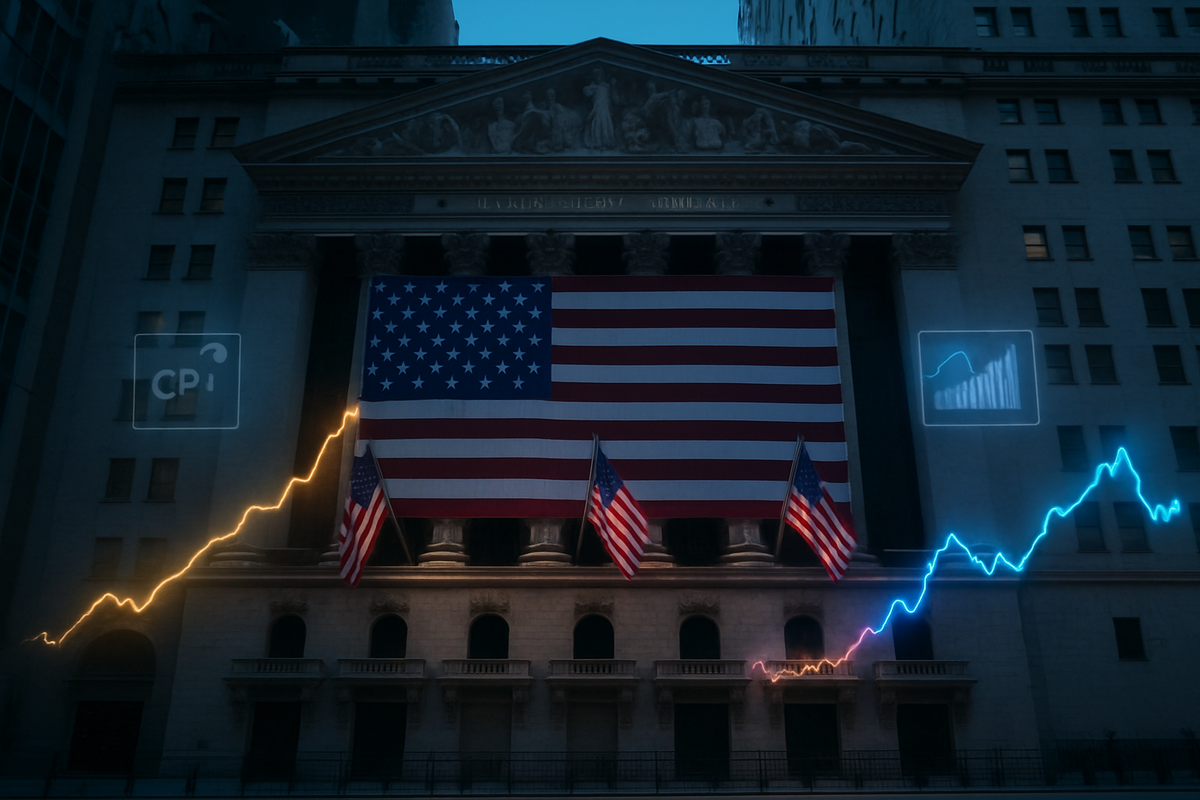
NEW YORK — The floor of the New York Stock Exchange (NYSE: ICE) sits silent today, February 16, 2026, as the U.S. financial markets observe the Presidents Day holiday. While the closure provides a momentary reprieve for traders, the atmosphere remains charged with anticipation following a highly divergent week of trading. Investors are currently weighing the strength of traditional blue-chip stocks against a cooling enthusiasm for the technology sector that has dominated market narratives for years.
The three-day weekend comes at a critical juncture for the broader market. As of the closing bell last Friday, the Dow Jones Industrial Average (NYSE: DIA) notched a fresh all-time record high, buoyed by strong performances in the industrial and financial sectors. Conversely, the tech-heavy Nasdaq Composite (NASDAQ: QQQ) struggled to find its footing, ending the week in negative territory as concerns over artificial intelligence (AI) monetization and interest rate uncertainty weighed on the "Magnificent Seven" heavyweights.
A Tale of Two Markets: Records and Retrenchment
The week leading up to this Presidents Day break was defined by a stark contrast between old-guard stability and new-age volatility. The Dow Jones Industrial Average reached unprecedented heights, fueled by a rotation into value-oriented stocks. Investors, weary of the sky-high valuations in the semiconductor and software sectors, shifted capital toward stalwarts in the energy and healthcare sectors. This movement was catalyzed by a series of better-than-expected earnings reports from traditional manufacturing and financial services companies, which suggested that the "soft landing" for the U.S. economy might finally be solidifying into a sustained period of steady, if unspectacular, growth.
However, the mood was markedly different on the Nasdaq. After a multi-year rally led by giants like Nvidia Corporation (NASDAQ: NVDA) and Microsoft Corporation (NASDAQ: MSFT), the tech sector faced a "reality check" week. Analysts pointed to a saturation of AI-driven sentiment, noting that while the technology's long-term potential remains undisputed, the immediate quarterly earnings were no longer enough to justify further valuation expansion. This divergence created a choppy environment for the S&P 500 (NYSE: SPY), which spent the week oscillating between record territory and technical support levels.
The market’s current state is the culmination of a month-long tug-of-war between inflation data and corporate resilience. Earlier in February, Consumer Price Index (CPI) figures showed that while core inflation is cooling, services inflation remains stubbornly "sticky." This has forced market participants to recalibrate their expectations for Federal Reserve policy, moving from hopes of aggressive rate cuts to a more cautious "wait and see" approach. The holiday closure today offers a period of reflection before a data-heavy week that many believe will dictate the market’s direction for the remainder of the first quarter.
Winners and Losers in the Post-Holiday Landscape
As the market prepares to reopen on Tuesday, several key players are positioned at the center of the storm. The primary "winners" of the current rotation appear to be the retail and consumer-discretionary giants. Walmart Inc. (NYSE: WMT) and Home Depot Inc. (NYSE: HD) are both scheduled to report earnings later this week. With the Dow hitting records, these stocks have seen renewed interest as "defensive growth" plays. Investors are betting that a resilient labor market will continue to support robust consumer spending, potentially pushing these retail leaders to their own multi-year highs.
On the losing side of the recent volatility are the high-multiple software and cybersecurity firms. Companies like Palo Alto Networks (NASDAQ: PANW), which is slated to report results shortly after the holiday, are facing intense scrutiny. Any guidance that hints at a slowdown in enterprise spending could trigger a further retreat in the tech sector. Similarly, the semiconductor industry, led by Nvidia, has become a victim of its own success; with expectations set at near-impossible levels, even "good" news has recently been met with sell-offs as traders opt to lock in profits during the Dow's ascent.
The financial sector, represented by firms like JPMorgan Chase & Co. (NYSE: JPM) and Goldman Sachs Group Inc. (NYSE: GS), has emerged as a major beneficiary of the current interest rate environment. As the Fed maintains a higher-for-longer stance than previously anticipated, net interest margins remain favorable. These institutions have provided the backbone for the Dow’s record run, serving as a haven for investors looking to escape the turbulence of the Silicon Valley-centric indices.
Macro Significance and the "Sticky" Inflation Narrative
The significance of this holiday pause extends beyond simple market mechanics. It marks a transition point in the 2026 economic narrative. For the past two years, the market has been obsessed with the "pivot"—the moment the Federal Reserve would begin a sustained cycle of rate cuts. However, the data leading into this Presidents Day suggests that the economy may have entered a "neutral" phase, where rates are neither stimulative nor restrictive enough to cause a recession. This has shifted the focus from the Fed's next move to the underlying health of corporate balance sheets.
Historically, mid-February has been a period of moderate performance for stocks, but 2026 is proving to be an outlier due to the sheer volume of impending macro data. The upcoming release of the Federal Open Market Committee (FOMC) meeting minutes on Wednesday and the Core PCE Price Index—the Fed’s preferred inflation metric—on Friday are being viewed as "make or break" events. If the PCE data shows a re-acceleration of prices, the Dow’s record highs could be short-lived as the "higher for longer" narrative gains even more traction, potentially pushing Treasury yields back toward 2024 peaks.
Furthermore, the "AI hangover" is a trend that competitors and partners alike are watching closely. The ripple effects of a tech stumble could impact everyone from cloud providers like Amazon.com Inc. (NASDAQ: AMZN) to the power companies fueling massive data centers. If the tech sector continues to underperform while the Dow climbs, it will represent one of the most significant market decouplings in recent history, challenging the long-held belief that "as goes tech, so goes the market."
The Path Forward: Tuesday Reopening and Beyond
When the opening bell rings on Tuesday morning, the immediate focus will be on the Empire State Manufacturing Index and initial reactions to the retail earnings reports. In the short term, the market is likely to remain in a state of high alert. If the Dow can maintain its record levels despite the tech drag, it will signal a fundamental change in market leadership that could persist for several quarters. This strategic pivot requires investors to rethink their portfolios, moving away from hyper-growth and toward companies with strong cash flows and dividend histories.
Long-term possibilities include a scenario where the "Mag Seven" tech stocks consolidate for several months, allowing the rest of the market to catch up—a "catch-up trade" that many analysts have been predicting since 2024. However, the risk remains that if tech stocks fall too far, they will eventually drag the blue-chip indices down with them, as passive investment vehicles are heavily weighted toward those high-market-cap companies. The coming weeks will determine if this is a healthy consolidation or the beginning of a deeper correction.
Market opportunities are emerging in the mid-cap space, which has historically outperformed following the conclusion of a major large-cap tech rally. Investors should watch for increased volume in ETFs that track the Russell 2000 (NYSE: IWM) as a sign that the rally is truly broadening. Conversely, the challenge remains for the Federal Reserve to manage this "neutral" economy without accidentally triggering a late-cycle inflationary spike or a sudden contraction in the labor market.
Conclusion: A Market at a Crossroads
This Presidents Day holiday serves as a vital cooling-off period for a market that has become increasingly fragmented. The juxtaposition of a record-breaking Dow Jones Industrial Average against a stumbling tech sector highlights a market that is searching for its next major catalyst. While the "old economy" stocks are having their moment in the sun, the broader health of the financial system remains tied to how the tech giants navigate a maturing AI landscape and a complex interest rate environment.
Moving forward, the primary takeaways are clear: diversification has returned as a critical strategy, and macro data is once again the primary driver of daily price action. Investors should brace for a volatile second half of February as the Core PCE and GDP data provide the final pieces of the Q1 economic puzzle. The "soft landing" remains the base case, but the margin for error has narrowed significantly.
In the coming months, watch for the sustainability of the Dow’s record run and whether the Nasdaq can find a bottom. The interaction between consumer spending reports from the likes of Walmart and the inflation data from the Fed will be the ultimate arbiter of whether 2026 becomes a year of steady growth or a year of painful recalibration. For now, Wall Street takes a breath, but the quiet will not last for long.
This content is intended for informational purposes only and is not financial advice.