The financial world reached a staggering new frontier this month as the S&P 500 surged past the 7,000-point milestone for the first time in history. On February 16, 2026, the market remains in a state of high-octane anticipation, buoyed by a "perfect storm" of cooling inflation, a pivot in Federal Reserve policy, and an unprecedented capital expenditure cycle centered on artificial intelligence. This breakthrough is not merely a psychological victory for bulls; it represents a fundamental recalibration of corporate earning power in a post-AI-hype era.
As the index hovers above this historic level, all eyes have turned toward the ongoing fourth-quarter earnings season. Investors are looking for concrete evidence that the massive investments made by "hyperscalers" are finally translating into bottom-line productivity gains across the broader economy. With the 7,000 mark now in the rearview mirror, the market sentiment has shifted from cautious optimism to a robust, data-driven conviction, though questions remain about whether valuations have outpaced the reality of the coming fiscal year.
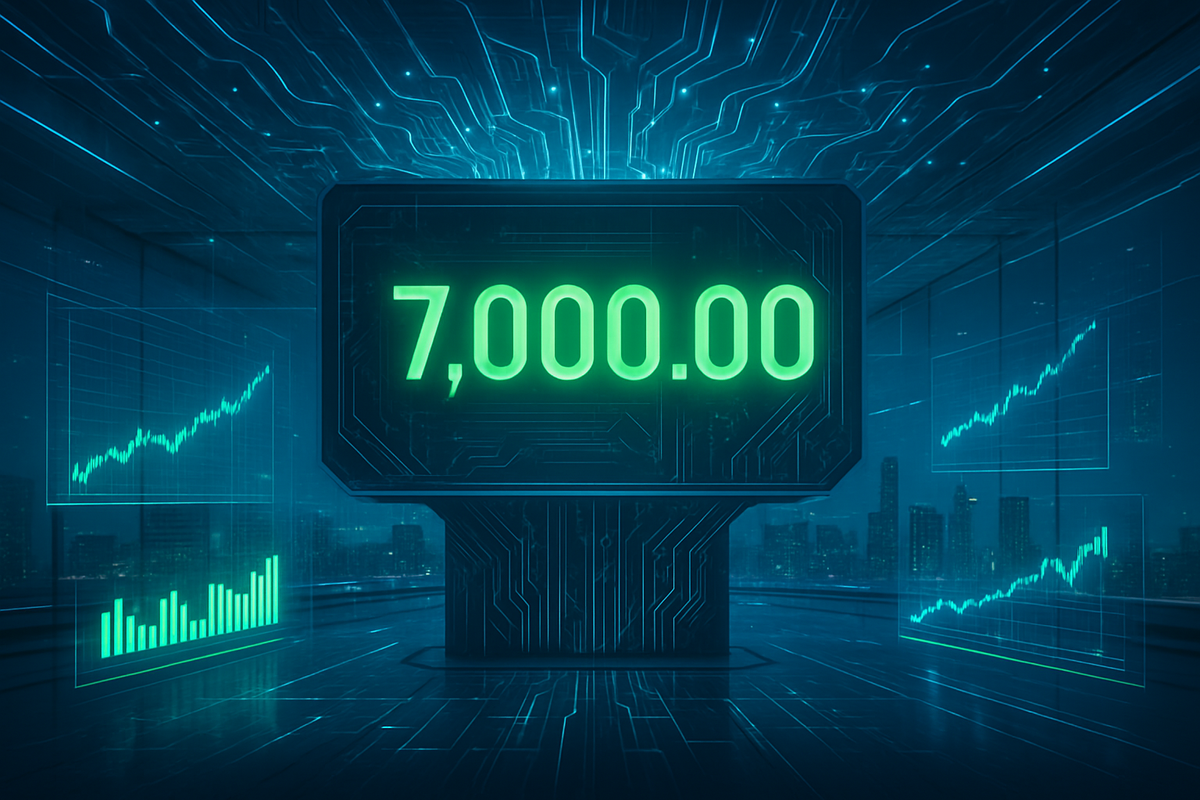
The ascent to 7,000 was characterized by a rapid acceleration that caught many Wall Street analysts off guard. After breaching the 6,000-point mark in November 2024, the index spent much of 2025 in a period of "normalization," consolidating gains as the market waited for the Federal Reserve to finalize its "soft landing" strategy. The final push began in late December 2025, driven by a Santa Claus rally that refused to quit, culminating in the historic intraday touch of 7,002.28 on January 28, 2026.
Key to this movement was the breach of a significant technical "Gamma Wall"—a concentration of options positioning that had acted as a ceiling for much of early January. When high trading volume, sparked by better-than-expected manufacturing data and easing CPI numbers (which fell to 2.4% in February), pushed the index through this resistance, a wave of systematic buying and short-covering propelled the S&P 500 into uncharted territory.
Stakeholders, from institutional hedge funds to retail investors, have been energized by a shift in narrative. The "AI speculation" of 2023 and 2024 has evolved into what analysts call "AI industrialization." This transition was cemented by the passage of the "One Big Beautiful Bill Act" (OBBBA) in July 2025, which provided critical fiscal tailwinds, including the reinstatement of 100% bonus depreciation. This policy allowed corporations to immediately deduct the massive costs of AI hardware, effectively subsidizing the infrastructure build-out that has fueled the recent rally.
The primary winners of this 7,000-point surge remain the titans of the semiconductor and cloud infrastructure sectors. NVIDIA (NASDAQ: NVDA) continues to be the undisputed leader of the pack, having surpassed a $5 trillion market valuation in late 2025. The company’s dominance in AI silicon remains unchallenged, serving as the foundational layer for the entire market’s growth. Similarly, Microsoft (NASDAQ: MSFT) has seen its stock price soar on the back of a reported $281 billion backlog in AI service contracts, proving that software integration is finally catching up to hardware capabilities.
Other major contributors to the index's milestone include Meta Platforms (NASDAQ: META) and Amazon (NASDAQ: AMZN). Meta’s aggressive 2026 Capex plan, which exceeds $115 billion, has signaled to the market that the "efficiency" era has successfully transitioned back into a growth phase. Meanwhile, Oracle (NYSE: ORCL) has emerged as a surprise heavyweight in the data center space, with its shares hitting record highs as it seeks a $50 billion capital raise to expand its global AI footprint. Broadcom (NASDAQ: AVGO) and Micron (NASDAQ: MU) have also benefited immensely from the insatiable demand for high-bandwidth memory and custom AI networking chips.
However, the rally has not been a rising tide for all boats. A phenomenon known as "AI Anxiety" has begun to weigh on traditional enterprise software providers like Salesforce (NYSE: CRM) and SAP (NYSE: SAP). Investors are increasingly concerned that legacy subscription models may be disrupted by newer, agentic AI systems that require less human interface and different pricing structures. While these companies remain profitable, their failure to keep pace with the S&P 500’s 14-month sprint has created a visible bifurcation in the technology sector.
The significance of hitting 7,000 in early 2026 extends far beyond the numbers on a ticker tape. It marks a definitive end to the era of high interest rates that defined the 2022-2024 period. With the Federal Reserve having cut rates three times in 2025 to reach a neutral range of 3.50%–3.75%, the "cost of capital" hurdle that previously suppressed growth stocks has largely evaporated. This event fits into a broader historical trend of market "super-cycles," drawing comparisons to the mid-1990s productivity boom, though with significantly higher concentration in mega-cap technology.
Furthermore, the ripple effects are being felt in the regulatory and policy spheres. The success of the OBBBA tax incentives has sparked a global "subsidies race," with European and Asian markets scrambling to implement similar fiscal measures to prevent a capital flight to U.S. equities. This has reinforced the S&P 500's status as the world's premier destination for growth capital, but it also invites increased scrutiny from antitrust regulators who worry about the growing influence of the "Hyperscale Five."
Historically, milestones of this magnitude often precede periods of increased volatility. When the index hit 5,000 in early 2024 and 6,000 in late 2024, it was followed by brief but sharp corrections as the market "digested" its gains. The 7,000 level is unique because it arrives amidst a fundamental shift in corporate operations; AI is no longer a future promise but a current line item on balance sheets, which may provide a more solid floor than previous speculative bubbles.
Looking ahead, the short-term trajectory of the market will be dictated by the remaining Q4 2025 earnings reports. The "high bar" set by the 7,000 milestone means that even slight misses in guidance could lead to significant profit-taking. Traders are particularly focused on the "AI ROI" (Return on Investment)—investors are no longer satisfied with hearing about AI "potential"; they want to see it reflected in expanded margins and reduced operational costs.
In the long term, the market may face a strategic pivot as the "Capex Super-Cycle" eventually matures. Analysts are already debating when the massive spend on data centers will hit a point of diminishing returns. This could lead to a shift in market leadership toward "AI adopters"—non-tech companies in healthcare, finance, and logistics that successfully use these new tools to disrupt their own industries. Strategic adaptations will be required for companies that have relied on cheap labor or legacy processes, as the productivity gap between AI-integrated and traditional firms continues to widen.
The S&P 500 crossing 7,000 is a testament to the resilience of the U.S. economy and the transformative power of technological innovation. The key takeaways from this event are clear: a "soft landing" was not only possible but has served as the springboard for a new era of growth, and the integration of artificial intelligence into the industrial core is now the primary driver of equity valuations. Moving forward, the market appears robust, but it is moving into a phase where "execution" will be more important than "vision."
Investors should watch closely for the Federal Reserve's next moves in the spring of 2026, as any hint of a return to inflationary pressure could dampen the current "risk-on" mood. Additionally, the sustainability of the 7,000 level will depend on whether mid-cap and small-cap stocks can finally join the rally, broadening the market’s base beyond the tech giants. For now, Wall Street is celebrating a historic achievement, but the real test lies in whether the upcoming earnings can justify the breathtaking momentum that brought us here.
This content is intended for informational purposes only and is not financial advice.