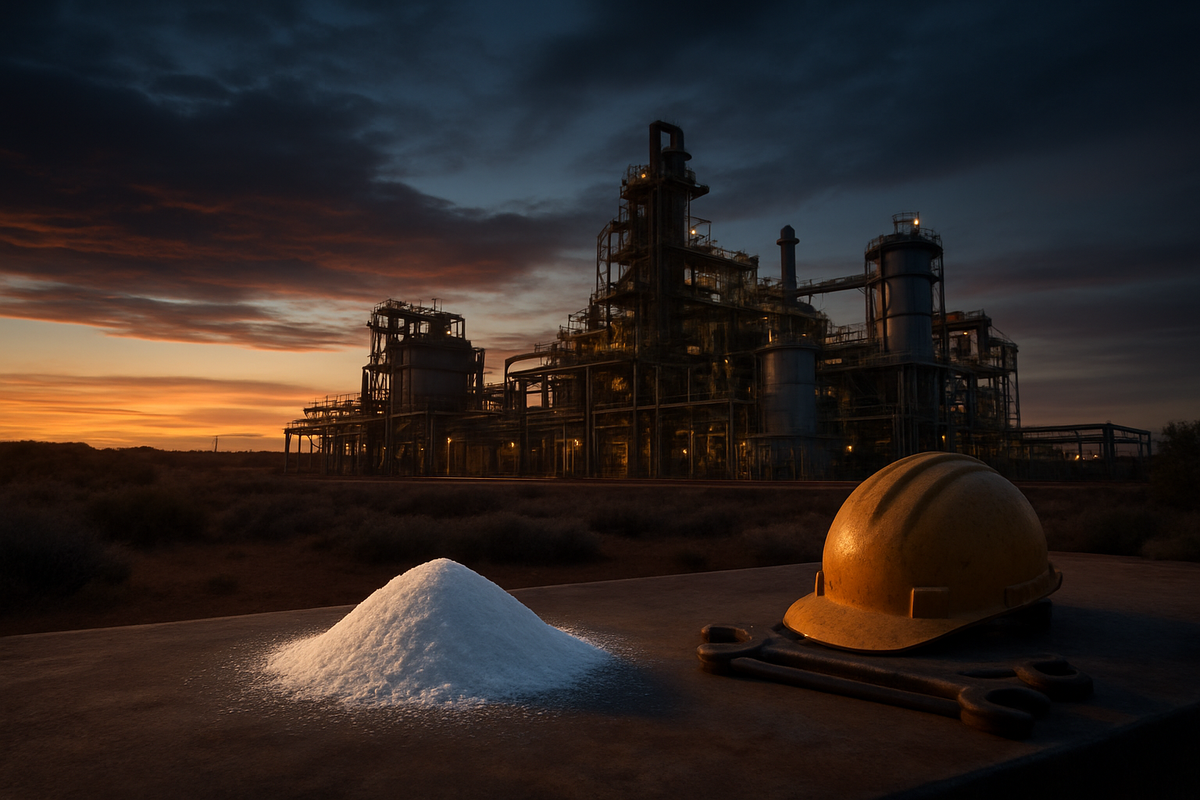
In a move that has sent shockwaves through the global battery metals sector, Albemarle Corporation (NYSE: ALB) officially announced on February 11, 2026, that it will idle the remaining operations at its flagship Kemerton lithium hydroxide plant in Western Australia. This decision marks the final chapter in a multi-year restructuring effort as the world’s largest lithium producer pivots away from high-cost Western refining in favor of capital preservation and higher-margin assets in China and Chile. By placing the facility into "care and maintenance," Albemarle is effectively removing 48,000 tonnes of nameplate lithium carbonate equivalent (LCE) capacity from a market that is only just beginning to recover from a two-year pricing slump.
The immediate implications of the Kemerton closure are profound for the electric vehicle (EV) supply chain, particularly for automakers in the United States and Europe. The idling of one of the few large-scale "non-Chinese" conversion facilities significantly complicates the efforts of Western manufacturers to source Inflation Reduction Act (IRA)-compliant battery materials. As Albemarle shifts its fulfillment strategy to its lower-cost Chinese refineries, the global lithium market faces an impending supply deficit that analysts predict could reach up to 80,000 tons LCE by the end of 2026, potentially forcing a sharp correction in battery-grade hydroxide prices.
A Retreat from the Western "Refining Trap"
The decision to shutter Kemerton's last operating production line, known as Train 1, follows a tumultuous period for the facility. During its fourth-quarter 2025 earnings call, Albemarle CEO Kent Masters characterized the move as a necessary reaction to a "structural cost gap" that has plagued Australian downstream processing. According to company data, converting hard-rock spodumene into lithium hydroxide in Western Australia costs roughly $4 to $5 per kilogram more than similar operations in China. These headwinds, driven by escalating Australian labor costs, high energy prices, and complex waste management requirements, made the facility untenable even as spot prices for lithium rebounded to $20/kg LCE in early 2026.
The timeline leading to this moment reflects a steady erosion of Albemarle’s downstream ambitions in the region. In late 2024, the company halted construction on Trains 3 and 4 at the site and idled Train 2, resulting in a staggering $1.3 billion impairment charge. While there was hope throughout 2025 that a recovery in EV demand would save the remaining operations, the "market realism" of 2026 won out. The final idling has resulted in the loss of approximately 250 direct jobs, bringing the total workforce reduction at the Kemerton site to over 600 since the restructuring began.
Industry reaction has been swift, with Western Australian state officials expressing disappointment over the setback to the region's "Value Add" mining strategy. Conversely, the equity markets have viewed the move as a prudent defensive play. Albemarle's stock saw a modest uptick following the news, as investors cheered the company’s commitment to its "Financial Flexibility" program, which aims to save an additional $100 million to $150 million in 2026 on top of the $450 million in costs cut during the previous fiscal year.
Winners and Losers in a Tightening Market
The primary "losers" in this strategic pivot are Western automakers, such as Ford Motor Company (NYSE: F) and General Motors (NYSE: GM), who are under intense pressure to decouple their supply chains from China to qualify for consumer tax credits. With Kemerton offline, the pool of IRA-compliant lithium hydroxide has shrunk overnight. This creates a challenging bottleneck for the North American battery industry, which must now look toward more expensive or less mature projects to fill the void. Furthermore, the local Australian economy faces a blow to its aspirations of becoming a diversified lithium hub rather than just a "dig and ship" quarry for overseas refiners.
On the winning side, pure-play miners such as Pilbara Minerals Limited (ASX:PLS) may see an indirect benefit. By remaining focused solely on upstream spodumene production, these companies avoid the operational losses associated with high-cost Western refining while continuing to feed the robust demand from Chinese converters. Additionally, Albemarle’s competitors with established, lower-cost operations, such as Sociedad Química y Minera de Chile (NYSE: SQM), stand to gain as the global supply of battery-grade hydroxide tightens, potentially allowing them to command a "green premium" for their non-Chinese material that remains in the market.
Within Australia, the joint venture between Wesfarmers Limited (ASX:WES) and SQM at the Kwinana refinery now stands as one of the few remaining large-scale Western conversion hopes. If they can successfully navigate the cost hurdles that tripped up Albemarle, they may find themselves in a dominant position as the "last man standing" for Western-refined lithium.
Strategic Realignment Amidst Shifting Industry Trends
Albemarle’s retreat fits into a broader industry trend where the "lithium rush" of the early 2020s has been replaced by a period of disciplined consolidation. The market has shifted from a state of chronic oversupply in 2024 to a "rebalancing phase" in 2026. Interestingly, while EV growth has stabilized at a respectable 20-25% annually, it is the Stationary Energy Storage Systems (BESS) sector that has become the new engine of demand, growing at nearly 50% per year. This shift in the demand profile is forcing producers to re-evaluate which assets are worth the high operational expenditure.
The Kemerton idling also highlights the failure of historical precedents that suggested Western refining could quickly achieve parity with Chinese incumbents. The "refining trap"—where the capital intensity and operational complexity of hydroxide production outweigh the benefits of geographic proximity to mines—is now a documented reality for Western firms. This may lead to a policy shift, where governments in the U.S. and Australia may need to provide even more aggressive subsidies or floor-price guarantees to prevent a total exodus of downstream processing to Asia.
The Road Ahead: Scenarios for the Lithium Deficit
In the short term, Albemarle is likely to maintain its sales guidance by leaning heavily on its brine operations in Chile and its extensive refining network in China. However, this is a strategic pivot that prioritizes the balance sheet over geopolitical supply chain independence. For the rest of 2026, the market will be watching closely to see if the removal of Kemerton's supply triggers a sustained price rally. If the projected deficit of 80,000 tons LCE materializes, we could see lithium prices climb back toward the mid-$20/kg range, which would improve the margins of remaining producers but threaten the affordability of mid-range EVs.
Long-term, the question remains whether Kemerton will ever restart. Albemarle has kept the facility in "care and maintenance," leaving the door open for a return if the structural cost gap narrows or if a "Western-only" price tier emerges that justifies the $5/kg premium. However, such a scenario would require a significant evolution in trade policy or a technological breakthrough in refining efficiency. For now, the focus remains on Albemarle's divestiture of non-core assets, such as its recent sale of the Ketjen catalysts business, as it doubles down on its highest-quality upstream resources.
Market Outlook and Investor Takeaways
The idling of Kemerton is a definitive signal that the era of "growth at any cost" in the lithium sector is over. Albemarle’s decision emphasizes that even the industry leader is not immune to the harsh realities of high-cost Western manufacturing. For investors, the takeaway is clear: the lithium market is entering a phase of supply-side discipline that could provide a floor for prices, but at the cost of slower infrastructure development in the West.
Moving forward, the market will be hyper-focused on quarterly production reports from other Western refiners, such as IGO Limited (ASX:IGO) and its partner Tianqi Lithium Corporation (SZSE:002466), to see if they follow Albemarle’s lead. Investors should also monitor the BESS adoption rates and any potential changes to the IRA eligibility rules, as these will be the primary drivers of the lithium price trajectory for the remainder of 2026. Albemarle has chosen financial stability over geographic diversification; only time will tell if this retreat leaves them—and the Western EV industry—vulnerable to the next cycle of supply volatility.
This content is intended for informational purposes only and is not financial advice.