In a landmark move that signals a deepening integration between high-tech manufacturing and raw material extraction, South Korean materials giant Sphere Corp (KOSDAQ: 347700) has officially acquired a 10% stake in the Excelsior Nickel Cobalt (ENC) project in Indonesia. The deal, announced on January 2, 2026, involves the purchase of the equity interest from Decent Resource, a subsidiary of the Chinese stainless-steel titan Tsingshan Holding Group. Valued at approximately $2.4 billion, the transaction underscores the escalating competition for high-purity nickel—a critical component not just for electric vehicle (EV) batteries, but increasingly for the burgeoning aerospace and space exploration industries.
This strategic acquisition marks a pivotal shift in the global nickel landscape. By securing a direct stake in one of Indonesia’s most advanced High-Pressure Acid Leach (HPAL) facilities, Sphere Corp is effectively bypassing traditional market intermediaries to ensure a "mine-to-rocket" supply chain. The move comes as Indonesia continues to solidify its position as the world’s nickel powerhouse, even as it implements tighter mining quotas to stabilize global prices. For the market, this deal represents a new era of vertical integration where downstream industrial players are willing to pay a premium for guaranteed, ESG-compliant mineral access.
The Deal Details: A High-Stakes Entry into Sulawesi
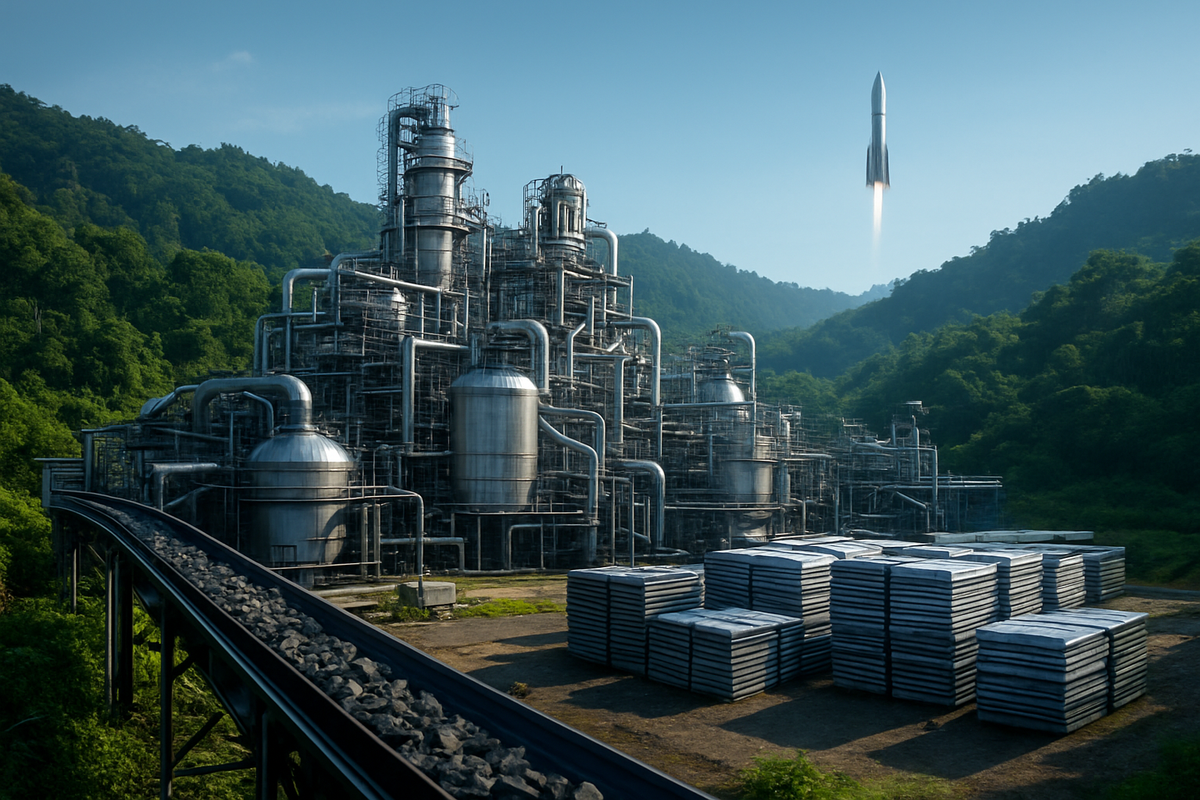
The acquisition of the 10% stake from Decent Resource grants Sphere Corp proportional offtake rights to the ENC project’s production, specifically focusing on high-purity nickel cathode. The ENC project, located in the Morowali Industrial Park in Central Sulawesi, is a joint venture led by Nickel Industries Limited (ASX: NIC), which retains a 44% controlling interest. The project is unique in its design, being the first HPAL facility globally capable of producing three distinct Class-1 nickel products: Mixed Hydroxide Precipitate (MHP), nickel sulphate, and nickel cathode.
The timeline leading to this moment has been rapid. Following a massive $1 billion supply agreement signed with Elon Musk’s SpaceX in late 2025, Sphere Corp (formerly known as LifeSemantics Corp before its strategic pivot and rebranding) needed to secure the raw materials necessary to fulfill its 10-year contract. Construction of the ENC facility progressed throughout 2024 and 2025, with commissioning now scheduled for the second quarter of 2026. This investment ensures that Sphere has the 72,000 tonnes of annual contained nickel capacity required to manufacture the specialty alloys used in SpaceX’s next-generation rocket engines and launch vehicles.
Initial industry reactions have been overwhelmingly positive, particularly for the Australian-listed Nickel Industries Limited. By bringing a high-profile South Korean partner like Sphere into the fold, the project gains further "Western-facing" credibility, distancing itself from the purely Chinese-backed reputation that has sometimes hindered Indonesian projects in the eyes of Western regulators. The market sees this as a masterstroke in diversification, allowing the project to serve both the Chinese battery market and the global aerospace sector simultaneously.
Winners and Losers: The Shifting Tides of Mining
The clear winner in this transaction is Nickel Industries Limited (ASX: NIC). The $2.4 billion valuation of the 10% stake implies a massive market premium for the ENC project, significantly higher than the company’s previous book valuations. This "look-through" value is expected to provide a substantial tailwind for NIC’s stock as investors reappraise the worth of its Indonesian portfolio. Furthermore, the partnership with Sphere Corp provides a direct link to the U.S. aerospace market, a lucrative niche that commands higher margins than the commoditized EV battery sector.
On the other hand, traditional Western mining giants like BHP (NYSE: BHP) and Glencore (LSE: GLEN) find themselves in a complex position. BHP has recently transitioned its Nickel West operations in Australia to "care and maintenance" after struggling to compete with the low-cost Indonesian "nickel flood" of 2024-2025. While Sphere’s investment validates the importance of nickel, it also highlights that the future of the industry may lie in Indonesia rather than higher-cost Western jurisdictions. Glencore, meanwhile, is pivoting its strategy to focus on "Green Nickel" certification, hoping to capture a premium from European automakers who are increasingly wary of the environmental footprint of Indonesian laterite ore.
Vale (NYSE: VALE) remains a formidable player but faces its own hurdles. Its Indonesian subsidiary, Vale Indonesia, has dealt with regulatory delays regarding the new 2026 mining quota system (RKAB). While Vale is also investing heavily in HPAL technology, the speed at which the Sphere-Nickel Industries partnership has moved to secure aerospace-grade offtake suggests that the competition for "Tier 1" customers is intensifying, leaving little room for those who cannot navigate the complex Indonesian regulatory environment.
Wider Significance: A Bifurcated Market and Geopolitical Realities
This event fits into a broader industry trend of supply chain bifurcation. We are seeing the emergence of two distinct nickel markets: one focused on low-cost, high-volume production for the Chinese EV market, and another focused on high-purity, traceable, and ESG-compliant production for Western aerospace and high-end automotive sectors. Sphere Corp’s insistence on the ENC project’s high environmental standards—including solar power integration and advanced tailings management—demonstrates that even in Indonesia, "green" credentials are becoming a prerequisite for deals involving Western-facing companies.
The ripple effects on competitors are significant. As South Korean and Japanese firms increasingly take equity stakes in Indonesian mines, the pressure on U.S. and European firms to do the same will mount. This deal serves as a blueprint for how companies can navigate the Inflation Reduction Act (IRA) requirements by securing supply from projects that, while located in Indonesia, involve significant investment and technology from "friendly" nations like Australia and South Korea.
Historically, this mirrors the vertical integration seen in the early 20th-century steel industry, but with a modern geopolitical twist. The Indonesian government’s recent decision to cut mining quotas for 2026 by nearly one-third is a clear signal that they intend to move from being a mere supplier of raw ore to a sophisticated hub for refined materials. By limiting supply and encouraging downstream investment like Sphere’s, Jakarta is successfully forcing the hand of global manufacturers to move their capital into the country.
The Road Ahead: Quotas, Prices, and Space Races
In the short term, the market will be watching the final commissioning of the ENC project in April 2026. Any delays in production could send ripples through the nickel price, which has already begun to recover from its 2025 lows due to the Indonesian quota cuts. For Sphere Corp, the challenge will be integrating this massive raw material stream into its alloy production facilities in South Korea. The company may need to seek further strategic pivots, perhaps investing in additional refining capacity to ensure the nickel cathode meets the exacting standards required by SpaceX.
Long-term, this deal could trigger a wave of similar acquisitions. As the "Space Race 2.0" accelerates, other aerospace firms may look to secure their own mineral foundations. We may see a scenario where the LME nickel price becomes less relevant for these players, replaced by long-term, fixed-price equity-linked offtake agreements. The primary challenge will remain the environmental impact of HPAL technology; if the ENC project can prove its "green" credentials over the next two years, it will likely become the gold standard for future Indonesian investments.
Final Assessment: A New Strategic Paradigm
The acquisition of a 10% stake in the ENC project by Sphere Corp is more than just a financial transaction; it is a declaration of the new strategic reality in the metals and mining sector. It confirms that Indonesian nickel is no longer just a "battery story" but a "critical infrastructure story" that spans from the Earth's roads to the stars. The $2.4 billion valuation sets a new benchmark for Indonesian assets and highlights the premium that downstream manufacturers are willing to pay for supply security.
Moving forward, investors should closely monitor the implementation of Indonesia’s 2026 mining quotas and the progress of HPAL projects currently under construction. The success or failure of these "green" Indonesian projects will determine the trajectory of nickel prices and the viability of the Western EV and aerospace supply chains. For now, Sphere Corp has positioned itself at the vanguard of this shift, securing its future in the high-stakes world of aerospace materials while the rest of the market scrambles to catch up.
This content is intended for informational purposes only and is not financial advice.