In a move that has sent shockwaves through both the halls of the United Nations and the trading floors of Wall Street, President Donald Trump has officially designated the acquisition of Greenland as a "vital pillar" of United States national security. This escalation, coming just one year into his second term, follows a high-stakes summit on January 14, 2026, where U.S. officials met with Danish and Greenlandic counterparts. The meeting, which ended in a diplomatic impasse, has triggered a series of aggressive economic measures, most notably the announcement of a 10% to 25% tariff on goods from eight key European allies, including Denmark.
The immediate implications are profound: the U.S. is signaling a fundamental shift in its Arctic strategy, moving from a cooperative defense model to one of assertive dominance. For the markets, this has created a stark divide. While traditional European giants are reeling from the threat of trade barriers, specialized mining and defense sectors are seeing a massive influx of capital as investors bet on a new "Arctic Gold Rush" fueled by the pursuit of mineral sovereignty and early-warning defense supremacy.
The Summit and the "Donroe Doctrine"
The escalation reached a boiling point during the Washington Summit on January 14, 2026. Vice President JD Vance and Secretary of State Marco Rubio met with Danish Foreign Minister Lars Løkke Rasmussen and Greenlandic Foreign Minister Vivian Motzfeldt to discuss the territory's status. The U.S. delegation framed the purchase of Greenland—or at least a "perpetual security lease"—as a necessity to counter increasing Russian and Chinese naval activity in the Arctic. Despite the U.S. offering what sources call a "historic financial package," Danish and Greenlandic officials maintained their stance that the island is not for sale, emphasizing Greenland’s sovereignty within the Kingdom of Denmark.
This deadlock prompted the President to enact what analysts are calling the "Donroe Doctrine"—a modern interpretation of the Monroe Doctrine applied to the high north. On January 17, just two days ago, the White House announced that if a "satisfactory security arrangement" is not reached, a 10% tariff will be levied against Denmark, Norway, Sweden, and several other European nations starting February 1, 2026. This is scheduled to rise to 25% by June. The administration argues that Denmark’s inability to single-handedly defend Greenland’s vast territory creates a "security vacuum" that the U.S. can no longer ignore.
The timeline leading to this moment has been rapid. Following the 2024 election, the administration appointed a "Special Envoy to Greenland" in late 2025, tasked specifically with exploring the transition of the territory to U.S. jurisdiction. The rhetoric has shifted from interest in real estate to a dire warning regarding the "Golden Dome" missile defense program, centered on the Pituffik Space Base. The U.S. contends that direct control over this base and the surrounding territory is the only way to ensure the integrity of North American early-warning systems against hypersonic threats.
Market Winners and Losers: The Arctic "Pure-Plays"
The financial markets have reacted with surgical precision to these developments. The primary winners are companies positioned to benefit from a U.S.-led mineral extraction and infrastructure boom in the Arctic. MP Materials (NYSE: MP), the only scaled rare earth producer in the Western Hemisphere, saw its stock surge 8% following the tariff announcement as investors anticipate a total decoupling from Chinese supply chains. Similarly, Energy Fuels (NYSE: UUUU) has trended upward by over 8%, trading near $21.94, as it expands its rare earth oxide production to meet what is now deemed a national security mandate.
In the mining sector specifically focused on Greenland, the reaction has been even more dramatic. Critical Metals Corp (NASDAQ: CRML), which holds interest in the massive Tanbreez rare earth deposit, saw its stock skyrocket 115% in early 2026 amid speculation that the U.S. government will fast-track permitting for the site. Greenland Resources Inc (TSX: MOLY) also enjoyed a 34.7% rise, as its molybdenum project—essential for defense-grade steel—is now viewed as a strategic Western asset. On the defense side, Lockheed Martin (NYSE: LMT) and RTX Corporation (NYSE: RTX) have seen steady gains; LMT is the primary beneficiary of Danish F-35 orders, while RTX remains the cornerstone of the radar systems at Pituffik.
Conversely, the losers are concentrated in the European markets. The OMX Copenhagen 25 index fell 2.88% today, as Danish exporters prepare for the February tariff wall. Novo Nordisk (NYSE: NVO), despite its strong fundamentals, has faced selling pressure due to its high exposure to the U.S. market. Shipping giant A.P. Moller - Maersk is also under scrutiny, as the geopolitical tension threatens to disrupt transatlantic trade lanes. Furthermore, renewable energy leader Ørsted has seen shares decline after reports that the Trump administration might pause offshore wind projects as part of its broader trade negotiations.
Strategic Shift and the Race for Rare Earths
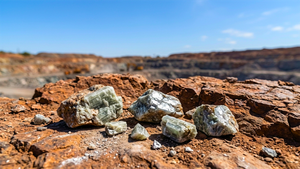
This event fits into a broader industry trend of "friend-shoring" and the weaponization of trade for resource security. The pursuit of Greenland is not merely about land; it is about the 1.5 million tons of rare earth elements (REEs) trapped beneath its ice. As the Greenland ice sheet continues to recede—losing 105 billion metric tons of ice in the last year alone—minerals that were once inaccessible are now within reach. The Trump administration’s move is a direct attempt to break the Chinese monopoly on the materials required for everything from F-35 fighter jets to electric vehicle motors.
The policy implications are vast. We are witnessing the potential end of the post-Cold War cooperative Arctic Council model, replaced by a "Great Power" competition. The regulatory landscape for mining in Greenland is expected to be completely overhauled if the U.S. succeeds in its diplomatic or economic pressure. Historically, this mirrors the 1867 purchase of Alaska, which was initially mocked as "Seward's Folly" before becoming a cornerstone of American resource and strategic power. However, unlike 1867, the 2026 effort is taking place in an era of hyper-globalized trade, making the "stick" of tariffs a potent, if controversial, tool.
The Path to June: Scenarios and Strategic Pivots
Looking ahead, the market should prepare for two primary scenarios. In the short term, the "High-Level Working Group" established at the Washington Summit has until the June 1 tariff deadline to present a compromise. This could take the form of a "Joint Security Zone" where the U.S. manages defense and resource extraction while Denmark retains nominal sovereignty. Such an outcome would likely stabilize European markets while keeping the "Arctic-play" stocks at their current premiums.
In the long term, if the impasse continues and the 25% tariffs are enacted, we may see a strategic pivot by European nations. Denmark and its NATO allies have already launched "Operation Arctic Endurance" to signal their resolve. For investors, the opportunity lies in infrastructure. Fluor Corp (NYSE: FLR) is already being discussed as the primary contractor for a multi-billion dollar expansion of Arctic naval and air facilities. Any firm with "Mission Solutions" capabilities—focusing on logistics in extreme environments—will likely see a significant expansion of their project backlogs over the next 24 months.
A New Frontier for Investors
The "Greenland Shift" marks a definitive end to the era of Arctic exceptionalism, where the region was once considered a zone of low tension. For the market, this is a clarion call to re-evaluate the value of strategic geography. The key takeaways for investors are clear: mineral sovereignty is no longer a secondary concern; it is a primary driver of U.S. foreign policy and, by extension, stock valuations in the mining and defense sectors.
Moving forward, the market will likely remain volatile as each diplomatic cable or presidential tweet regarding the "Donroe Doctrine" hits the wires. Investors should watch for the specifics of the tariff implementation on February 1 and any signs of a "Greenland Premium" being priced into mid-cap mining stocks. While the geopolitical risk is high, the potential for a total reconfiguration of the global rare earth supply chain offers a once-in-a-generation opportunity for those positioned in the right sectors.
This content is intended for informational purposes only and is not financial advice.