New York, NY – December 3, 2025 – Silver Exchange-Traded Funds (ETFs) have emerged as the unexpected titans of the precious metals market in 2025, dramatically outperforming their gold counterparts. This significant shift is driven by a potent combination of surging industrial demand, persistent supply deficits, and a supportive macroeconomic environment characterized by anticipated interest rate cuts and a weaker U.S. dollar. For investors, this trend signals a potential re-evaluation of silver's role, not just as a monetary safe haven, but as a critical industrial commodity poised for sustained growth, prompting considerations for portfolio diversification, profit-taking strategies, and a keen eye on market volatility.
The remarkable rally in silver, particularly evident through the performance of silver-backed ETFs, has seen the metal achieve multi-year and even all-time highs. With year-to-date returns exceeding 100% for some silver ETFs, the white metal has comfortably eclipsed gold's respectable, yet comparatively modest, 60% gain over the same period. This aggressive ascent has propelled silver prices to approximately $58-$59 per ounce, surpassing its previous peak of $48.70 per ounce recorded in April 2011. Gold, while also experiencing a robust run, has reached around $4,200-$4,222 per ounce. A key indicator of this divergence is the gold-to-silver ratio, which has plummeted from a peak of around 107:1 to approximately 73:1-75:1 in 2025, signaling silver's increasing value relative to gold. This dramatic rebalancing has led to substantial investor interest, with silver ETFs witnessing significant inflows. In September 2025, these funds accounted for nearly 28% of total passive fund flows, and their assets under management (AUM) have more than tripled from October 2024 to September 2025, reaching over ₹37,518 crore. This surge underscores a broad market recognition of silver's unique position at the intersection of traditional precious metal appeal and burgeoning industrial necessity.
The Dual Catalyst: Industrial Demand Meets Monetary Policy
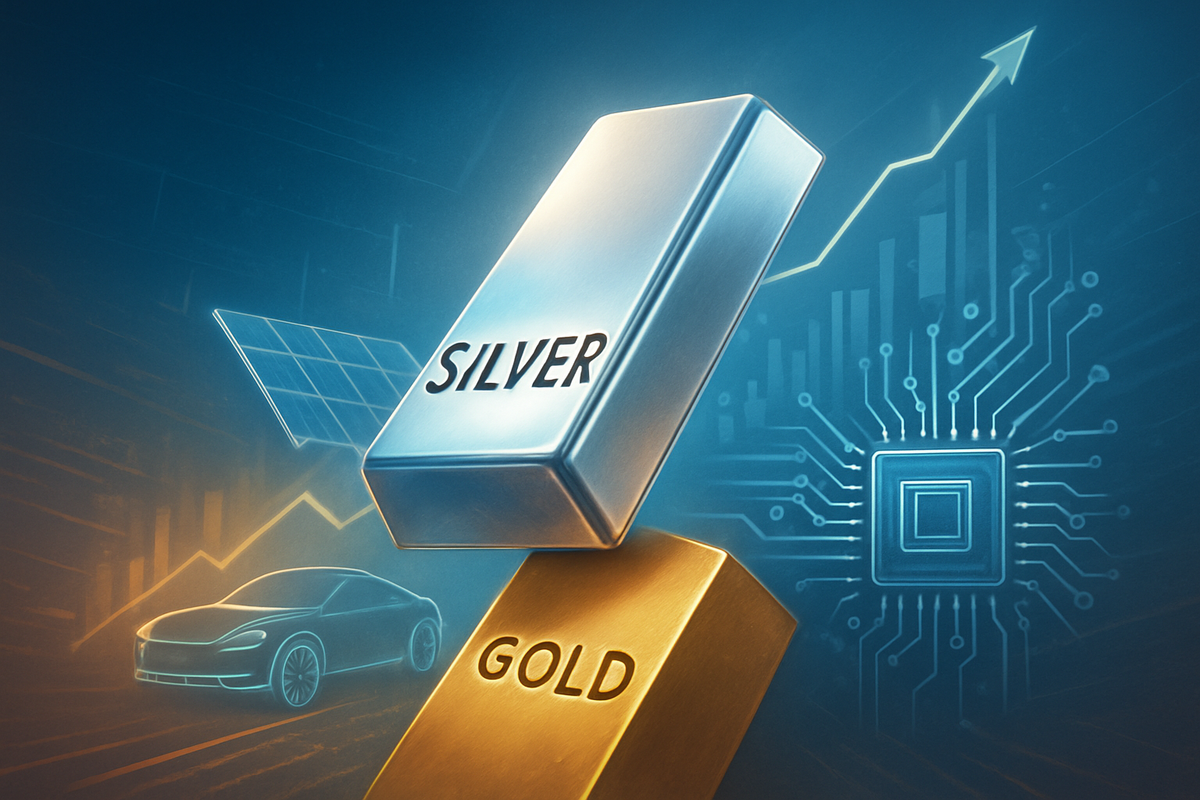
Silver's exceptional performance is underpinned by a confluence of factors, with its dual identity as both a monetary metal and a vital industrial commodity playing a pivotal role. Over half of global silver demand now emanates from industrial applications, a proportion significantly higher than gold's. The burgeoning clean energy transition stands out as a primary driver, with massive demand stemming from solar panels (photovoltaics), electric vehicles (EVs), and their associated charging infrastructure. The rapid expansion of artificial intelligence (AI) and advanced computing also fuels demand for high-performance semiconductors, which rely heavily on silver's superior conductivity. Furthermore, the ongoing global rollout of 5G technology and the increasing sophistication of high-end electronics contribute substantially to this industrial appetite.
Compounding this robust demand is a persistent supply deficit in the silver market. For several years, global demand has consistently outstripped mine production. In 2024, this shortfall exceeded 200 million ounces, a trend expected to continue into 2025, exerting relentless upward pressure on prices. Unlike gold, where a significant portion of its use is for investment and jewelry, much of silver's industrial application results in permanent loss, limiting its recyclability and exacerbating supply constraints.
The macroeconomic landscape further bolsters silver's appeal. Expectations of interest rate cuts by the Federal Reserve (NYSE: FED) in December 2025 have been a significant catalyst. Lower interest rates typically diminish the opportunity cost of holding non-yielding assets like precious metals and tend to weaken the U.S. dollar, making dollar-denominated commodities more attractive to international buyers. Global geopolitical tensions, ongoing trade uncertainties, and lingering concerns over inflation continue to burnish the safe-haven appeal of precious metals, including silver. Moreover, many experts believe silver has been historically undervalued relative to gold, and the earlier elevated gold-silver ratio prompted investors to view silver as a more attractive value proposition, triggering a reversion towards its historical average. Its smaller market size compared to gold also means silver often experiences more dramatic price swings during bullish cycles, offering higher percentage gains, and its lower price per ounce makes it more accessible to a broader range of retail investors, particularly through ETFs. The recent inclusion of silver in a U.S. list of critical minerals has further highlighted its strategic importance, potentially leading to future policy support.
Public Companies Poised for Gains or Losses
The surge in silver prices has direct and indirect implications for a range of public companies across various sectors. Silver mining companies are clear beneficiaries, as higher prices translate directly into increased revenues and profitability. Major players like Fresnillo PLC (LSE: FRES), Pan American Silver Corp. (NASDAQ: PAAS), and Wheaton Precious Metals Corp. (NYSE: WPM), which derive significant portions of their revenue from silver, are likely to see enhanced financial performance. Increased capital expenditure in exploration and development could follow, potentially boosting the mining services sector.
On the demand side, companies heavily involved in the clean energy transition, particularly solar panel manufacturers and electric vehicle producers, face a nuanced situation. While higher silver prices increase their input costs, the underlying demand for their products, which drives silver's industrial use, remains strong. Companies such as First Solar, Inc. (NASDAQ: FSLR) and Tesla, Inc. (NASDAQ: TSLA), along with other EV and renewable energy firms, might experience margin pressure if they cannot effectively pass on increased material costs to consumers. However, their long-term growth trajectories, intrinsically linked to the energy transition, continue to fuel the very demand for silver. Similarly, electronics manufacturers and semiconductor companies, including giants like Intel Corporation (NASDAQ: INTC) and Samsung Electronics Co., Ltd. (KRX: 005930), which utilize silver in their high-performance components, will also navigate higher input costs. ETF providers focused on precious metals, such as iShares Silver Trust (NYSEARCA: SLV) and Aberdeen Standard Physical Silver Shares ETF (NYSEARCA: SIVR), are experiencing significant growth in assets under management and trading volumes, benefiting directly from investor interest in silver. Conversely, companies whose business models are predicated on lower commodity prices or those with less flexible supply chains might face headwinds.
Wider Significance: A Critical Mineral in a Green Future
The current outperformance of silver is more than a fleeting market trend; it signifies a deeper structural shift within the global economy and commodity markets. This event strongly aligns with broader industry trends centered on decarbonization and technological advancement. Silver's designation as a "critical mineral" in the U.S. underscores its indispensable role in the clean energy transition, from solar power generation to electric vehicle batteries and charging infrastructure. This strategic importance suggests potential future government incentives, research funding, and supply chain prioritization, further cementing silver's long-term demand profile.
The ripple effects of this trend extend to competitors and partners across various industries. For other precious metals, particularly platinum group metals (PGMs) which also have significant industrial applications, silver's rally might draw investor attention to the broader industrial metals complex. Companies involved in recycling and sustainable resource management could also see increased opportunities as efforts to mitigate supply deficits intensify. Regulatory bodies may begin to pay closer attention to silver supply chains, given its critical status, potentially leading to new policies aimed at securing domestic supplies or fostering responsible sourcing. Historically, silver has often been dubbed "poor man's gold," but its current trajectory suggests a re-evaluation of this moniker. While prone to higher volatility due to its smaller market size, silver has historically demonstrated periods of significant outperformance during industrial booms and inflationary environments, echoing similar surges seen in the early 1980s and 2011. This current rally, however, appears to be underpinned by more fundamental and sustained industrial demand drivers than previous speculative bubbles.
What Comes Next: Navigating Volatility and Long-Term Potential
Looking ahead, the trajectory of silver will likely be shaped by a combination of ongoing industrial demand, global monetary policy, and geopolitical stability. In the short term, investors should anticipate continued price volatility. While the current momentum is strong, pullbacks are always possible, and key resistance levels around $60 per ounce and higher will be closely watched. Conversely, strong support levels will be monitored for potential buying opportunities during any dips. The anticipated interest rate cuts by the Federal Reserve (NYSE: FED) in December 2025 will be a critical event, potentially providing further impetus for precious metals.
In the long term, the structural supply deficits and the relentless march of the clean energy transition suggest a robust demand outlook for silver. This fundamental imbalance could support higher price floors and sustained growth. Market opportunities may emerge for companies innovating in silver recycling technologies or those discovering new silver deposits. Strategic pivots might be required for manufacturers heavily reliant on silver, prompting them to explore alternative materials or secure long-term supply contracts. Potential challenges include unexpected shifts in industrial demand, a stronger-than-anticipated U.S. dollar, or a more hawkish stance from central banks. However, the overarching narrative of silver as a critical component of a decarbonizing and technologically advanced world points towards continued relevance and potential appreciation. Scenarios could range from a steady appreciation driven by fundamental demand to more volatile surges influenced by speculative interest and macroeconomic shocks.
Comprehensive Wrap-up: A New Era for Silver
In summary, silver's dramatic outperformance of gold in 2025, particularly through the lens of ETFs, marks a significant moment in the precious metals market. The key takeaways are clear: silver's dual role as an industrial metal and a safe-haven asset is more pronounced than ever, driven by insatiable demand from the clean energy sector and persistent supply shortages. This fundamental shift, coupled with a supportive macroeconomic backdrop of anticipated rate cuts and a weaker U.S. dollar, has propelled silver into the spotlight.
Moving forward, the market is poised for continued interest in silver. Its unique position as a critical mineral for the future economy suggests that its industrial demand will remain a powerful force. Investors should assess their current allocations, considering the significant gains already realized. While the allure of gold as a traditional store of value remains, silver offers a compelling blend of monetary appeal and cyclical growth potential. In the coming months, investors should closely watch global economic indicators, the pace of the clean energy transition, central bank policies, and the gold-to-silver ratio for further clues on market direction. The era of silver as merely "poor man's gold" may be definitively over, ushering in a new chapter where the white metal stands on its own as a strategic commodity vital for the future.
This content is intended for informational purposes only and is not financial advice