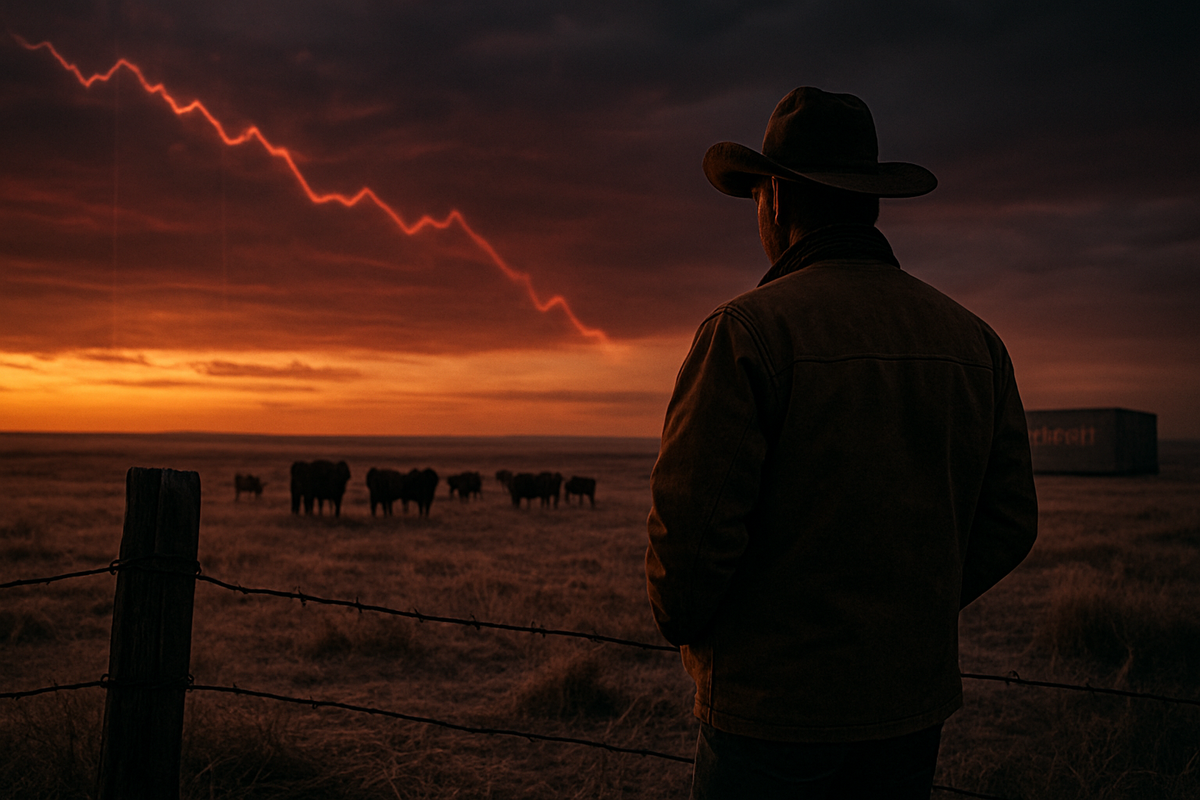
As the winter of 2025 settles across the American Heartland, the U.S. cattle industry finds itself in the grip of a jarring economic disconnect. Despite consumers paying record-high prices at the grocery store—with ground beef averaging $6.54 per pound and premium steaks topping $12.29—the primary producers of that beef, the nation’s cattle ranchers, are facing a sudden and severe contraction in profitability. A late-year collapse in cattle futures has erased nearly ten months of market gains in just six weeks, leaving family farms to navigate a landscape of high input costs and shifting trade policies that many fear could permanently alter the livestock industry.
The immediate implications are dire for the roughly 700,000 cow-calf operations across the country. The "golden era" of 2023 and 2024, characterized by tight supplies and record-breaking gate prices, has slammed into a wall of market volatility. For many family-run operations that rely on the fall and winter calf sales for their annual liquidity, the 15% drop in live cattle prices since mid-October represents more than just a dip in margins; it is a threat to their operational viability at a time when interest rates and feed costs remain stubbornly high.
A Market in Turmoil: The Q4 Collapse
The current crisis reached a boiling point in the fourth quarter of 2025. Following a peak in mid-October where live cattle futures hit a staggering $248 per hundredweight (cwt), the market experienced a "flash crash," plummeting roughly $40/cwt by mid-December. This volatility was triggered by a confluence of factors, most notably a sudden shift in trade expectations. While the U.S. cattle herd remains at its lowest level since 1951—approximately 86.7 million head—the market’s sensitivity to supply has been blunted by record-high carcass weights and a surge in lean beef imports.
The timeline leading to this moment began with the multi-year drought of 2021-2023, which forced massive liquidations of the national herd. By 2025, the industry expected a period of aggressive herd rebuilding. However, that expansion has stalled. High interest rates have made the capital required to retain heifers—a three-year investment before a calf reaches the market—prohibitively expensive. Stakeholders, including the National Cattlemen’s Beef Association (NCBA) and R-CALF USA, have voiced growing alarm that the domestic industry is being hollowed out by a combination of biological constraints and regulatory uncertainty.
Initial industry reactions have been a mix of confusion and anger. Ranchers in the South, where cash trade has dipped toward $229/cwt, have pointed to the widening "spread" between what they receive and what retailers charge. While the "Big Four" meatpackers have historically been the target of such ire, the late-2025 narrative has shifted toward federal policy. Executive actions aimed at curbing food inflation by increasing import quotas from Brazil and Argentina have sent a shockwave through the domestic market, leading many producers to feel that their recovery is being sacrificed to lower the Consumer Price Index (CPI).
Winners and Losers in the Beef Value Chain
The economic fallout of the late-2025 price decline is unevenly distributed across the public markets. Tyson Foods (NYSE: TSN), the largest U.S. meat processor, has found itself in a precarious position. The company reported a staggering $426 million adjusted operating loss in its beef segment for fiscal 2025, with projections of further losses reaching up to $600 million in 2026. The scarcity of cattle has forced Tyson to close major processing facilities, such as its plant in Lexington, Nebraska, as it struggles to "optimize" a shrinking supply while paying high prices for the cattle it can find.
In contrast, JBS (OTC: JBSAY), the world's largest meatpacker, has demonstrated more resilience through geographic and protein diversification. While its North American beef operations recorded a $293 million loss in the second quarter of 2025, the company’s massive presence in the poultry and pork markets—including its majority stake in Pilgrim’s Pride (NASDAQ: PPC)—has cushioned the blow. JBS’s global platform allows it to capitalize on the very imports that are currently hurting U.S. ranchers, positioning it as a strategic "winner" in a globalized protein market even as its U.S. beef margins suffer.
On the retail and food service side, the outlook is more optimistic. Large-scale retailers like Walmart (NYSE: WMT) and Costco (NASDAQ: COST) stand to benefit if the wholesale price of beef continues to soften, allowing them to either expand their margins or drive foot traffic with "rollback" pricing on staples. Similarly, fast-food giants like McDonald’s (NYSE: MCD) and Restaurant Brands International (NYSE: QSR), the parent of Burger King, are seeing relief in their input costs for ground beef, which could lead to more aggressive promotional environment in early 2026.
Broader Industry Trends and Regulatory Headwinds
The challenges facing cattle ranchers fit into a broader trend of agricultural consolidation. As small family farms face the "liquidity trap" of falling prices and high debt, many are selling out to larger, vertically integrated operations. This shift is being accelerated by new regulatory burdens, such as the European Union Deforestation Rule (EUDR) and tightening domestic environmental standards regarding methane emissions. While these regulations aim for sustainability, the compliance costs often fall disproportionately on smaller producers who lack the administrative infrastructure of corporate feedlots.
Historically, the cattle cycle lasts 8 to 12 years, but the current cycle has been disrupted by "black swan" events, including the post-pandemic inflation spike and unprecedented trade interventions. The political climate in late 2025 is particularly charged; following the November elections, there was a brief surge in rancher sentiment based on promises of deregulation. However, that optimism has been tempered by what some in the industry call the "Argentina Betrayal"—a series of trade deals that lowered tariffs on South American beef to combat domestic food inflation.
The "Product of USA" labeling rule, which was finalized in early 2024, has also become a focal point. While intended to give domestic producers a competitive edge, the influx of imported "lean trim" used for blending into ground beef has complicated the supply chain. Ranchers are now pushing for even stricter enforcement to ensure that the "Product of USA" label isn't diluted by the very imports that are currently suppressing domestic live cattle prices.
The Path Ahead: Strategic Pivots and Scenarios
Looking toward 2026, the cattle industry faces two primary scenarios. The first is a "long-term contraction," where continued low prices and high interest rates prevent herd expansion, leading to a permanent reduction in the U.S. cattle footprint. In this scenario, the U.S. becomes increasingly dependent on foreign beef, and the "Big Four" packers continue to shutter domestic plants in favor of global sourcing. Ranchers who survive will likely be those who pivot toward "value-added" niches, such as grass-fed, organic, or carbon-neutral certifications that command a premium over the volatile commodity market.
The second scenario is a "supply-side recovery" triggered by a potential easing of interest rates by the Federal Reserve. If the cost of capital drops in early 2026, ranchers may finally find it feasible to begin heifer retention. This would lead to even tighter supplies in the short term (as cattle are kept for breeding rather than sent to slaughter), potentially causing a massive "V-shaped" recovery in prices. For investors, this would mean a period of extreme volatility for companies like Tyson Foods (NYSE: TSN), which would face even higher input costs before the eventual supply increase hits the market in 2028 or 2029.
Final Assessment: What to Watch
The U.S. cattle industry is at a crossroads where the traditional laws of supply and demand are being tested by global trade policy and a high-interest-rate environment. The key takeaway for the market is the stark decoupling of retail and producer prices. While the "beef squeeze" at the grocery store may ease for consumers in 2026, the "margin squeeze" for ranchers is likely to persist, driving further consolidation in the heartland.
Moving forward, investors and industry analysts should keep a close eye on the USDA’s January 2026 Cattle Inventory report, which will provide the first definitive look at whether ranchers have truly begun to rebuild their herds. Additionally, any shifts in trade policy regarding Brazilian and Argentine beef will be a major catalyst for cattle futures. For the American rancher, the coming months will be a test of endurance, as they wait to see if the political promises of a "less restrictive environment" can outweigh the harsh realities of a globalized and volatile market.
This content is intended for informational purposes only and is not financial advice.