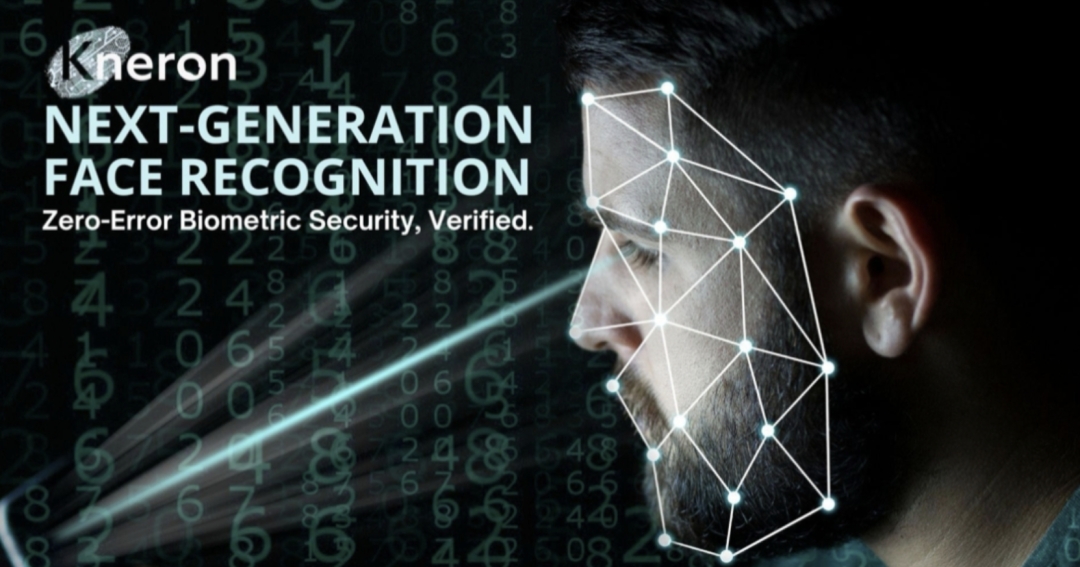
Kneron has reached a significant milestone in biometric security after its Face Recognition Module v1.0 achieved perfect results in two leading international standards: ISO/IEC 30107 for anti-spoofing and ISO/IEC 19795 for performance accuracy. Independent testing was conducted by Fime, an NVLAP-accredited biometric laboratory, over a month-long evaluation.
The system recorded zero errors across all categories, successfully blocking every spoofing attempt, from printed photos to complex 3D masks, while also achieving zero false accepts and zero false rejects.
Performance remained consistent across varied lighting conditions, facial features, and a demographically diverse participant group, addressing common concerns around reliability and algorithm bias. Crucially, the technology operates fully on device using Kneron’s ultra-low-power edge AI chips, ensuring privacy without cloud reliance.
With certification complete, the solution is deployment-ready for smart locks, access control, financial services, and identity verification, setting a new baseline for secure, practical, and trustworthy face recognition.
I sat down with the CEO of Kneron, this is what they had to say,
First of all please introduce yourself.
I’m Albert Liu, the founder and CEO of Kneron. Kneron is a global leader in full-stack edge AI solutions, pioneering reconfigurable NPU chip for running CNN and LLM workloads on edge.
Our work focuses on enabling reliable, on-device AI for applications where power efficiency, security, and data privacy are important. We take an integrated approach to hardware and software so that AI systems can operate consistently in real-world environments without relying on cloud processing.
Your face recognition module achieved zero errors under two major ISO standards, verified by an NVLAP-accredited lab. How significant is independent validation like this in an industry often driven by vendor claims rather than third-party proof?
Independent validation is not just critical in biometric security, but it is exceptionally rare.
Most biometric systems are never tested this way, and many would not pass if they were. Achieving 0.0% FAR, 0.0% FRR, and 0.0% APCER simultaneously under ISO/IEC 19795 and ISO/IEC 30107 is not incremental improvement, it’s an outlier result.
To put this in context: even flagship consumer systems and many government-deployed biometric solutions accept non-zero error rates as unavoidable. This evaluation shows that assumption is no longer true.
Independent validation matters because it removes ambiguity. These results were produced by an NVLAP-accredited lab, under standardized attack scenarios, over thousands of real attempts.
Zero false accepts and zero false rejects is an extraordinary result. For readers who may not be familiar with biometric testing, what does “zero error” actually mean in practical, everyday use?
In everyday terms, it means the system never guessed wrong during testing ever. In practical terms, zero error means two things happening simultaneously and reliably.
First, no unauthorized user is ever mistakenly granted access.Second, legitimate users are never locked out due to recognition failure.
For consumers, that translates to a system that works instantly, consistently, and securely without frustration or risk. For enterprises and financial institutions, it means confidence that security and user experience don’t have to be a tradeoff.
Deepfakes, 3D masks, and AI-generated images are rapidly evolving. How confident are you that the system tested today will remain resilient as spoofing techniques continue to advance?
No security system can rely on a single defense. Our confidence comes from a layered approach that combines Near-Infrared imaging, 3D sensing, and algorithms optimized for edge AI hardware. These techniques target physical liveness and depth characteristics that are fundamentally difficult to replicate with synthetic media. Because everything runs on-device, we can also evolve algorithms over time without exposing data, allowing the system to adapt as attack methods change.
Many biometric systems still rely on cloud processing. What are the security and privacy advantages of performing face recognition fully on device, especially as concerns around data misuse grow?
Running face recognition fully on device dramatically reduces risk. There is no biometric data transmitted, stored, or processed in the cloud, which eliminates large attack surfaces and data misuse concerns.
From a privacy standpoint, users retain control over their identity data. From a security standpoint, attackers have far fewer vectors to exploit. This approach aligns strongly with emerging privacy regulations and growing public concern about data ownership.
You combine Near Infrared imaging, 3D sensing, and a purpose-built low-power AI chip. Which of these elements was most critical in achieving perfect ISO results, and why?
It’s really the integration that matters. Near-Infrared imaging captures texture and depth that visible-light cameras miss. 3D sensing allows us to distinguish real human faces from flat or synthetic replicas. And the low-power NPU enables these computations to run in real time on device.
None of these components alone would achieve zero-error results. It’s the tight coupling of sensing, algorithms, and silicon that made this performance possible.
Algorithmic bias remains a major concern in facial recognition. How did demographic diversity factor into the testing, and what do the results suggest about fairness and consistency across different user groups?
The evaluation was conducted using a racially and demographically diverse dataset, reflecting real global deployment conditions. Subjects varied in age, facial features, and background.
The system maintained consistent performance across all groups, which suggests that the algorithms are not over-optimized for a single demographic. That consistency is essential for fairness, trust, and responsible deployment.
Certification is one step, deployment another. How quickly could this technology realistically appear in consumer products like smart locks or financial authentication systems?
This is an area where we have invested heavily in research and development for many years, which gives us a high level of confidence in the technology. These capabilities are not theoretical. They are already being deployed in production today across real world authentication and access control applications.
The certification reinforces that foundation. Achieving these results is difficult and time consuming, which is precisely why they matter. Independent validation provides customers with added confidence that the technology performs reliably under demanding conditions.
As a result, we expect even broader adoption to follow in the coming months. The goal of certification is to achieve more confidence between innovation and real-world adoption.
Many consumers already use face recognition without realizing its limitations. Do you believe this milestone should change how people think about the security of smart locks and home access systems?
Yes, and urgently.
Many smart locks today would fail the same spoofing tests used here. Consumers assume “face recognition” means secure, but that’s often not true.
This milestone proves that home-grade devices can reach enterprise-level security. Once that’s known, expectations will change and they should.
By setting a new benchmark, do you expect this achievement to pressure competitors or regulators to raise minimum security standards for biometric systems?
Absolutely.
When independent data shows that zero-error performance is achievable today, it resets the conversation. Regulators gain evidence to raise standards. Enterprises gain leverage to demand better systems. And competitors are forced to explain why their error rates are still considered acceptable.
This is how baselines move.
With identity fraud and digital impersonation accelerating globally, what role do you see edge-based biometric security playing in restoring public trust in digital identity over the next five to ten years?
Digital identity is under attack everywhere from payments to access control to remote onboarding.
Edge-based biometric security offers something the industry desperately needs: verifiable trust without mass data exposure. Over the next five to ten years, I believe systems like this will become the foundation of digital identity because trust can’t scale if security is optional.
About Kneron
Founded in 2015, Kneron is a global leader in low power edge AI, delivering secure on device intelligence for smart homes, security, automotive, robotics, and industrial IoT.
Media Contact
Company Name: Kneron
Contact Person: Media Manager
Email: Send Email
Country: United States
Website: www.kneron.com