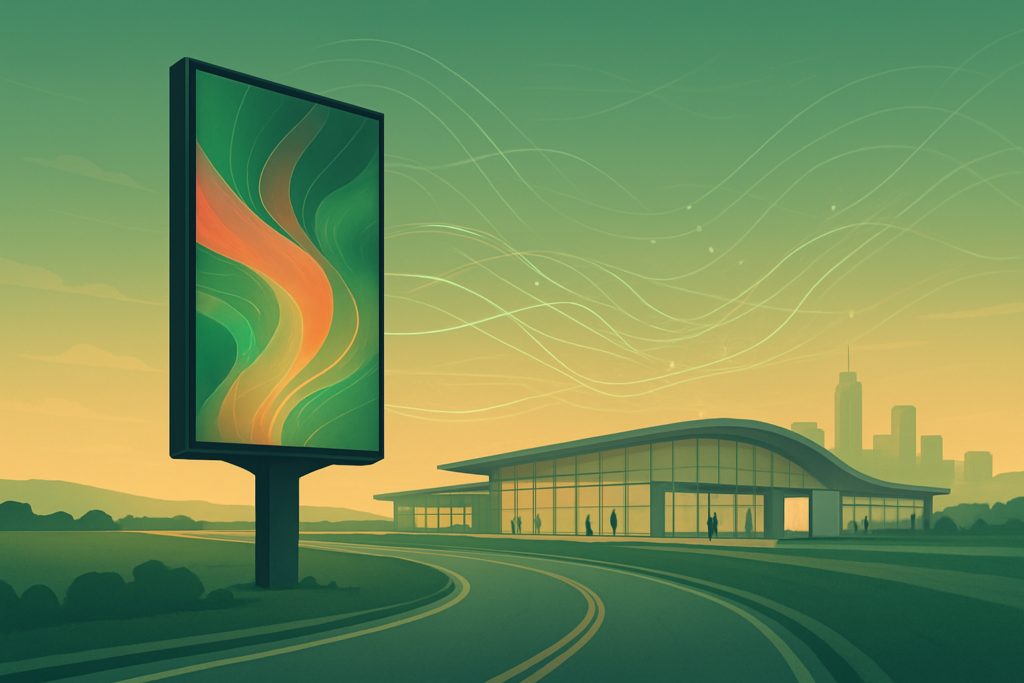
As of February 10, 2026, the landscape of the out-of-home (OOH) advertising industry has undergone a seismic shift. Clear Channel Outdoor Holdings, Inc. (NYSE: CCO) has long been a titan of the American roadside, but it enters the mid-2020s at a historic crossroads. Just yesterday, on February 9, 2026, the company announced a definitive agreement to be acquired by an investor group led by Mubadala Capital and TWG Global in a $6.2 billion take-private transaction.
This move marks the end of an era for CCO as a public entity and signals a major bet on the resilience of physical advertising in an increasingly digital world. Once burdened by the debt of its former parent company and a sprawling, inefficient international footprint, Clear Channel Outdoor has spent the last two years aggressively slimming down to become a "U.S. pure-play" powerhouse. Today’s research feature explores how CCO reached this pivotal moment, the mechanics of its business model, and what the future holds for the world’s most recognizable billboard operator as it retreats from the public markets.
Historical Background
The story of Clear Channel Outdoor is a century-long narrative of consolidation. The company’s roots trace back to 1901 with the founding of Foster & Kleiser in Portland, Oregon, which grew into a dominant outdoor advertising force on the West Coast. Over the decades, the business passed through several hands, including Metromedia and Patrick Media, before being acquired by Eller Media in 1995.
The most transformative phase began in 1997 when Clear Channel Communications (now iHeartMedia) purchased Eller Media, folding it into a massive media empire that combined radio, television, and outdoor advertising. For years, the outdoor division served as a cash-cow subsidiary, but it also became tethered to the massive debt load of its parent.
In May 2019, following iHeartMedia's bankruptcy restructuring, Clear Channel Outdoor was spun off as a standalone public company. However, the timing was difficult; less than a year later, the COVID-19 pandemic decimated travel and outdoor movement. Since 2022, under the leadership of CEO Scott Wells, the company has focused on a "strategic retrenchment"—divesting its European and Latin American assets to pay down legacy debt and refocusing entirely on high-margin U.S. billboard and airport contracts.
Business Model
Clear Channel Outdoor operates a relatively straightforward but high-barrier-to-entry business model: it leases or owns the rights to physical spaces where people congregate or travel and sells advertising "impressions" on those spaces.
The company’s revenue is categorized into two primary segments as of 2026:
- U.S. Americas: This is the core of the business, consisting of approximately 430,000 display faces across the United States. This includes traditional "bulletins" (large billboards), "posters" (smaller, street-level displays), and "street furniture" (bus shelters).
- Airports: CCO is the leading provider of airport advertising in the U.S., holding long-term contracts with major hubs like Atlanta, Chicago, and New York. This segment is particularly lucrative due to the "captive audience" of high-net-worth travelers.
The company's modern business model is driven by Digital Out-of-Home (DOOH). By converting static boards to digital screens, CCO can sell the same physical space to multiple advertisers in a rotating loop, significantly increasing the revenue yield per board while lowering the operational costs associated with physical vinyl installation.
Stock Performance Overview
Over the last decade, CCO’s stock has been a bellwether for both the advertising cycle and the company’s internal leverage struggles.
- 10-Year Horizon: A decade ago, CCO was still a subsidiary of iHeartMedia. Since its 2019 spin-off, the stock has been highly volatile, often trading as a "high-beta" play on the macroeconomy.
- 5-Year Horizon: From 2021 to 2025, the stock struggled to regain its pre-pandemic highs, largely weighed down by a debt load that reached over $5 billion. While competitors like Lamar Advertising (NASDAQ: LAMR) traded at a premium due to their REIT status, CCO often traded at a discount.
- 1-Year Horizon: In 2025, the stock began a slow recovery as divestitures in Europe (Spain and France) were finalized.
- Current Move: The February 9, 2026 announcement of the take-private deal at $2.43 per share represented a 71% premium over its previous month’s average. This "buyout pop" has brought the stock to its highest level in years, providing a liquidity event for long-suffering shareholders.
Financial Performance
The fiscal year 2025 was a year of "operational excellence meeting financial gravity." While the company's billboards were performing better than ever, the cost of servicing its debt remained a primary concern for public investors.
- Revenue: For the full year 2025, CCO reported consolidated revenue of approximately $1.59 billion, representing a 7.5% year-over-year increase.
- EBITDA: Adjusted EBITDA reached $498 million in 2025, driven by higher margins in the Airports segment and the cost-savings from the European exit.
- The Debt Burden: Prior to the 2026 buyout announcement, CCO carried a total debt of roughly $5.3 billion. Interest expenses in 2025 alone consumed nearly $400 million, leaving little room for net income.
- Valuation: Before the buyout, the company was trading at an EV/EBITDA multiple of roughly 10x, significantly lower than its peers, reflecting the market's "leverage discount."
Leadership and Management
Scott Wells, who took over as CEO in late 2021, has been the architect of the company’s "U.S. Pure-Play" strategy. Wells is widely respected for his focus on technology and data, moving CCO away from being a "real estate company" and toward being a "data-driven media company."
Under Wells, the management team has executed:
- The "Four-Pillar Strategy": Focusing on customer centricity, technology leadership, sales execution, and balance sheet strength.
- The European Divestiture: A multi-year effort to sell off international assets in a difficult M&A environment.
- The 2026 Take-Private: This is seen as Wells’ final act as a public CEO, successfully finding a buyer (Mubadala) capable of providing the capital needed to finally de-lever the balance sheet without the quarterly scrutiny of Wall Street.
Products, Services, and Innovations
CCO’s most significant innovation is RADAR, a sophisticated data analytics suite. RADAR uses anonymized mobile location data to track the movement patterns of consumers. This allows advertisers to prove "attribution"—showing that a person who drove past a billboard eventually visited the advertiser’s store or website.
Other key innovations include:
- Programmatic DOOH (pDOOH): CCO has integrated its digital inventory with automated buying platforms. Advertisers can now buy billboard space in real-time, just like they buy Facebook ads, adjusting spend based on time of day, weather, or local events.
- 3D Anamorphic Displays: In major markets like New York’s Times Square, CCO has deployed 3D digital tech that makes advertisements appear to "pop out" of the screen, creating viral marketing moments.
- Airport Innovation: New high-resolution "hero" displays in renovated terminals (e.g., LAX and JFK) offer brands high-impact visibility among international travelers.
Competitive Landscape
The OOH market is a three-way battle for dominance in the U.S.:
- Lamar Advertising (NASDAQ: LAMR): The market leader by face count. Lamar’s advantage is its status as a Real Estate Investment Trust (REIT), which provides tax advantages and allows it to pay a high dividend. It focuses primarily on "mid-market" roadside billboards.
- Outfront Media (NYSE: OUT): CCO’s closest rival in major metropolitan markets. Outfront has a heavy focus on transit (subways and buses), particularly in New York City.
- Clear Channel Outdoor (NYSE: CCO): Positioned as the tech-forward option with the strongest airport portfolio. CCO has historically had higher leverage than its peers, which has been its primary competitive weakness.
Industry and Market Trends
As of early 2026, the OOH industry is benefiting from a "media fragmentation" trend. As consumers skip TV ads and use ad-blockers online, the "un-skippable" nature of a physical billboard has become more valuable.
- Retail Media Integration: OOH is increasingly being bought in conjunction with Retail Media Networks (RMNs). For example, a brand might buy a CCO billboard leading up to a grocery store where they are also running in-store digital ads.
- Sustainability: Advertisers are now demanding "Green Media" audits. CCO has responded by accelerating the transition to LED lighting and exploring solar-powered displays to reduce the carbon footprint of its physical network.
Risks and Challenges
Despite the optimism of the 2026 buyout, CCO faces significant hurdles:
- Interest Rate Sensitivity: With billions in debt, any "higher-for-longer" interest rate environment makes refinancing extremely expensive.
- Macroeconomic Cyclicality: Advertising is often the first budget cut during a recession. While OOH is more resilient than local radio or print, it is not immune to a downturn.
- Regulatory Zoning: Local municipalities are increasingly restrictive about new billboard permits, making "organic" growth difficult and forcing companies to rely on digital conversions of existing boards.
Opportunities and Catalysts
- The Private Advantage: By going private in 2026, CCO can focus on long-term digital conversion (which requires high upfront CapEx) without worrying about short-term earnings misses.
- Political Spending: 2026 is a midterm election year in the U.S. Political ad spend is a massive catalyst for OOH, as candidates compete for "mindshare" in key swing districts.
- Consolidation: As a private entity backed by Mubadala, CCO may become an acquirer again, looking to pick up smaller independent billboard operators to increase its U.S. footprint.
Investor Sentiment and Analyst Coverage
Prior to the February 9th buyout announcement, sentiment on CCO was "cautiously optimistic" but frustrated. Analysts at firms like JP Morgan and Morgan Stanley had maintained "Hold" or "Neutral" ratings, citing the company's impressive operational growth but "distressing" debt levels.
The take-private deal has been viewed by the analyst community as the "most logical conclusion" for CCO. Hedge funds that had been betting on a turnaround (like Legion Partners) have seen their thesis validated by the 70%+ premium offered in the buyout.
Regulatory, Policy, and Geopolitical Factors
The primary regulatory risk for CCO is data privacy. The RADAR platform relies on mobile location data; should the U.S. pass a federal privacy law similar to Europe's GDPR, the ability to track consumer movement and attribute it to billboard impressions could be curtailed.
Geopolitically, the company has de-risked significantly by exiting Europe and Latin America. By becoming a domestic-focused entity, it is no longer exposed to currency fluctuations or the regulatory complexities of the European Union’s advertising laws.
Conclusion
Clear Channel Outdoor’s journey from a subsidiary of a radio conglomerate to a targeted, private U.S. media leader is a masterclass in corporate restructuring. As of February 10, 2026, the company is preparing to enter its next chapter under the ownership of Mubadala Capital and TWG Global.
For investors, CCO has been a rollercoaster, but the 2026 buyout provides a definitive exit at a significant premium. For the advertising industry, CCO remains a vital player—one that has successfully proven that in a world of digital noise, the physical landscape remains one of the most powerful canvases for a brand's message. Moving forward, the industry should watch how CCO uses its new private capital to accelerate its digital and programmatic evolution, potentially setting the stage for a re-IPO at a much higher valuation later this decade.
This content is intended for informational purposes only and is not financial advice.