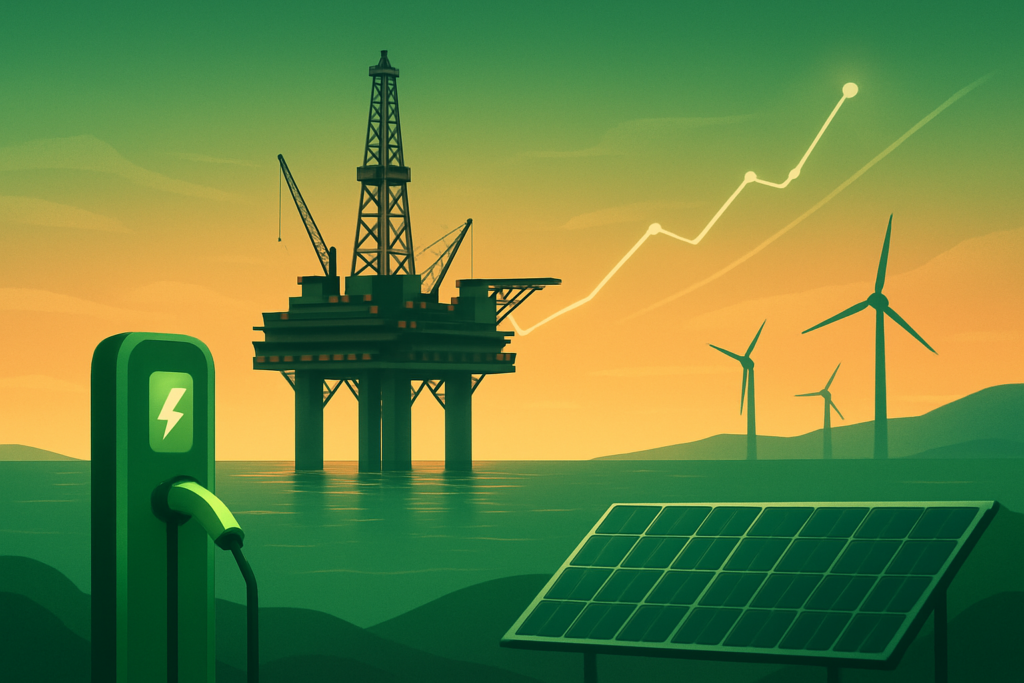
As of February 10, 2026, the global energy landscape finds itself at a crossroads between the urgent demands of decarbonization and the immediate realities of energy security. At the heart of this tension stands BP p.l.c. (NYSE: BP, LSE: BP), a company that has spent the last five years attempting one of the most ambitious strategic pivots in corporate history. Once the vanguard of the "Beyond Petroleum" movement, BP has recently recalibrated its trajectory, opting for what CEO Murray Auchincloss describes as a "pragmatic" approach. This feature explores the complexities of BP’s business model, its financial health, and the high-stakes gamble it is taking by leaning back into its hydrocarbon roots while navigating an increasingly litigious and volatile global market.
Historical Background
The story of BP began in 1908 in the deserts of Persia, where the discovery of oil led to the formation of the Anglo-Persian Oil Company. For much of the 20th century, the company served as a strategic arm of the British state, providing the fuel that powered the Royal Navy and the UK’s industrial might. After a series of privatizations in the 1970s and 80s, BP transformed into a global "supermajor" through aggressive consolidation, most notably its 1998 merger with Amoco and the 2000 acquisition of ARCO.
However, the company’s modern identity is inextricably linked to the 2010 Deepwater Horizon disaster. The tragedy resulted in 11 lives lost and an environmental catastrophe that cost the company over $70 billion in settlements. This trauma forced a decade of divestments and a fundamental rethink of the company's risk profile. In 2020, then-CEO Bernard Looney launched a radical plan to shrink oil production by 40% and reinvent BP as an "Integrated Energy Company." By early 2026, that strategy has been significantly modified under new leadership, reflecting a broader industry shift back toward high-margin fossil fuels.
Business Model
BP operates a tri-pillar business model designed to balance cash generation from traditional assets with growth in "transition" businesses.
- Upstream (Production & Operations): This remains the company’s "engine room." BP focuses on high-margin, low-carbon-intensity oil and gas projects. Key regions include the Gulf of Mexico, the North Sea, and Brazil. In 2025, BP doubled down on this segment, prioritizing short-cycle projects that provide immediate cash flow.
- Customers & Products: This segment includes BP’s global retail network (over 20,000 sites), the premium Castrol lubricants brand, and aviation fuels. Interestingly, BP recently announced a plan to optimize this portfolio, including the potential divestment of a majority stake in Castrol to further reduce corporate debt.
- Gas & Low Carbon Energy: This pillar integrates natural gas and LNG with renewables like solar (via Lightsource bp), wind, hydrogen, and EV charging. While once the primary focus of growth capital, BP has recently shifted toward a "capital-light" model here, seeking partners to share the high costs of offshore wind and hydrogen infrastructure.
Stock Performance Overview
Over the last decade, BP’s stock has been a story of resilience rather than rapid growth. As of early February 2026, BP trades around $39 per share on the NYSE.
- 1-Year Performance: BP has seen a roughly 29% total return, significantly outperforming the broader market. This surge was driven by the company’s strategic "pivot to profit," which involved scrapping aggressive production cuts and boosting shareholder returns.
- 5-Year Performance: The stock has returned approximately 127%, benefiting from the post-pandemic energy price spike and a disciplined approach to capital allocation.
- 10-Year Performance: Looking back a decade, the return stands at roughly 134%. While positive, BP has historically lagged behind U.S. peers like ExxonMobil (NYSE: XOM), primarily due to the "transition discount"—investor skepticism regarding BP’s ability to generate high returns from green energy compared to oil.
Financial Performance
BP’s 2025 fiscal year was defined by a drive toward balance sheet strength. Total revenue for 2025 settled at approximately $192.5 billion. While underlying profit dipped slightly due to a cooling in global crude prices, the company’s Return on Average Capital Employed (ROACE) improved to 14%.
A critical metric for investors has been BP’s net debt, which dropped to $22.2 billion by the end of 2025. This deleveraging has been a core pillar of the Auchincloss strategy, intended to provide the company with the flexibility to weather commodity cycles. However, in a move that surprised some income investors, BP announced a temporary suspension of share buybacks in early 2026 to prioritize reaching a sub-$20 billion debt target.
Leadership and Management
Murray Auchincloss, who took the helm as CEO in early 2024, has been credited with bringing "operational discipline" back to BP. A former CFO, Auchincloss has moved away from the visionary, often idealistic rhetoric of his predecessor toward a focus on execution and "deliverability."
Under his leadership, the management team has been streamlined, and a new target to cut structural costs by $6.5 billion by 2027 was established. Governance remains a focal point; the board has worked hard to repair trust after the sudden departure of the previous CEO, emphasizing transparency and conservative financial planning.
Products, Services, and Innovations
While hydrocarbons pay the bills, BP continues to innovate in the "new energy" space:
- Biofuels: BP is one of the world’s largest players in biogas and sustainable aviation fuel (SAF), viewing these as high-margin bridges between oil and renewables.
- EV Charging: The BP Pulse network has expanded rapidly, focusing on "ultra-fast" charging hubs at existing retail sites.
- Hydrogen: BP is developing several major hydrogen hubs, including the H2Teesside project in the UK, aiming to provide low-carbon fuel for heavy industry.
- Deepwater Expertise: In its core business, BP’s use of seismic imaging and robotics in the Gulf of Mexico remains industry-leading, allowing for more efficient extraction from "ultra-deep" reservoirs.
Competitive Landscape
BP competes in an arena of giants, most notably Shell (NYSE: SHEL), ExxonMobil, and Chevron (NYSE: CVX).
- The Valuation Gap: A persistent challenge for BP is its valuation compared to U.S. supermajors. ExxonMobil, with a market cap exceeding $600 billion, trades at a significantly higher multiple. This is largely attributed to the U.S. market’s preference for pure-play hydrocarbon growth over the diversified energy model favored by European firms.
- Strengths: BP’s world-class gas trading business and its extensive retail footprint are significant competitive advantages.
- Weaknesses: Higher leverage than Shell and a history of more frequent strategic shifts have left some investors wary of "execution risk."
Industry and Market Trends
The energy sector in 2026 is dominated by the theme of "energy security." Following years of geopolitical instability, governments are once again prioritizing reliable supply over rapid decarbonization. This has created a favorable tailwind for BP’s LNG and upstream oil segments. Simultaneously, the "green-hushing" trend—where companies downplay their climate goals to avoid political and investor backlash—has allowed BP to move away from its more aggressive 2030 production cut targets with minimal reputational damage.
Risks and Challenges
Despite its recent recovery, BP faces formidable headwinds:
- Operational Risk: Oil and gas extraction is inherently dangerous; any safety lapse could revive the specter of Deepwater Horizon.
- Market Risk: BP’s earnings are highly sensitive to Brent crude prices. A global recession or a sudden surge in supply from OPEC+ could squeeze margins.
- Litigation: A new wave of "antitrust-style" climate litigation is emerging. In early 2026, BP was named in a landmark Michigan lawsuit alleging a "cartel-like" effort to suppress EV adoption.
- Policy Volatility: In the UK, the Energy Profits Levy (windfall tax) remains a significant burden, with headline tax rates reaching 78% for North Sea operations.
Opportunities and Catalysts
- Middle East Expansion: BP’s recent $27 billion deal to redevelop the Kirkuk fields in Iraq signals a return to its roots in low-cost, high-volume production areas.
- U.S. Policy: Following the 2024 U.S. elections, a more "energy-dominant" policy stance in Washington has opened up new leasing opportunities in the Gulf of Mexico and Alaska.
- Portfolio Optimization: The potential sale of a stake in Castrol and other non-core assets could unlock billions in capital for debt reduction or future dividend hikes.
Investor Sentiment and Analyst Coverage
Current analyst sentiment for BP is "Hold / Cautiously Optimistic." While Wall Street applauds the shift back to hydrocarbons and the focus on debt reduction, there is lingering concern about the lack of share buybacks in the near term. Large institutional holders, including activist voices like Elliott Management, continue to pressure the board to narrow the valuation gap with Shell and Exxon. Retail sentiment is generally positive, buoyed by a dividend yield that remains among the most attractive in the FTSE 100.
Regulatory, Policy, and Geopolitical Factors
The geopolitical landscape remains a minefield. While 2025 saw a relative stabilization of Middle Eastern tensions, the "geopolitical risk premium" remains a permanent fixture of oil pricing. In Europe, the "Environmental Omnibus" regulation has simplified some green reporting requirements, but BP must still comply with strict CO2 storage mandates by 2030. In the U.S., the lifting of the LNG export pause has been a major boon for BP’s global trading arm, allowing for increased flow of American gas to European and Asian markets.
Conclusion
BP p.l.c. enters mid-2026 as a company that has rediscovered its identity. By stepping back from the ledge of a radical, rapid green transition, it has stabilized its finances and regained the favor of many value investors. However, the path ahead is narrow. The company must prove that it can grow its traditional oil and gas production while simultaneously building a profitable, if smaller, low-carbon business. For investors, BP offers a compelling, high-yield play on energy pragmatism, but it requires a high tolerance for the regulatory and commodity-driven volatility that defines the modern energy supermajor. As Murray Auchincloss navigates the "back-to-basics" era, the ultimate test will be whether BP can finally close the valuation gap with its American peers.
This content is intended for informational purposes only and is not financial advice.