Let’s be real. Running a property maintenance business isn’t like running a coffee shop or selling scarves on Etsy. You’re juggling multiple properties, recurring jobs, 2 AM emergencies, and a team scattered across the city. It’s chaotic, fast-paced, and tough to manage.
So why are you using a generic invoicing tool made for freelance designers? Sure, those “one-size-fits-all” apps seem quick, easy, and cheap. But let’s face it: what works for solo consultants often fails when you’re handling dozens of work orders across multiple locations. If you’re spending more time fighting your software than getting paid, this post is for you.
Let’s explore why generic tools aren’t cutting it and what you should be using instead.
The Reality of Property Maintenance Billing
Picture this: It’s Tuesday. Your team handles a scheduled repair in the morning, gets pulled into an emergency plumbing fix in the afternoon, and squeezes in a follow-up visit before clocking out.
That’s three different billing scenarios in one day.
Generic invoicing tools are built for static, predictable pricing. They assume you sell a product for $50, and that’s the end of the story. But your world is messy in the best way. Scopes change on-site. Clients need detailed documentation before they approve a dime.
Generic tools focus on creating the invoice. But they completely ignore the complex workflow that actually leads up to that bill. And that is where the trouble starts.
1. They Cannot Connect Invoices to Real Work
One of the biggest headaches with basic invoicing is the total disconnect between the field and the office. It’s like a high-stakes game of “telephone” where your profit is on the line.
Usually, it goes like this:
- Your tech scribbles notes on a greasy napkin (or hopes they’ll just remember).
- The office manager tries to play detective days later.
- An invoice is manually created based on a wing and a prayer.
This leads to some nasty surprises:
- Missing Line Items: You forget to charge for that extra part. Poof! There goes your profit.
- Data Entry Disasters: Rushed typing leads to typos that make you look unprofessional.
- Confused Clients: Customers get a bill that just says “Service” and immediately hit you with the “What was this for?” email.
For property managers, this lack of clarity is a total dealbreaker. They need to see exactly what happened on-site.
The Fix: Field service tools like Field Promax tie the invoice directly to the job. It’s built from real-time activity, not your office manager’s memory!
2. They Don’t Understand Recurring Billing
If you’re in property maintenance, recurring contracts are your bread and butter. You’ve got monthly inspections, routine repairs, and facility upkeep happening like clockwork.
Generic tools treat a recurring invoice like a photocopier: it just spits out the exact same bill every month.
But in the real world, is maintenance ever exactly the same? Maybe this month Property A needed extra filters. Maybe Property B needed fewer services because of a holiday. Without job-level context, your “automated” invoice becomes inaccurate.
This leads to:
- Confusing invoices that clients reject.
- You spend hours making manual adjustments every billing cycle.
- Lost time fixing mistakes that shouldn’t have happened.
A field service-focused platform keeps your recurring billing flexible. It knows that while the schedule repeats, the work might vary, ensuring you get paid for what you actually did.
3. They Slow Down Approvals (And Your Paycheck)
Property managers and corporate clients are extremely difficult. They have strict approval processes. They don’t just hand over checks because you asked nicely. They need clear documentation, service dates, technician notes, and crucially, photos.
Generic invoicing tools usually look pretty, but they are terrible at the details. You can’t easily attach site photos or detailed technician reports.
So, you send a basic invoice. Then the client emails back:
- “What unit was this for?”
- “Was this the emergency call or the scheduled visit?”
- “Who signed off on this?”
Every question is a delay. Every delay hurts your cash flow.
Businesses using systems built for property maintenance can automatically include job details and photos right on the invoice. It answers the client’s questions before they even ask them. Faster approvals mean money in the bank sooner.
For property managers, this lack of clarity is a total dealbreaker. They need to clearly understand what work was performed, why it was necessary, and how it connects to the final charge. When job notes, service details, or explanations are poorly written or hard to follow, it creates friction and delays approvals. Tools like sparx reader help improve how information is presented by making technical or operational details easier to read and understand, reducing confusion for both clients and internal teams.
4. They Create More Admin Work, Not Less
Here is the irony of the century: Many owners choose cheap, generic tools hoping to save time. But they end up hiring more office staff just to manage the mess the software creates.
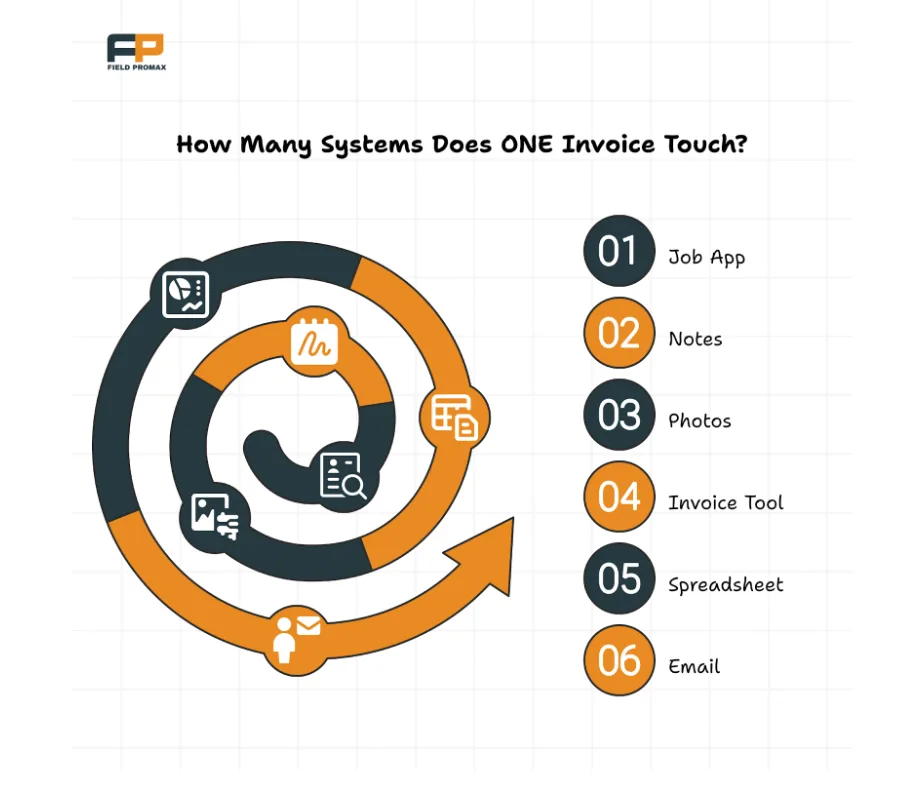
Your office team ends up doing double data entry, typing job details into a spreadsheet, then retyping them into the invoicing app. They spend hours cross-checking work orders against billing to make sure nothing fell through the cracks.
This manual process is a trap. It doesn’t scale. As you grow and get more clients, the billing bottleneck just gets tighter.
Field service management platforms reduce this friction by keeping job data, customer details, and billing in one place. With tools like Field Promax, your office team spends less time fixing invoices and more time helping you grow the business.
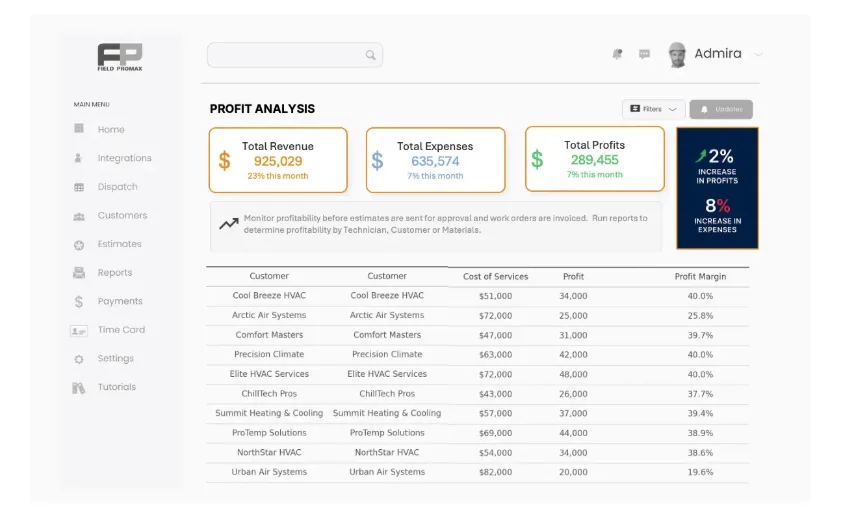
5. Poor Reporting Leaves You Flying Blind
You need to know what drives your revenue. Which properties are making you rich? Which contracts are actually costing you money? Which types of jobs eat up all your labor hours?
Generic invoicing tools give you basic financial reports. They can tell you how much you made, but they can’t tell you how you made it. They lack operational context.
Without meaningful reporting, it is hard to:
- Spot unprofitable contracts.
- Adjust pricing based on real labor patterns.
- Plan staffing based on demand trends.
Modern field service tools connect the dots between invoices, jobs, customers, and service types. This gives you practical data you can actually use to make smarter decisions, like realizing you need to raise your rates for that one demanding client.
What Property Maintenance Businesses Actually Need
The problem isn’t invoicing itself. It’s the disconnect between the field and the office.
Property maintenance businesses need systems that understand how work happens in the real world. You need a tool that acts like a bridge, not a barrier.
Effective billing tools should:
- Link invoices directly to completed jobs. No more guessing games.
- Reflect changes made on-site. If the scope changes, the bill updates.
- Provide clear documentation. Photos, notes, and signatures are attached automatically.
- Reduce manual data entry. One-click invoicing from the work order.
When billing mirrors actual operations, disputes drop, payments speed up, and teams spend less time chasing paperwork.
A Realistic Example From the Field
Let’s look at a quick example. Imagine a small property maintenance company managing 40 residential units.
The Old Way: Using a generic tool, the office manager spends Friday afternoon frantically digging through emails and technician texts to create invoices. She misses a few line items. She sends the invoices. On Monday, three property managers call to dispute the charges because the descriptions are vague. Payment is delayed by two weeks.
The Field Promax Way: The technician finishes a job, snaps a photo of the repair, adds a note, and marks the job “Complete” on their mobile app. The office manager sees this instantly. She reviews the details, clicks “Generate Invoice,” and sends it off with the photo attached. The property manager approves it immediately because they can see the proof of work. Payment is processed on time.
See the difference? It’s not magic; it’s just better software.
Don’t Let Bad Billing Hold You Back
Property managers today expect professionalism and transparency. They compare service providers not just on price, but on how easy they are to work with. If your billing is a mess, you look like a mess.
Generic invoicing tools were never designed for the complexity of property maintenance work. Sticking with them is like trying to mow a lawn with a pair of scissors technically possible, but painful and inefficient.
For owners who want to grow without adding billing headaches, the solution isn’t working harder. It’s choosing tools designed for how property maintenance actually runs. Platforms like Field Promax help bridge the gap between fieldwork and billing, making invoicing a strength instead of a constant struggle.
Ready to stop fighting your invoices and start growing your business? Schedule a demo today and see how much easier life can be.
Frequently Asked Questions
Why are generic invoicing tools a poor fit for property maintenance businesses?
Generic invoicing tools are built for simple, one-time services, not the complexities of property maintenance. This mismatch leads to errors, payment delays, and client disputes because there’s no clear link between the work done and the invoice.
Can property maintenance companies scale using basic invoicing software?
Trying to scale with basic invoicing software is like trying to win a race with a unicycle. As your jobs increase, your team gets bogged down fixing invoices and answering questions, which slows growth and adds to your costs.
What causes payment delays with generic invoicing tools?
Invoices get stuck because they’re missing the “who, what, and where.” Property managers won’t pay up without service dates and proof of work. Generic tools make you do the legwork manually, leading to more back-and-forth than a tennis match and seriously slow approvals.
What should property maintenance businesses look for instead of generic invoicing?
Property maintenance businesses should look for tools that connect jobs, customers, and billing in one system. Field service-focused platforms help ensure invoices are accurate and easy to understand and aligned with actual work completed, which leads to faster payments and better client trust.