Square data shows regular customers tip 11% higher and are shared across 32% of businesses in the same ZIP code, driving thousands in additional revenue per connection1
Square today published its 2026 Local Economy Report report, a first-of-its-kind analysis revealing how "regulars" and the neighborhood networks they create are the backbone of thriving local economies. The report reveals that regular customers drive 6x more revenue for local businesses and unpacks the patterns and trends in their spending. This includes regulars making predictable purchases, tipping more generously, and prioritizing in-person experiences, which ultimately creates the steady demand businesses rely on during periods of economic uncertainty.
This press release features multimedia. View the full release here: https://www.businesswire.com/news/home/20260318263799/en/
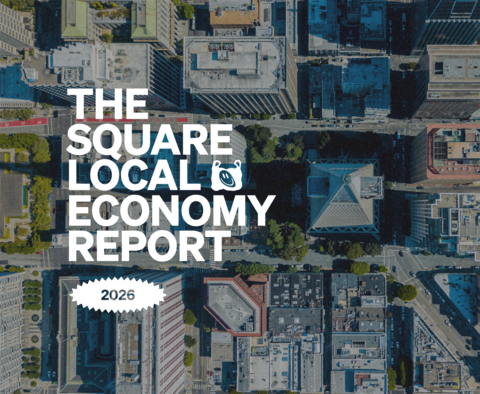
(Graphic: Square)
The report also shows how business success is no longer measured solely within a business's own four walls, but also by connections to regular customers and neighboring businesses. Square found that 32% of regular customers are shared by businesses in the same ZIP code, and each network connection between businesses can generate thousands in additional annual revenue.
The Neighborhood Network Effect: How Shared Regulars Power Local Economies
Square's analysis of millions of anonymized transactions reveals that local businesses are interconnected through shared regular customers, who create neighborhood networks where one business's success supports the next. The report reveals that:
- 32% of regular customers are shared between businesses in the same ZIP code, keeping dollars circulating locally
- Each network connection is correlated with notable revenue growth: In Los Angeles, businesses earn an average of $2,201 more in annual revenue per connection, with similar lifts in Chicago ($1,100), New York ($1,500), and San Francisco ($2,025)
- In San Francisco, 67% of sellers are connected to other nearby businesses through shared regulars
- Coffee shops and casual dining establishments serve as the most common neighborhood connectors, acting as everyday hubs that funnel customers to retail, beauty, and service businesses
- Looking at Cash App consumer data, up to 60 cents of every dollar spent at local businesses stays circulating within the neighborhood 2
“Neighborhoods aren't just a collection of individual businesses; they're interconnected networks where success is shared,” said Nick Molnar, Global Head of Sales & Marketing at Block. “When a coffee shop thrives, the salon next door benefits. When regulars support one business, they're often supporting five others in the same ZIP code. The future of commerce is local, and Square helps sellers understand and activate these neighborhood connections. Because when local businesses win together, entire communities thrive."
The 6x Effect: Why Regulars Are the Lifeblood of Local Business
At the center of neighborhood resilience is the "regular,” a customer who visits a business at least four times per year. Square data shows these loyal customers are dramatically more valuable:
- Regular customers generate 6X more annual revenue than one-time visitors nationally – in Atlanta, this rises to 7X
- Regulars tip 11% higher on average compared to transient customers
- Regular customer revenue grew 7.67% in 2025, outpacing overall revenue growth (6.97%), even as transient revenue declined
- Product consistency drives loyalty: 78% of regulars at beauty businesses buy the same products each time; 59% of food & beverage regulars make the same order
- 90% of businesses using marketing tools successfully maintained regular customers in 2025, compared to only 38% of those that didn't
"At Square, our research has long shown that local economies thrive on relationships – between customers and sellers, sellers and their staff, and even between neighboring businesses themselves," said Christine Kahm, Head of Customer Strategy at Block. "And now, with this data analysis, we're further reinforcing that these connections aren't just feel-good stories, they're measurable drivers of revenue and resilience. Our unique vantage point across millions of transactions reveals the true anatomy of a neighborhood network: businesses that share regular customers earn thousands more in annual revenue. It's these relationships which are built on consistency, loyalty, and community, that underpin and power a thriving neighborhood network."
Consumers Are Staying Local Despite Economic Pressure
Loyalty from regulars has proven especially durable over time. Revenue from regular customers peaked during the height of the pandemic and has continued to grow since, underscoring loyalty’s role as the most reliable hedge against volatility.
In 2026, despite rising costs and economic uncertainty, consumer commitment to local commerce remains strong:
- 75% of consumers plan to spend at least as much, if not more, at local businesses over the next 12 months
- 55% shop or dine at local businesses in their ZIP code at least weekly
- 32% often or always visit multiple local businesses in a single outing, reinforcing the neighborhood network effect
- 72% of consumers will tolerate price increases if paired with added value, such as better products or exclusive offers
However, spending priorities are shifting. When forced to cut back, consumers say they are most likely to reduce spending at bars, breweries (27%), and full-service restaurants (27%), while retail remains the most stable category with 78% of consumers maintaining or increasing spending.
Looking Ahead to 2026: The Path Forward for Local Businesses
The path forward for local businesses is clear: consumers will continue to shop locally, but with intention. As the multi-stop habit continues to define how people shop and dine, the businesses that invest in loyalty, convenience, and community will turn economic pressure into neighborhood growth.
Intention is not only a consumer trend, but also a strategic seller tactic. The businesses that lead in 2026 are those actively building neighborhood networks by deepening relationships with regulars, collaborating with nearby sellers, and creating shared experiences that turn occasional visitors into repeat customers across the block. By strengthening these connections, sellers expand their base of regulars and unlock the measurable revenue growth that comes from loyalty.
"Sellers need to know that the neighborhood is their competitive advantage," continued Molnar. "The businesses that will define the next era of local commerce aren't just focused on their own four walls. They're tapped into the rhythms of their community, deeply connected to their regulars, and showing up how it matters most: with ease, convenience, and in-person expertise."
Read the full report here.
About the Square 2026 Local Economy Report Data Methodology
The Square Local Economy Report findings are derived from observed transaction-level data that is aggregated to protect confidentiality, along with nationally representative consumer research conducted in 2025. The report methodology is detailed below.
Transaction Data: Square analyzed all buyer-seller interactions from Jan. 2019 through Dec. 2025. A buyer-seller relationship was considered to be “regular” if there were transactions between them on four or more distinct dates within a year; all other relationships were considered “transient.” Note that a single buyer can have both regular and transient relationships with different sellers. To calculate regular versus transient statistics, Square grouped transactions by regular and transient labels and computed summary metrics for each group, such as average spend and total transaction volume.
Network Data: Square isolated all “regular” buyer-seller relationships in 2025 based on the methodology described above. Square constructed city-level networks by drawing a connection between two sellers if they share at least one regular buyer. Most analyses are based on each network’s largest connected component – i.e., the largest subgraph where there exists a path between every possible pair of nodes.
Network visualizations represent the subgraph of a given city by postcode. For each city, we select the postcode that produces a subgraph containing 10-100 sellers and the greatest number of connections to demonstrate local connectivity and ensure visualization clarity.
Marketing Data: Square analyzed statistics based on enrollment in any of the following marketing products: Email Marketing, Text Message Marketing (US only), and Loyalty Programs. We compared two groups of sellers: enrolled in a marketing product versus not. To quantify the effects of activating a marketing product, Square analyzed all sellers whose earliest activation occurred on or after Jan 2023 and compared performance in the three months preceding activation versus the three months following activation, only including sellers with at least 75 days of transactions in each period.
Consumer Survey Methodology: Square and Studio by Informa TechTarget conducted an independent survey of 994 consumers in the United States between September 23 and December 30, 2025. Respondents were screened to include a representative sample of age groups (18 to 61+) and geographical locations within the United States.
Cash App Data: Cash App Card transactions Jun, Jul, Aug 2025, Internal Data.
About Square
Square helps businesses turn transactions into connections and businesses into neighborhood favorites.
In 2009, Square started with a simple invention – the first mobile card reader, which changed how the entire financial system thinks about small businesses. Square has since grown into a global business platform helping millions of sellers of all sizes participate and thrive in their communities.
Whether independently run or a global chain, Square understands that sellers succeed when they have the freedom to focus on the experiences that keep customers coming back. From point of sale and payments to online commerce, staff management, cash flow tools, and more, Square brings together the tools sellers need to run and grow on one intelligent platform. For more information, visit squareup.com.
_________________________
1Per Square Transaction Data
2Per Cash App Data
View source version on businesswire.com: https://www.businesswire.com/news/home/20260318263799/en/
Contacts
Media Contact:
Square Press
press@squareup.com